A Year in the Valley

A Year in the Valley

Discovering the flora and fauna in a small square of Portmellon Valley

  • BioBlitz
  • The Rules
  • Tally
  • Map
  • Bird Page
  • Contact Form
  • Water Mint (Mentha aquatica) and Water Pepper (Persicaria hydropiper)

    Water Mint (Mentha aquatica) and Water Pepper (Persicaria hydropiper)

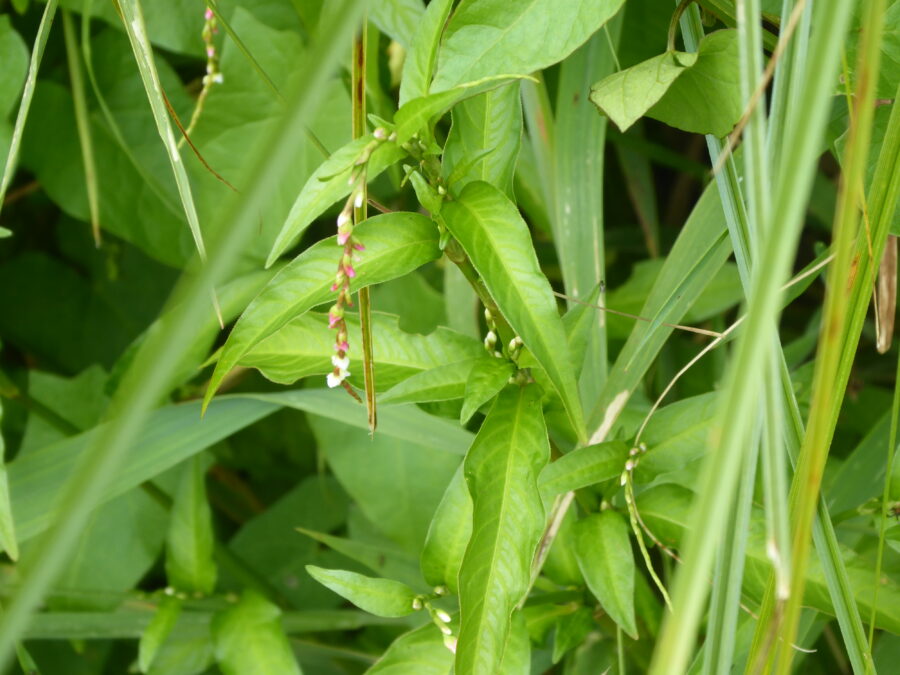
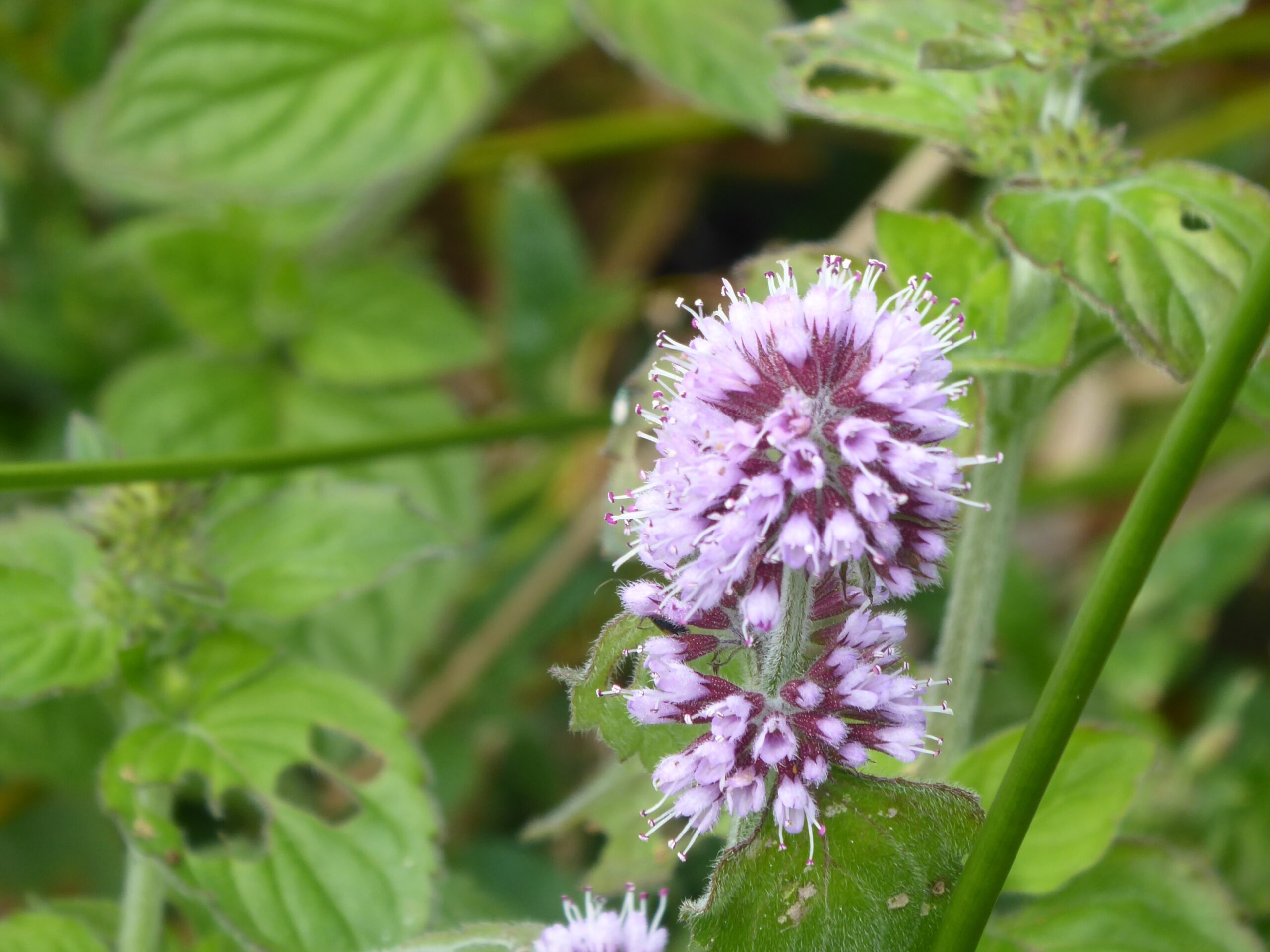
    I always knew this was Water Mint, even before I knew there was such a thing.  It was one of the first plants we unearthed in the Water Meadow, when we were still getting to know it four years ago.  Its leaves have that unmistakable mint scent, not too strong unless you crush a leaf between your fingers.  It’s a safe plant and can be used in place of other mints in cooking, tea, Pimms etc.  It looks like a mint.  And then there are the flowers.  They’ve not been out long and are very photogenic.  I’ve struggled to decide which is my favourite picture.
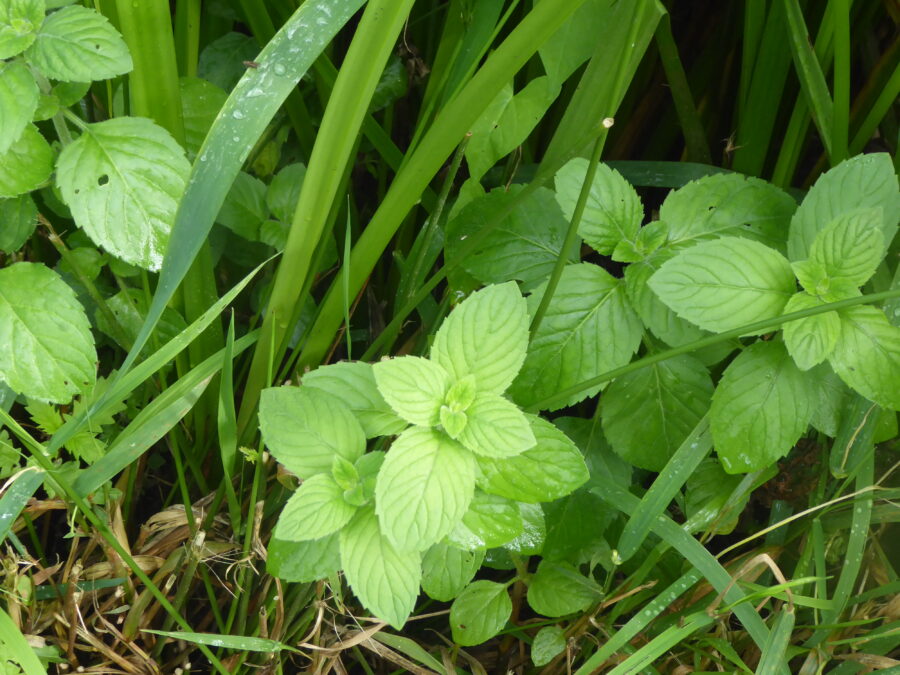
    This is what it looked like a month ago.
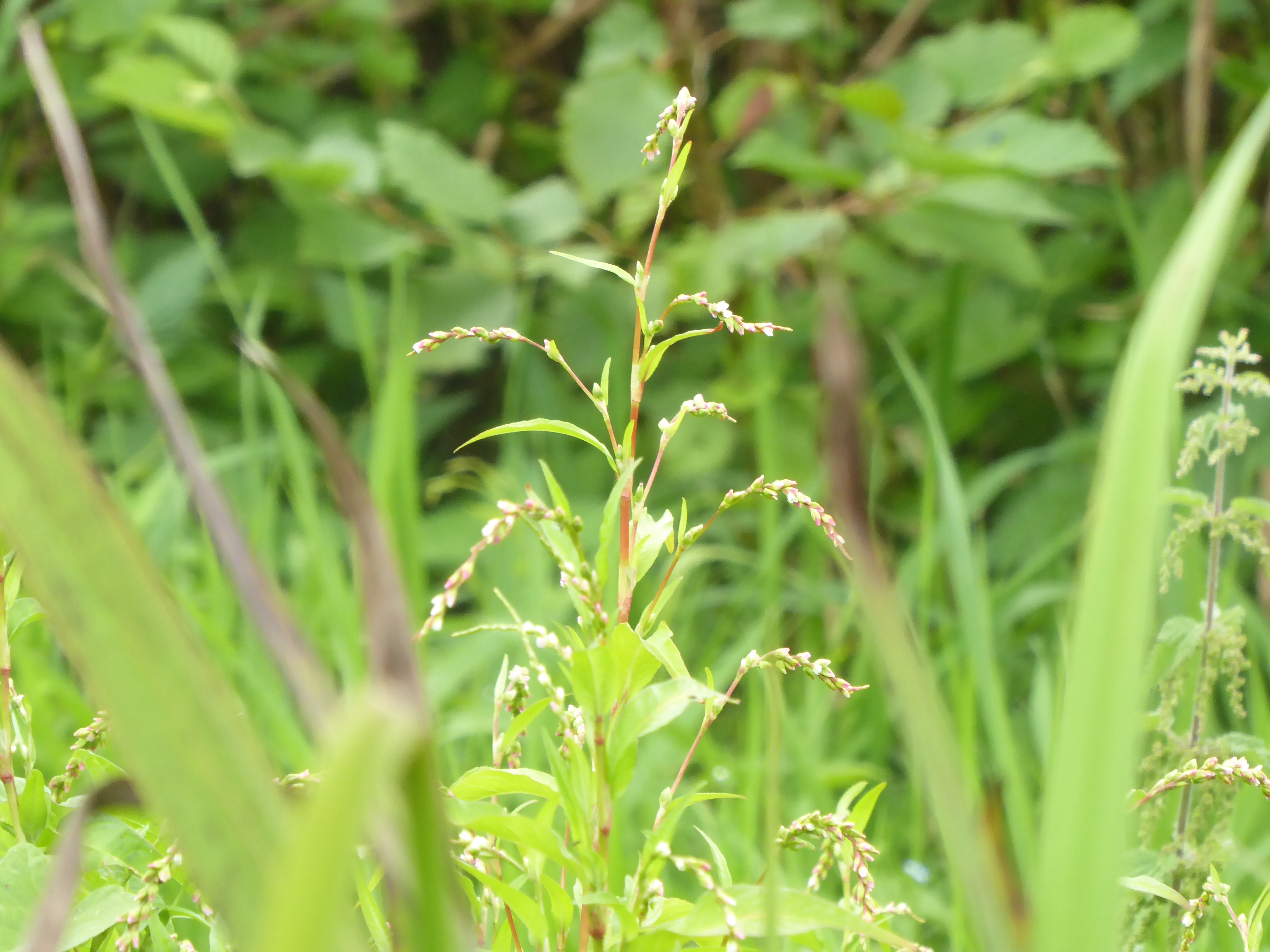
    Water Pepper

    Water Pepper is such an unassuming little plant that I nearly stepped over it until I noticed its tiny sorrel-type blooms.  As you can tell by its name it loves damp places.  I had to find out whether it was actually Water Pepper or Tasteless Water Pepper.  They both have white-pink flowers.  The flowers of the Water Pepper have little yellow dots.  The buds are green, as you can see, and the flower stems are nodding rather than upright.  The fruits are tiny nuts which are matt for the Water Pepper and shiny for the Tasteless Water Pepper.  So, I will have to check those out later.  The only other way is to taste the leaves – peppery vs flavourless.  But they have to be cooked first.

    UPDATE PICTURE 15/08/23
    Daisy D

    11 August 2023
    Flowers
    Water Mint, Water Pepper
  • Common Fleabane (Pulicaria dysenterica) and Long Hoverfly

    Common Fleabane (Pulicaria dysenterica) and Long Hoverfly

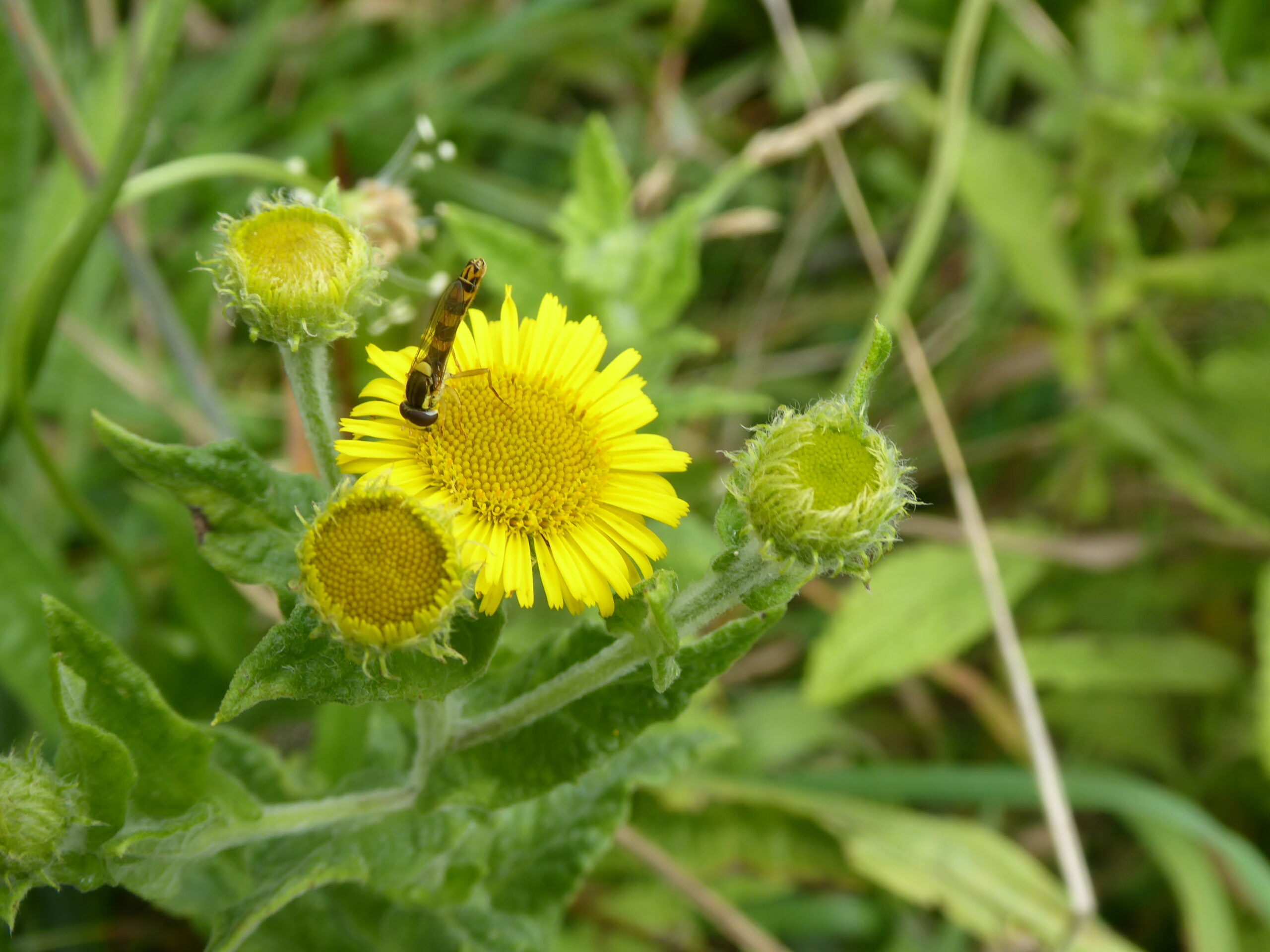
    We had clumps of yellow flowers in both the top garden and in the watermeadow.  The ones in the top garden turned out to be ragwort, but these (above) are common fleabane.  They both have bright yellow daisy-style flowers, but the leaves are quite different.  Ragwort has intricate leaves and fleabane has regular ‘leaf-shaped’ leaves, long and pointed and corrugated.

    The other difference is the occupants of the plants.  Ragwort, which is poisonous to animals, is host to the striking looking caterpillars of the cinnabar moth.  If you see a tall, yellow daisy with complicated leaves look for black and yellow striped caterpillars climbing over it.  They are an amazing sight!

    Our common fleabane, on the other hand, seemed to be a buffet for hoverflies.  Long hoverflies.  Long hoverflies have a distinctive elongated tubular body-shape.  Their body is longer than their wings.  Their eyes are reddish brown and their stripes are fairly regular and slightly m-shaped.

    Yesterday, I was walking round the garden thinking that it was mild and muggy, but too damp and dull to see anything much.  How wrong I was!  There were snails, wasps, damselflies, hoverflies, and many small bugs, as well as more butterflies than I was expecting.  I was chasing a few things round the garden.

    Now I’m getting to the stage where I think “Oh, I’ve got that one!”.  I may have missed a brown butterfly or two thinking that they were Meadow Browns, but it’s difficult to tell when they have their wings folded up.  Do I wait patiently or go in search of something else? 

    And another thing – I was mowing the lawn yesterday, before I went down to the watermeadow, and I found myself not only steering round a baby toad but picking blades of grass with ladybirds on to move them out of the way. 

    Daisy D

    10 August 2023
    Flowers, Insects
    Common Fleabane, Long Hoverfly
  • Common Lizard

    Common Lizard

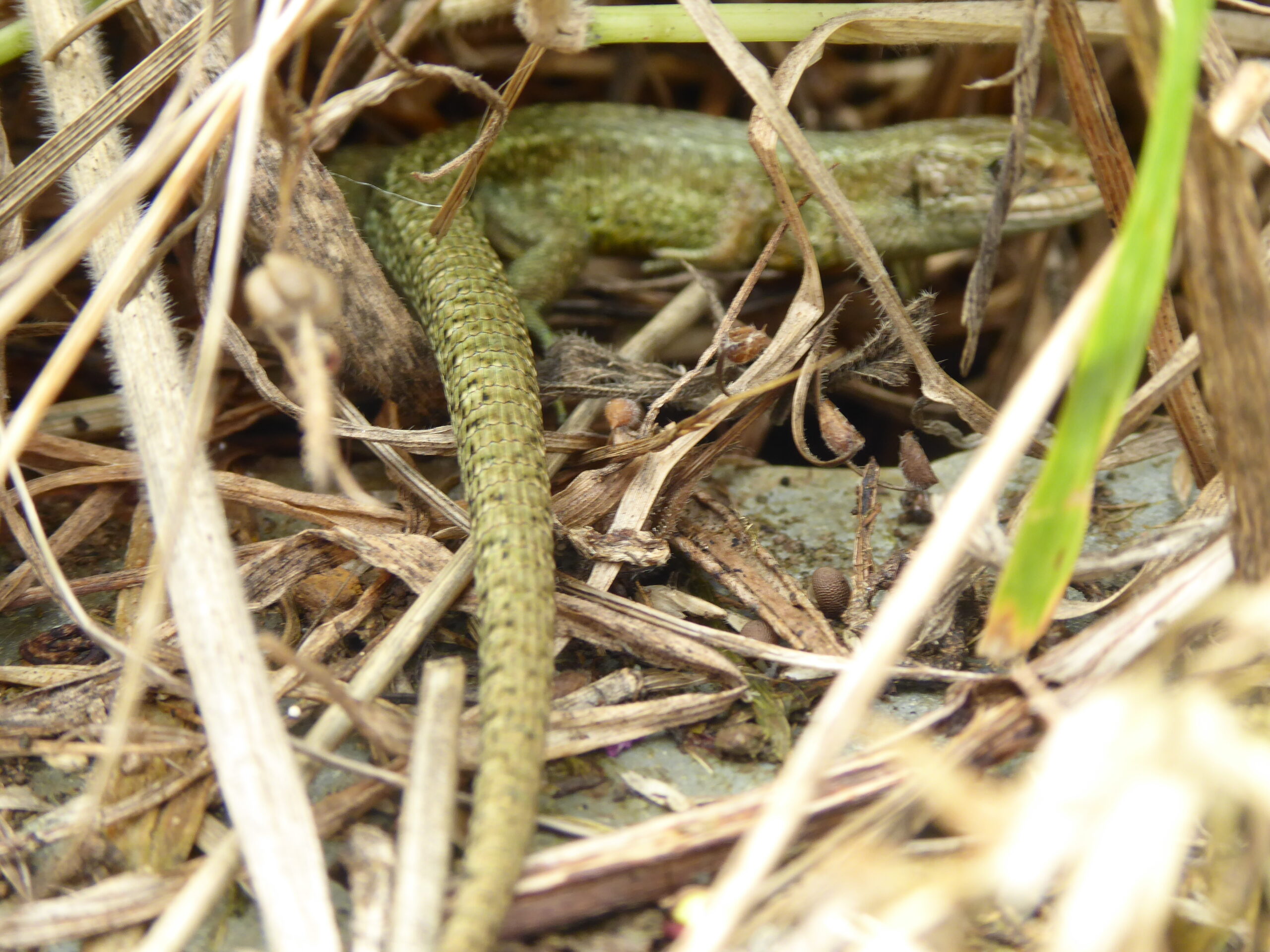
    When we were counting butterflies the other day, it was a sunny patch in an otherwise wet and windy day.  A variety of butterflies and other insects had come out to make the most of the warmth.  We knew we had a lizard or two living in the ramp behind the tiny bit of dry-stone wall.  But we rarely see them, so when Mr C spotted this one as we were trudging back up the steps into the garden, he just said “Don’t move.  Don’t move a muscle.”.  And I froze, as I realised what he had seen.  Then I squirmed round and managed to get a photo.

    He is quite green, but apparently you can get green shades of Common Lizard.  He also seems quite long.   They are around 15cm.  At this time of year they are having young, which are born live and are very tiny.  Then they will feed themselves up ready for hibernation.

    Daisy D

    09 August 2023
    Animals
    Common Lizard
  • Turnip Moth and White Ermine Moth

    Turnip Moth and White Ermine Moth

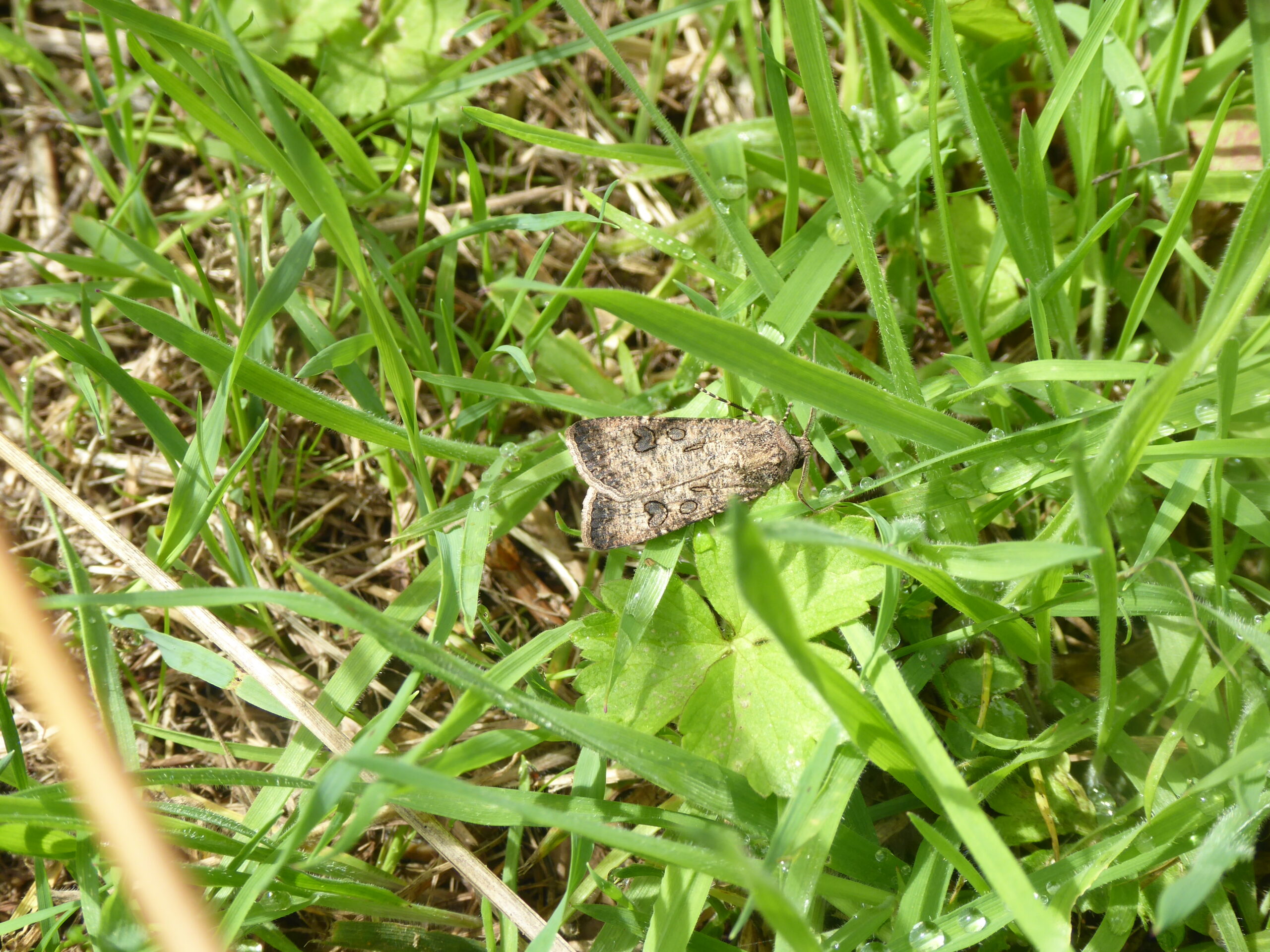
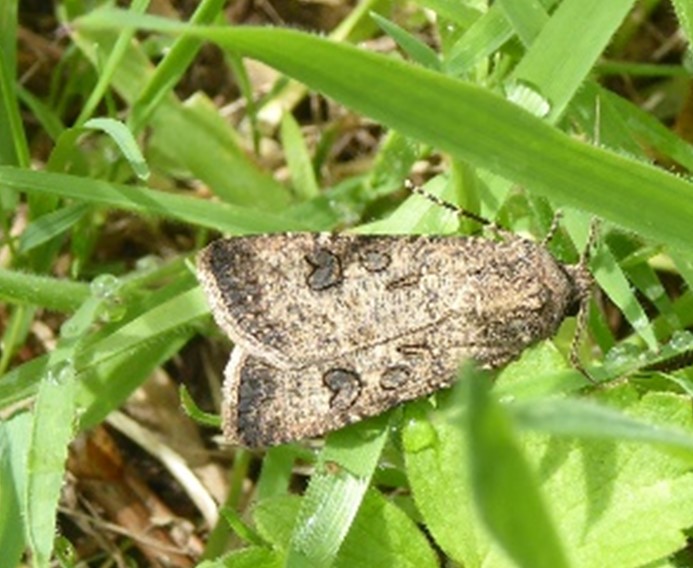
    This moth was just resting in the grass looking like a dead leaf.  I took a photo, and it was only when I looked at the picture I noticed the lovely markings that look as though someone has been drawing hearts and symbols on its wings with felt-tip pens.  The Turnip Moth is in the same family as the Heart and Dart, and the Heart and Club, which all have similar markings, but both the others have solid black darts, rather than outlined ones.

    I also learned another new word, pectinate, which means toothed, like the teeth of a comb.  The antennae are pectinate in order to detect the pheromones of suitable mates more effectively.

    This moth eats the roots of vegetables and herbaceous plants and is mainly found on managed land like gardens, parks, and farms.  It isn’t really far off its course to be in the valley, surrounded by farmland and gardens.

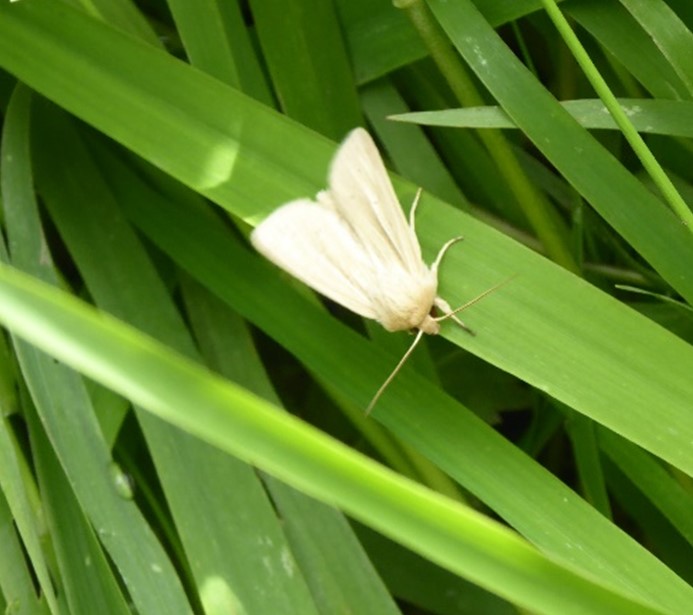
    This is a White Ermine Moth.  It is in the watermeadow because the caterpillars like eating nettles and docks.  The white wings range in appearance from a few black dots to many conjoined black spots.  This one has a few specks of black.  You will also notice the white ‘fur coat’ like a stole over its ‘shoulders’ and smart black and white legs.  This moth has style!

    UPDATE – we saw the caterpillar of this moth on 3 October.

    Daisy D

    08 August 2023
    Butterflies, moths, caterpillars
    Turnip Moth, White Ermine Moth
  • Dark Bush Cricket

    Dark Bush Cricket

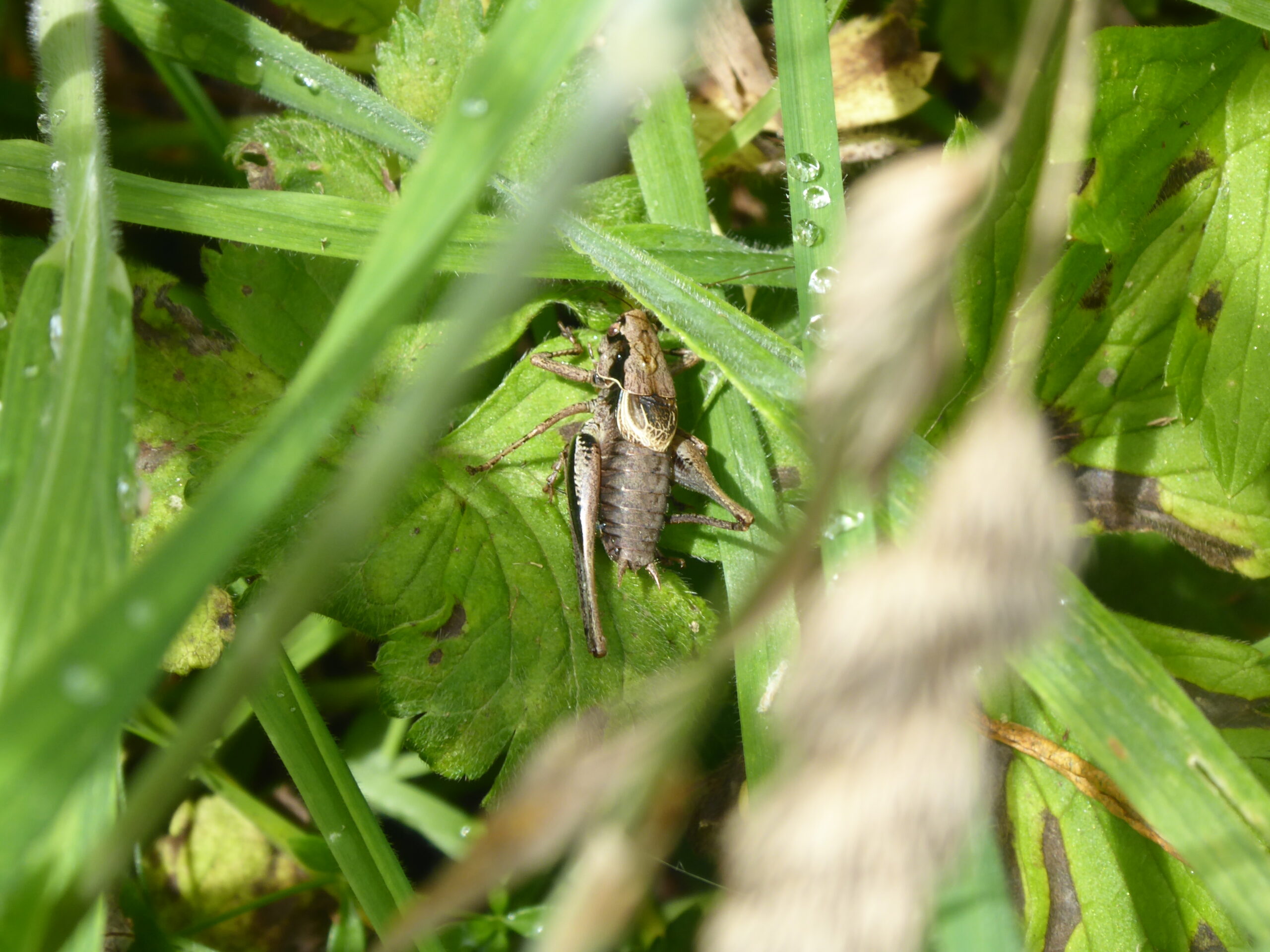
    A few weeks ago I saw a giant green grasshopper in one of the alder trees, but I didn’t have a camera handy, so I was excited to see another large grasshopper, especially when it turned out to be a cricket.  I didn’t even know we had crickets in this country! 

    The photo isn’t brilliant because it was hiding deep down in the undergrowth, and I didn’t want to push the grass out of the way in case it leapt out of sight.  However, you can see the giant legs, tiny wings, and earwig style tail.  What does all this mean?  The two tail appendages are called cerci and mark this cricket out as a male.  The tiny wings with pale edges are also characteristic of the male Dark Bush Cricket.  The females either have even tinier wings or none at all.

    Dark Bush Crickets can be found in a variety of habitats, except for sandy places, and eat brambles, dandelions, and nettles.  We have nettles in abundance and some brambles and dandelions.

    Daisy D

    07 August 2023
    Insects
    Dark Bush Cricket, Earwig
  • Today in the Watermeadow – and Montbretia

    Today in the Watermeadow – and Montbretia

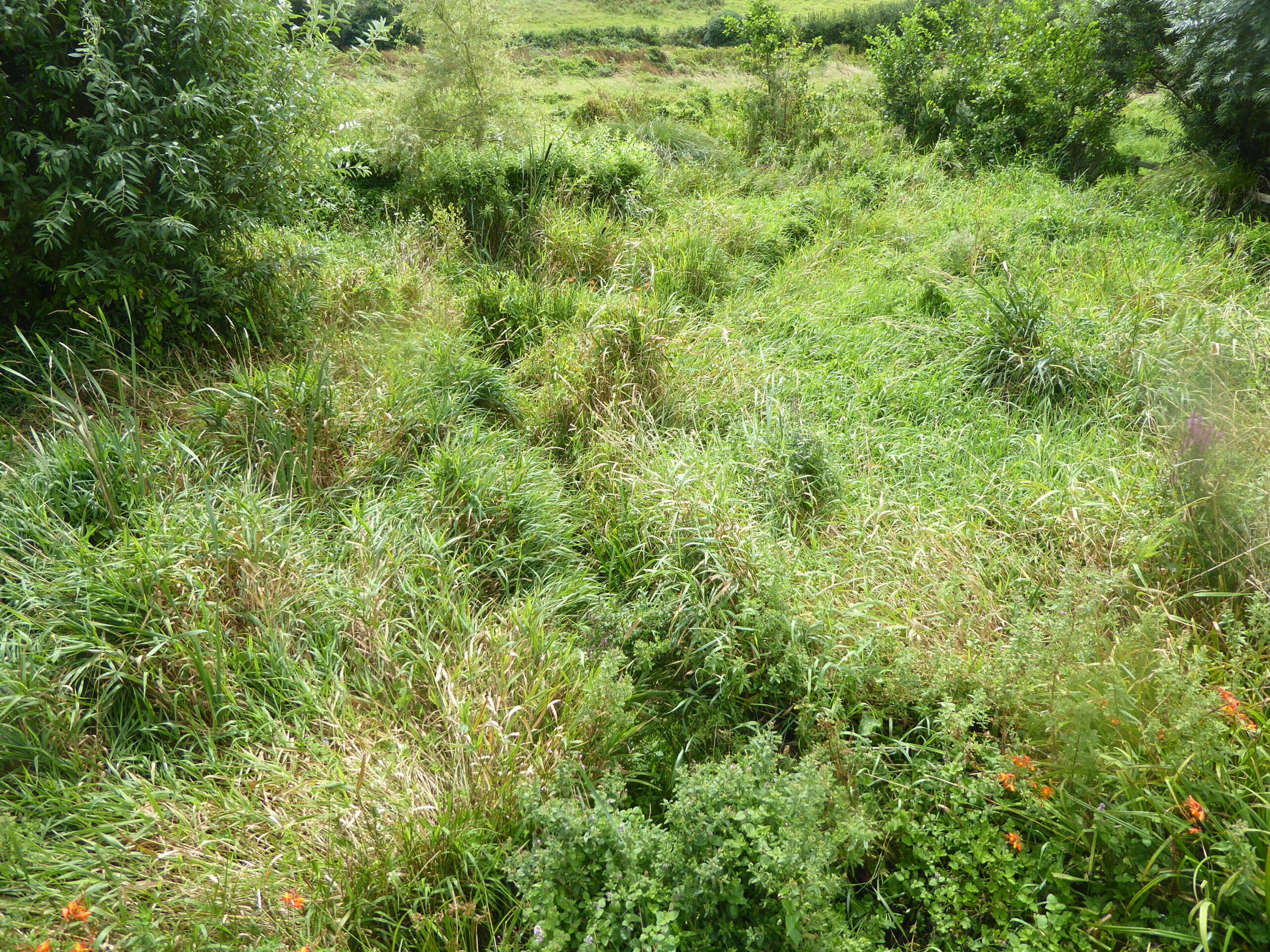
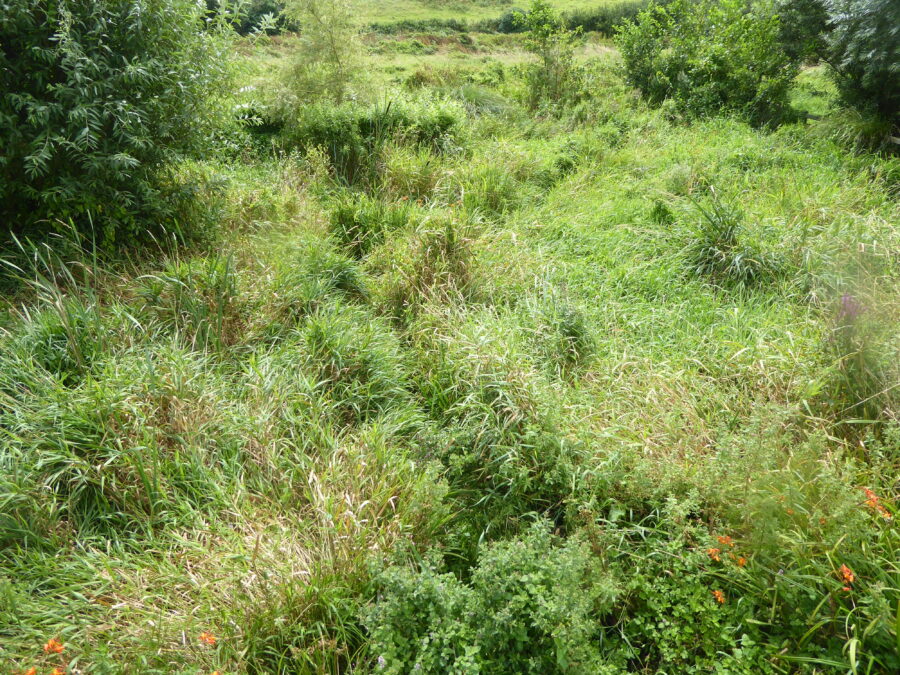
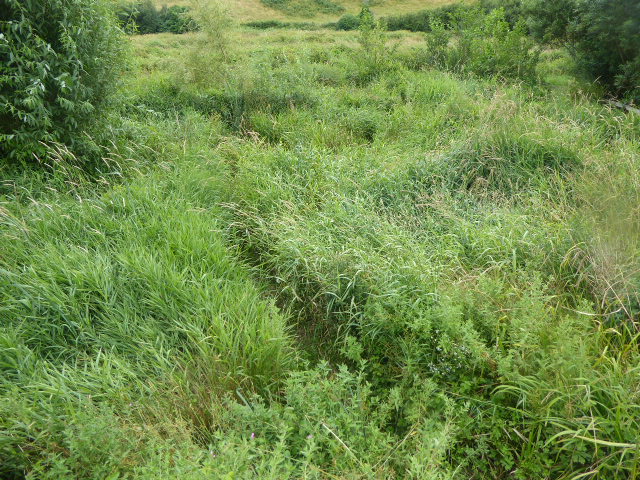
    Although the valley looks greener than last month the watermeadow doesn’t as the grass looks a lot drier.  This is a bit puzzling, but perhaps it’s because we have a higher proportion of grass in our bit, maybe not as much bindweed clambering over everything. 

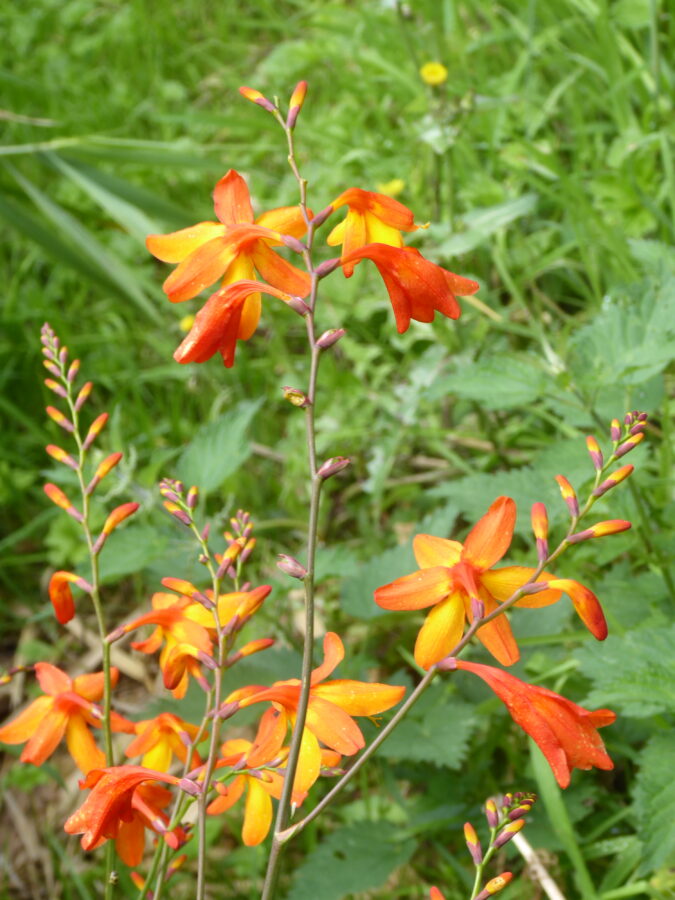
    Pops of colour in the meadow include orange montbretia blooms, spears of purple loosestrife over on the right, and a flourish of water mint in the centre bottom with some purple flowers.  Some bulrushes are starting to spike near the top of the picture where the pond is.  The pathways are very overgrown, as we haven’t had a chance to get down there to tidy them up.

    Here are August and July side-by-side so you can compare and contrast:

    06 August 2023
    06 July 2023

    The montbretia is a bit of anomaly as I’m sure it is new this year.  We used to have a lot in the top garden, and we pulled most of it up as it seemed to be taking over.  Now it appears down in the bottom, so I hope it isn’t going to make a bid for domination.  I wasn’t sure whether to count it as I thought it was a garden plant, but along with hydrangeas and fuchsias, it is not unusual to see it in Cornish hedgerows and verges, and it is looking quite at home down there.

    Daisy D

    06 August 2023
    Flowers, Views
    Montbretia, View
  • Today in the Valley – and a Goldfinch

    Today in the Valley – and a Goldfinch

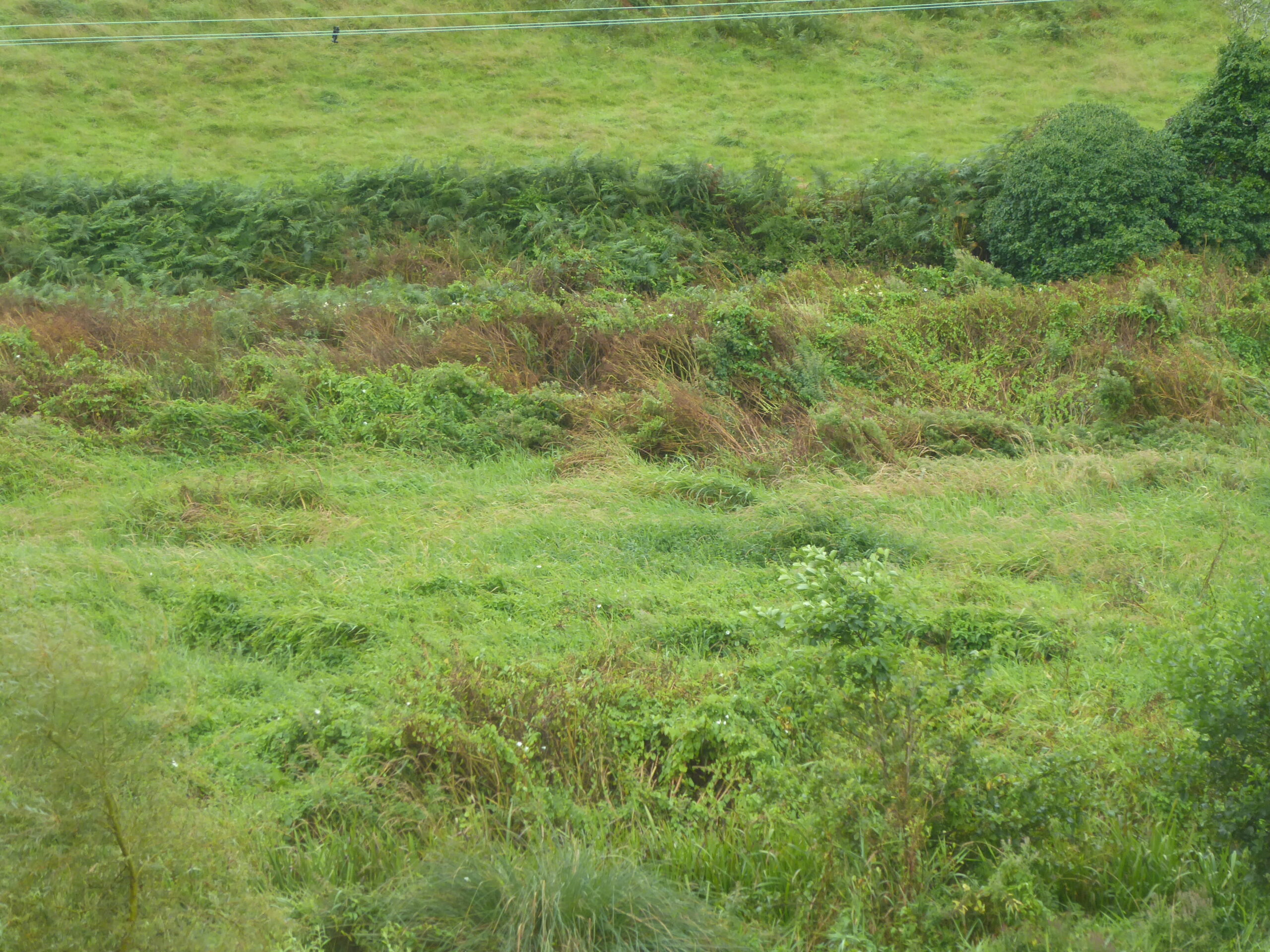
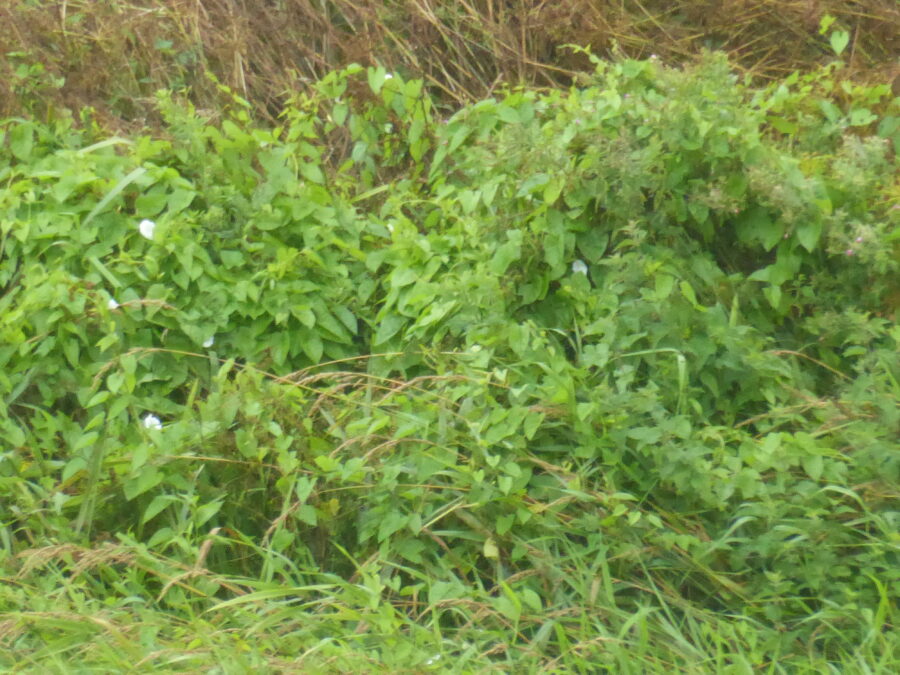
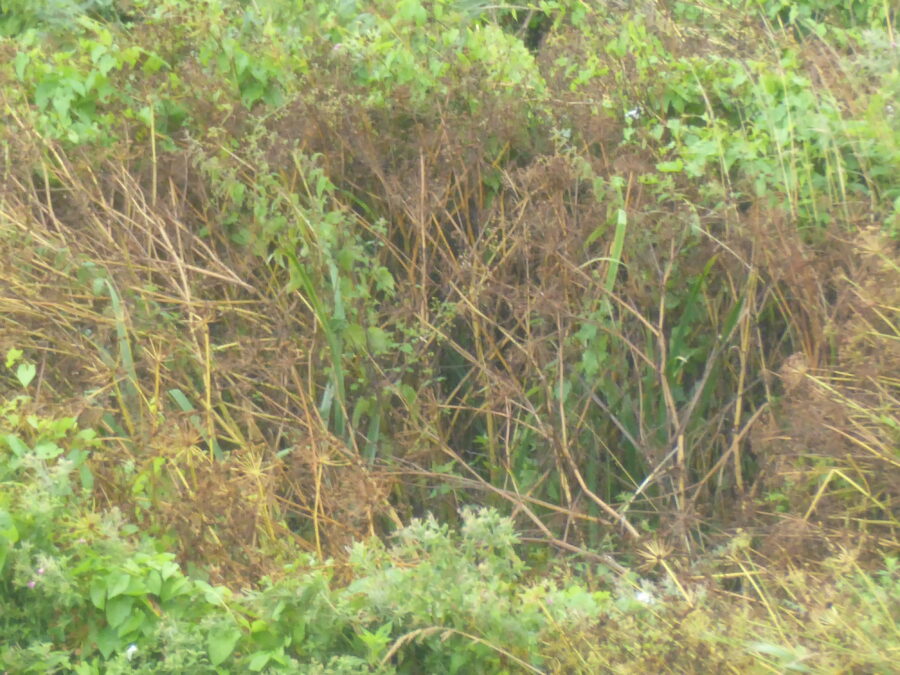
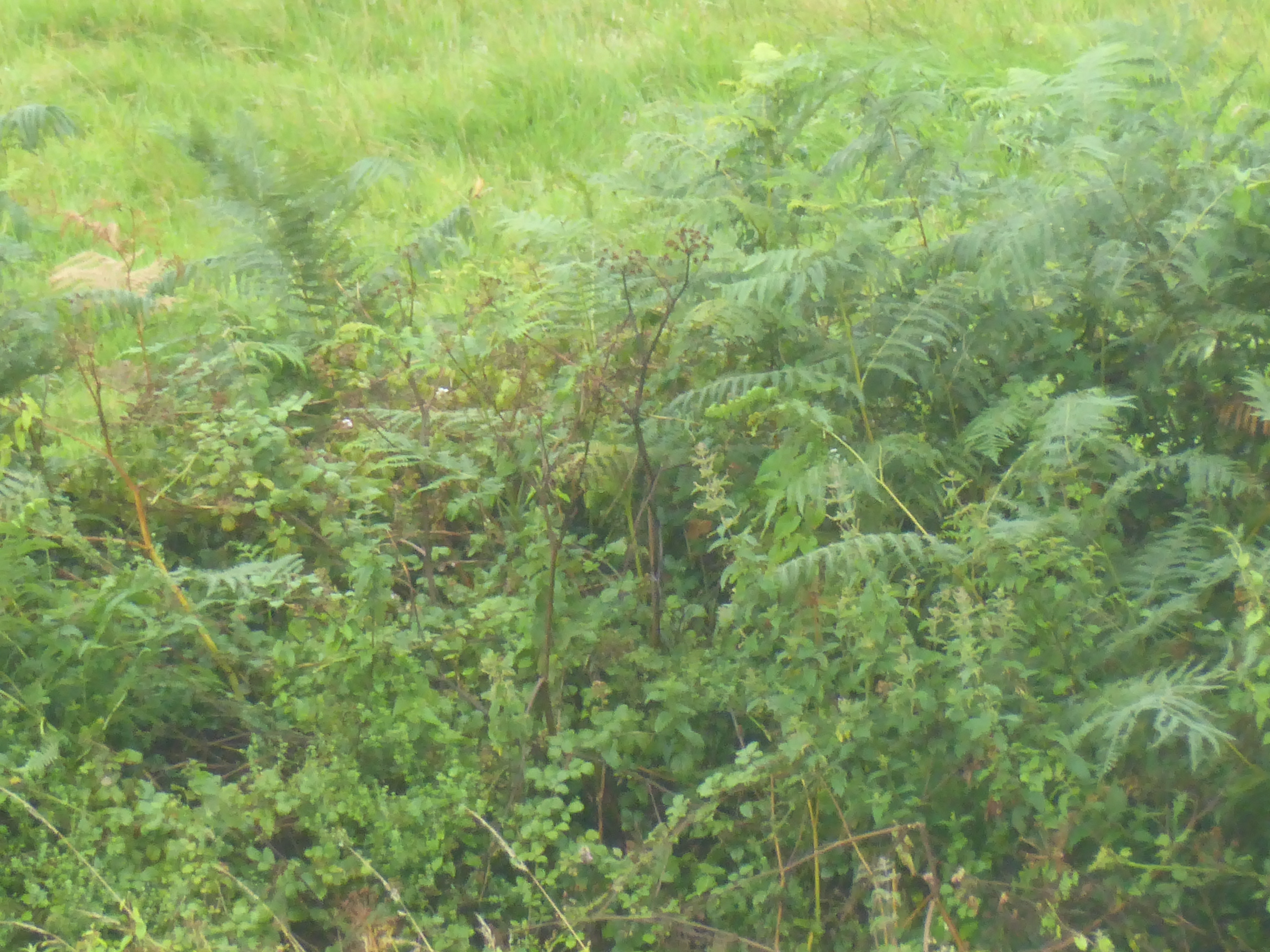
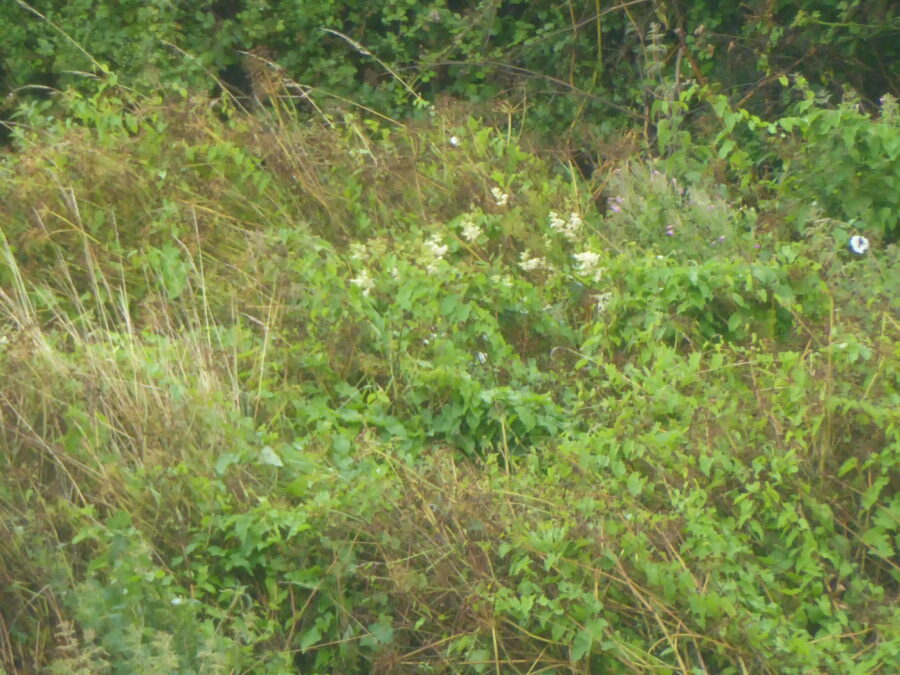
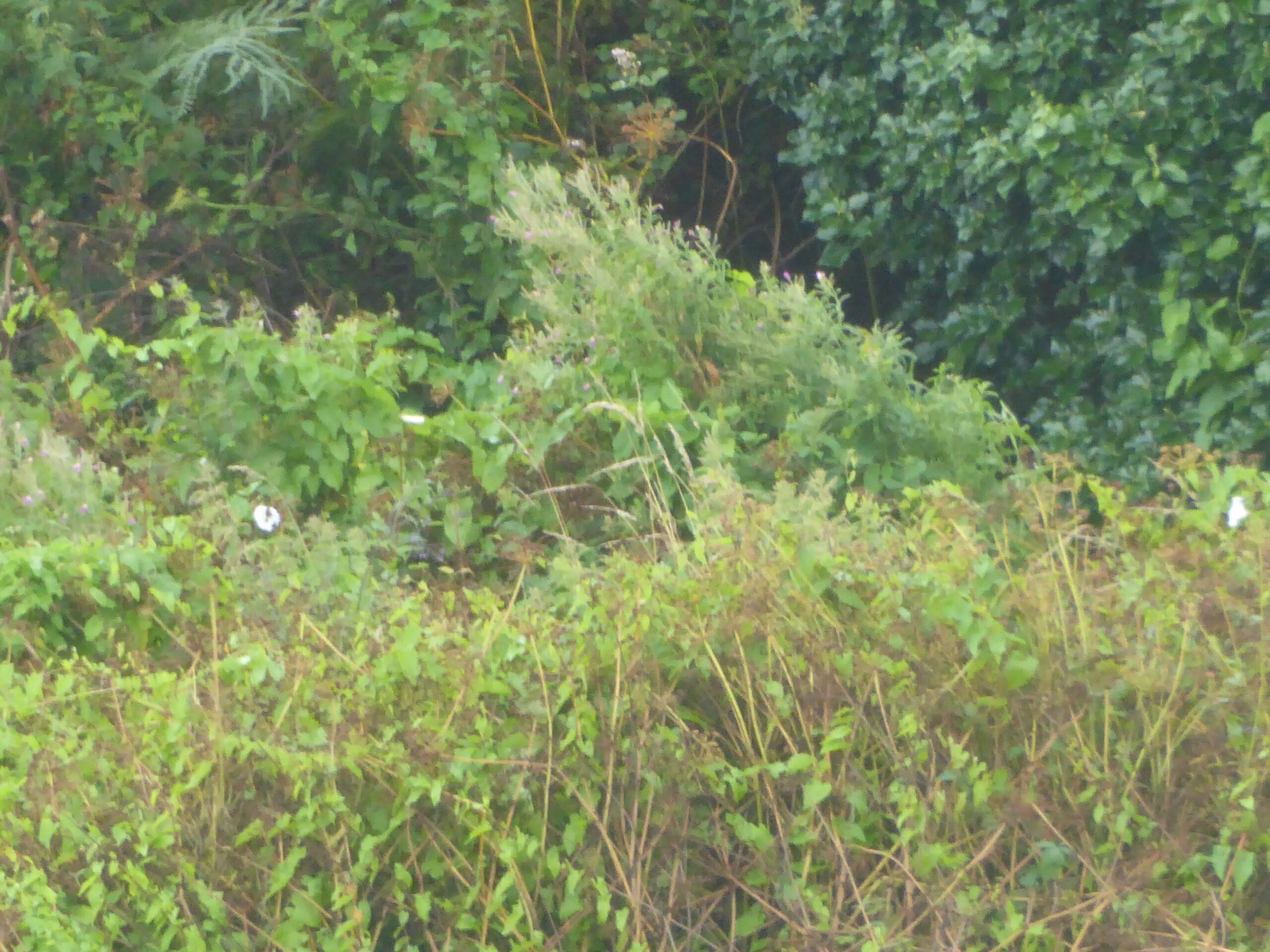
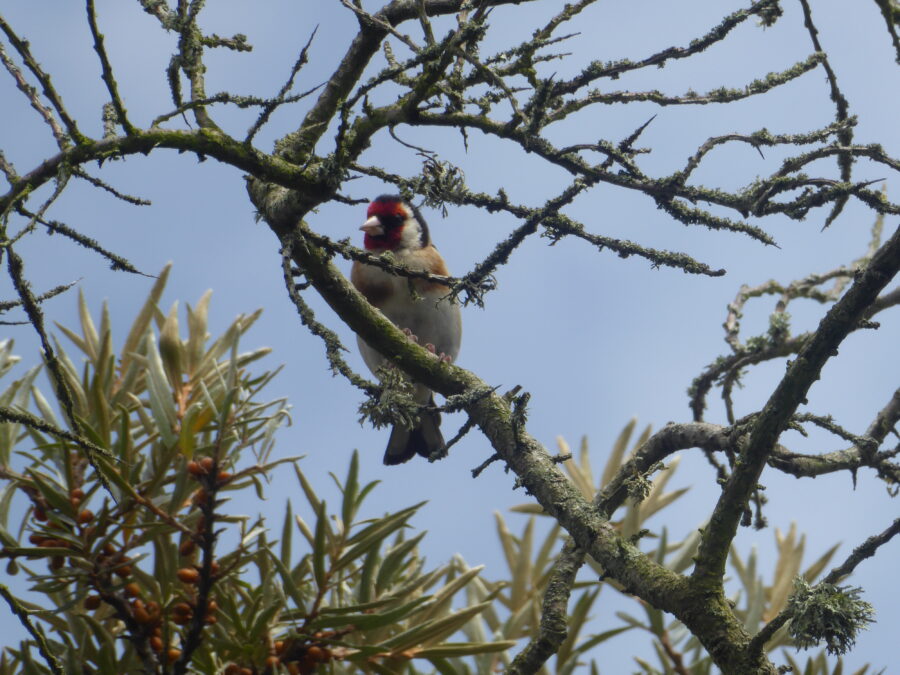
    The valley today is windswept and rainy as yet another storm blows in.  The grass is flattened, and the green clumps are tangles of bindweed tumbling over the skeletons of hemlock water dropwort and other foliage, their white bells scattered over the valley.  The far edge is hemmed with a flourish of bracken.  Any brown you can see is dead HWD.  There are some frothy white flowers in the distance, but I’m not sure what they are, possibly meadowsweet, but I’ll have to investigate when the weather improves.  Finally, there are some swathes of purple, which is willowherb, probably the great willowherb that has been in our patch.  Compared to last month, the valley is greener and lusher, generally, due to all the rain we have had.

    Close-ups:

    Bindweed
    Hemlock Water Dropwort
    Bracken (and other foliage)
    Unidentified white flowers
    Great Willowherb

    To brighten up the post, here is my best goldfinch photo so far, which I took the other day, when we were doing the Big Butterfly Count.  It is sitting near the top of one of the sea buckthorn trees.

    Daisy D

    05 August 2023
    Birds, Views
    Bindweed, Goldfinch, Great Willowherb, Hemlock Water Dropwort
  • What on earth is a Froghopper?

    What on earth is a Froghopper?

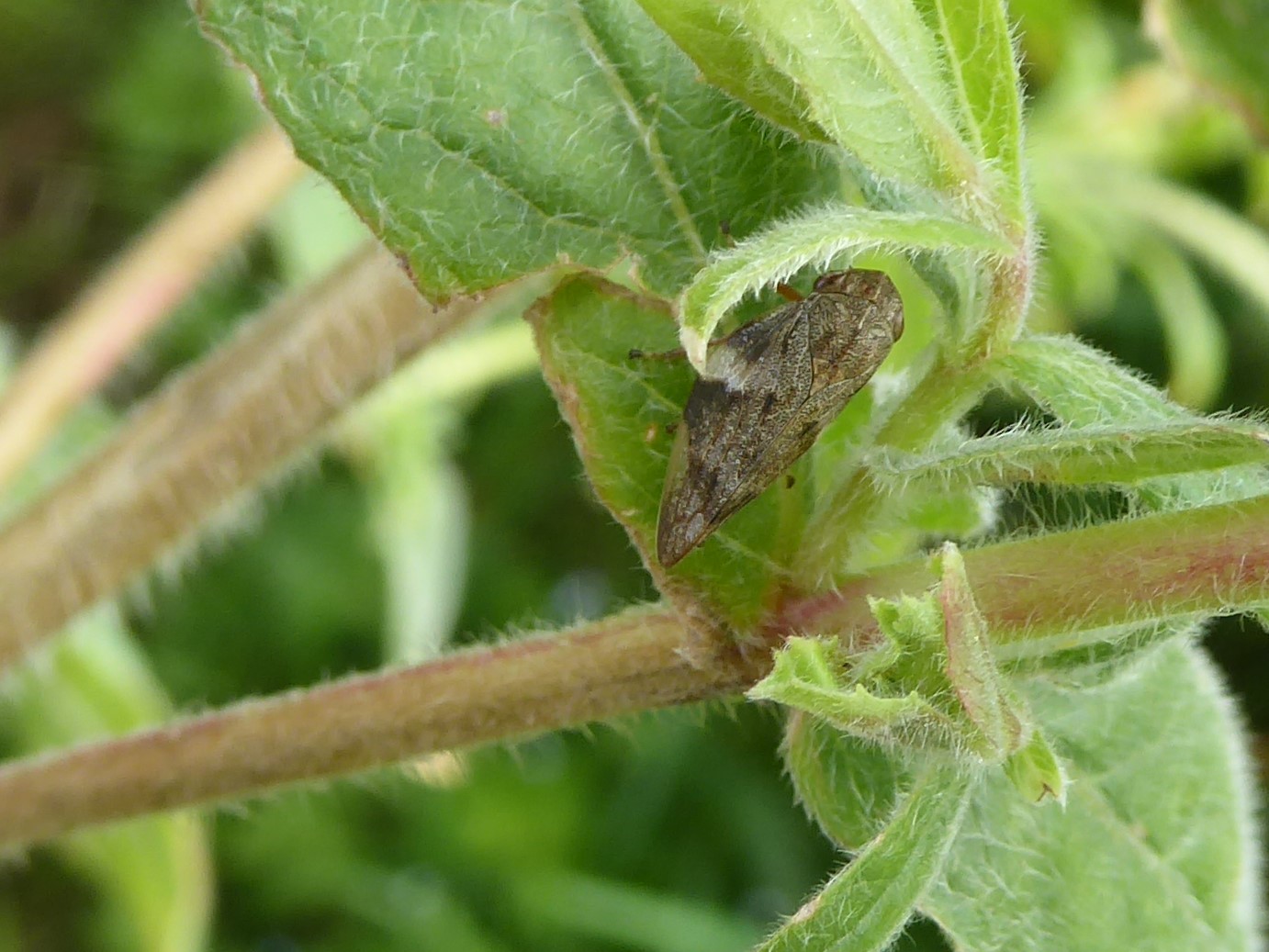
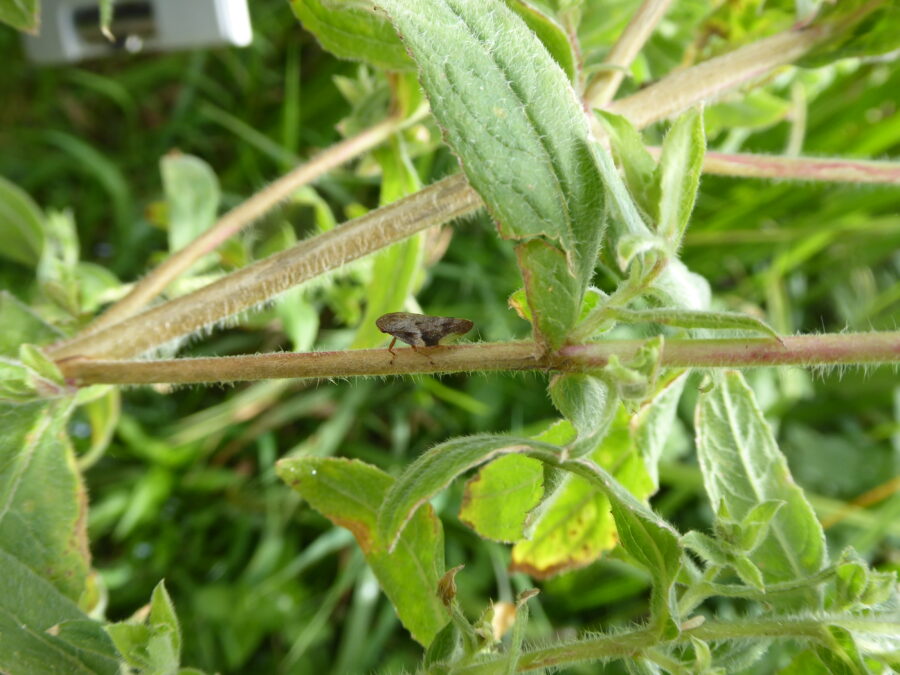
    It turns out that the Froghopper is the insect that makes ‘Cuckoo Spit’ – it is also known as a Spittlebug.  There it is, tucked under that curl of leaf in the picture above.

    The froghopper lives on plant sap, which it sucks out after piercing the stem with a beak on its cone-shaped head.   The cuckoo spit is a protective layer of foam that the baby froghopper makes from regurgitated sap to protect itself from predators like ants and parasitic wasps.  After a couple of weeks the baby froghopper splits its soft skin and emerges as an adult.   The adult is well-equipped with a harder skin and wing cases, and it can escape predators by jumping up to 70cm in the air, even though it is only half a centimetre long.  The adult froghopper lives for about three months.

    There are ten species of froghopper in the UK.  The two main ones are the Common Froghopper and the Black-and-red Froghopper, but I believe this one to be an Alder Froghopper.  It has a more subtle colouring than the Common Froghopper and distinctive white and clear patches, which mark it out as an Alder Froghopper.  I assumed that the Alder Froghopper would prefer Alders, but, in fact, it is happy in a variety of habitats.

    Daisy D

    04 August 2023
    Insects
    Froghopper
  • Female Azure Damselfly and Male Common Darter

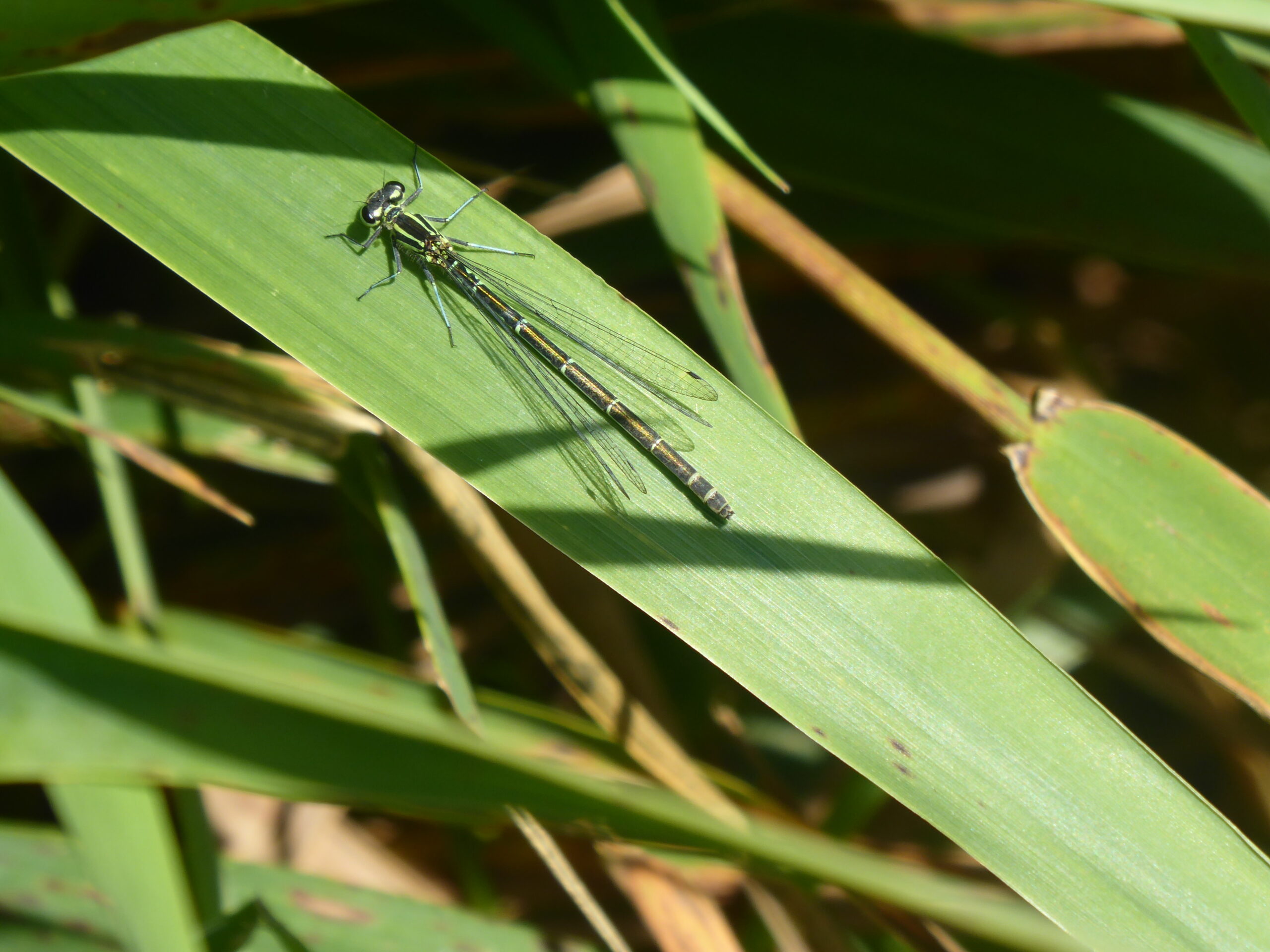
    Female Azure Damselfly and Male Common Darter

    This is a female Azure Damselfly. I got excited because I thought it was a Northern Damselfly.  But they are an endangered species and limited to the Scottish Highlands.  I stared and stared at my photo and various websites trying to identify it. 

    The female of the Northern Damselfly and the green forms of the Common Blue Damselfly and Azure Damselfly are black with thin pale blue stripes, pale blue legs, and pale green stripes on the thorax (upper body) and head. 

    Here are the reasons it could have been a Northern Damselfly:

    1. You can just see that there is a thin black spur-stripe from back to fore on the pale green sides of the thorax.
    2. The green stripes on the top of her thorax are thin.
    3. The markings on her pronotum, which is the bit that joins the back of the head to the body, are black outlined in pale green.

    The green form of the female Common Blue Damselfly is similar but the stripes on her thorax are wider green and there is no black spur on her green sides.

    However, then I found out about the Azure Damselfly, the female of which has similar markings and the shape of the pronotum has a distinctive three-lobed shape.  You can just see in the picture that the pronotum, which is black and outlined in pale green, has a scalloped edge.  So that confirmed it. 

    Also, this is Cornwall, not the Scottish Highlands.

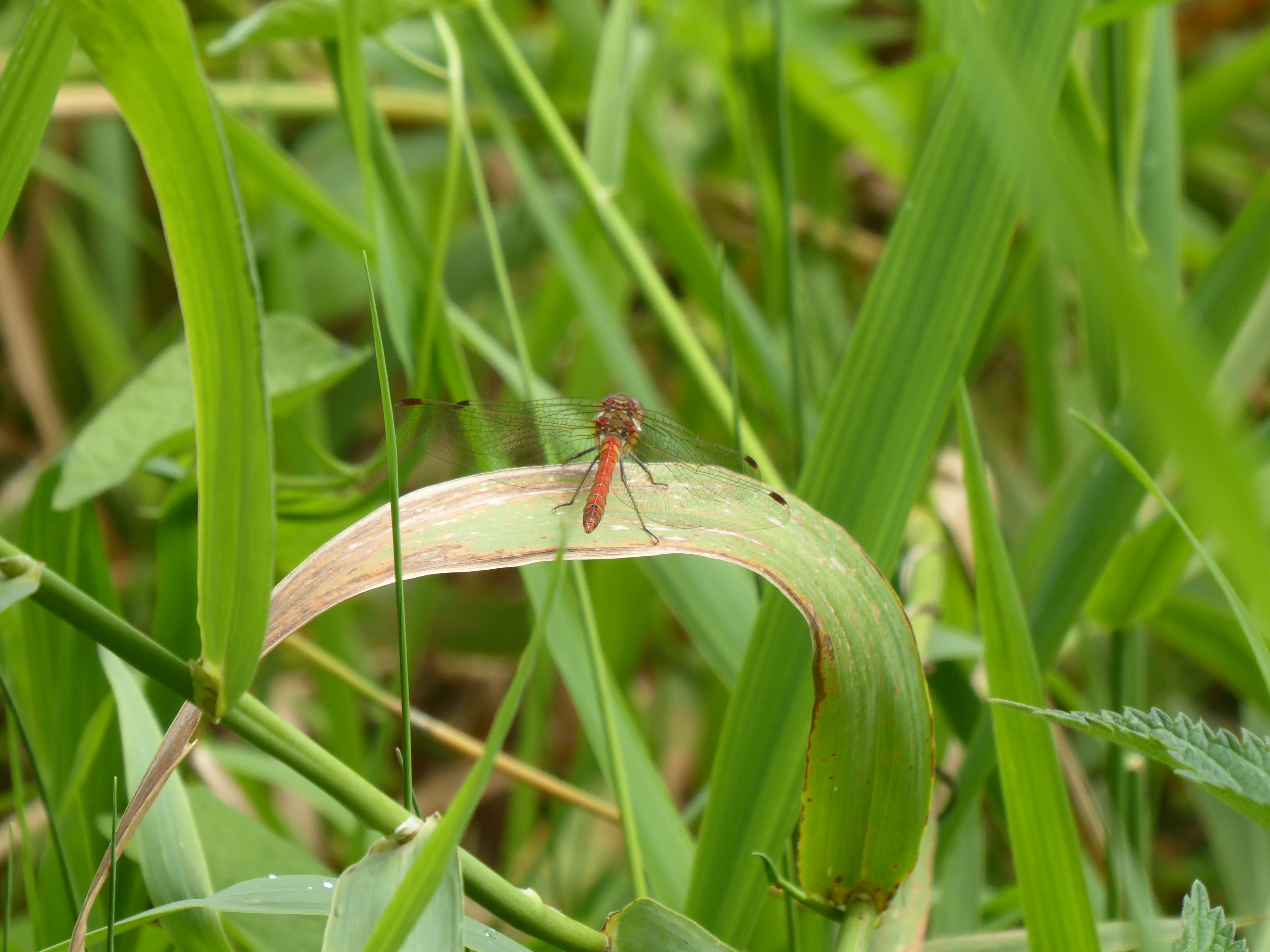
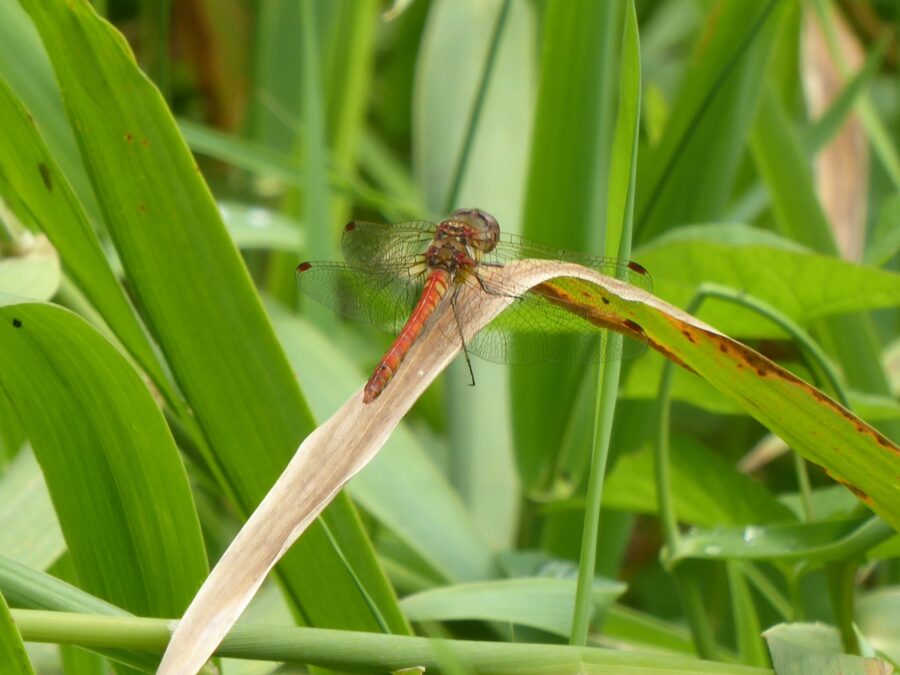
    This is a male Common Darter.  There are three red Darters – the male Common Darter, the Ruddy Darter, which is not really found in the South-West, and the Red Veined Darter, which is a migrant to the South of England.  This is the Common Darter because:

    it is orange-red, not deep red like the other two; it may have pale leg stripes – it’s hard to see – but they are definitely not black like the Ruddy Darter; and from the picture below you can just make out that it has yellow sides to its thorax, but I couldn’t see any facial markings which would help.  Still, I think I have enough clues to be sure that it is a Common Darter.

    Daisy D

    03 August 2023
    Insects
    Azure Damselfly, Common Darter
  • The Big Butterfly Count 2023 – Speckled Wood and Gatekeeper

    The Big Butterfly Count 2023 – Speckled Wood and Gatekeeper

    Yesterday, there was enough sunshine to bring the butterflies out, so we decided to do the Big Butterfly Count 2023 run by Butterfly Conservation.  We had to sit in the garden for 15 minutes and count how many butterflies we saw.  We guessed it would be like the Big Garden Birdwatch where you count how many of each species you see at any one time, otherwise how would you know you hadn’t counted the same one twice.  We were pleased with the results –

    3 x Peacocks

    2 x Green veined whites (I made a point of checking the underwings to make sure the veins were obvious)

    3 x Small whites

    6 x Red Admirals

    2 x Meadow Browns

    2 x Gatekeepers

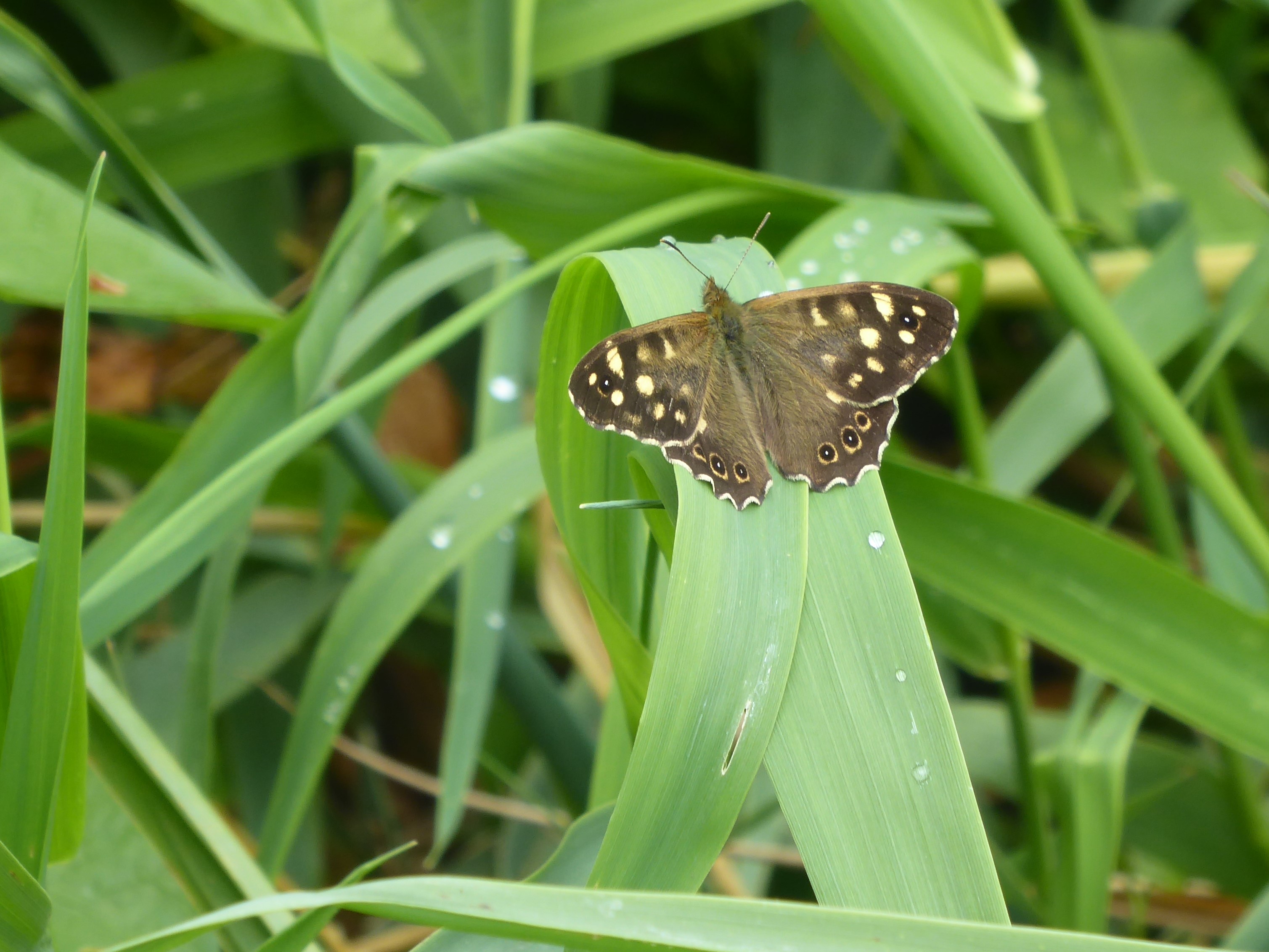
    1 x Speckled Wood

    The Speckled Wood (above picture) was just resting on a blade of grass.  It is so striking with its pale spots.  The spots change in colour according to the location.  They are white in more northerly locations becoming orange to the south.  This one was cream with a hint of orange.  The Speckled Wood obviously prefers woodland, but there is woodland further up the valley and willows, alders, and sea buckthorn in our patch, so it’s not far out of place.

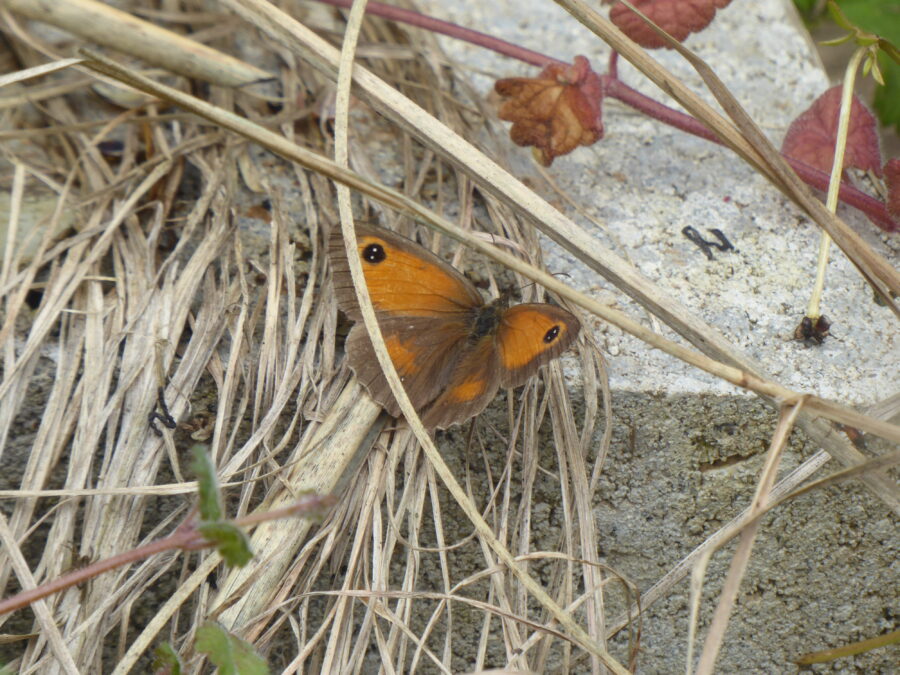
    I was pleased to see a Gatekeeper (also known as the Hedge Brown or Small Meadow Brown).  I found out about it when I was identifying the Meadow Brown and then I was lucky enough to see one on a walk from Par to Polkerris.  It is quite common and is distinctive from the Meadow Brown as it has two white dots in the black spots on its forewings, and more orange generally.  It is found where long grasses are near trees and bushes, as is the case here.

    Daisy D

    02 August 2023
    Butterflies, moths, caterpillars
    Gatekeeper, Meadow Brown, Speckled Wood
Previous Page
1 2 3 4
Next Page

©2023 All rights reserved.

  • October 2024
  • September 2024
  • August 2024
  • July 2024
  • June 2024
  • May 2024
  • April 2024
  • March 2024
  • February 2024
  • January 2024
  • December 2023
  • November 2023
  • October 2023
  • September 2023
  • August 2023
  • July 2023
  • June 2023
  • Spotted in September
  • Spotted in August
  • Spotted in July
  • Spotted in June
  • Conclusions