A Year in the Valley

A Year in the Valley

Discovering the flora and fauna in a small square of Portmellon Valley

  • BioBlitz
  • The Rules
  • Tally
  • Map
  • Bird Page
  • Contact Form
  • Brown Butterflies – Wall Brown and Meadow Brown

    Brown Butterflies – Wall Brown and Meadow Brown

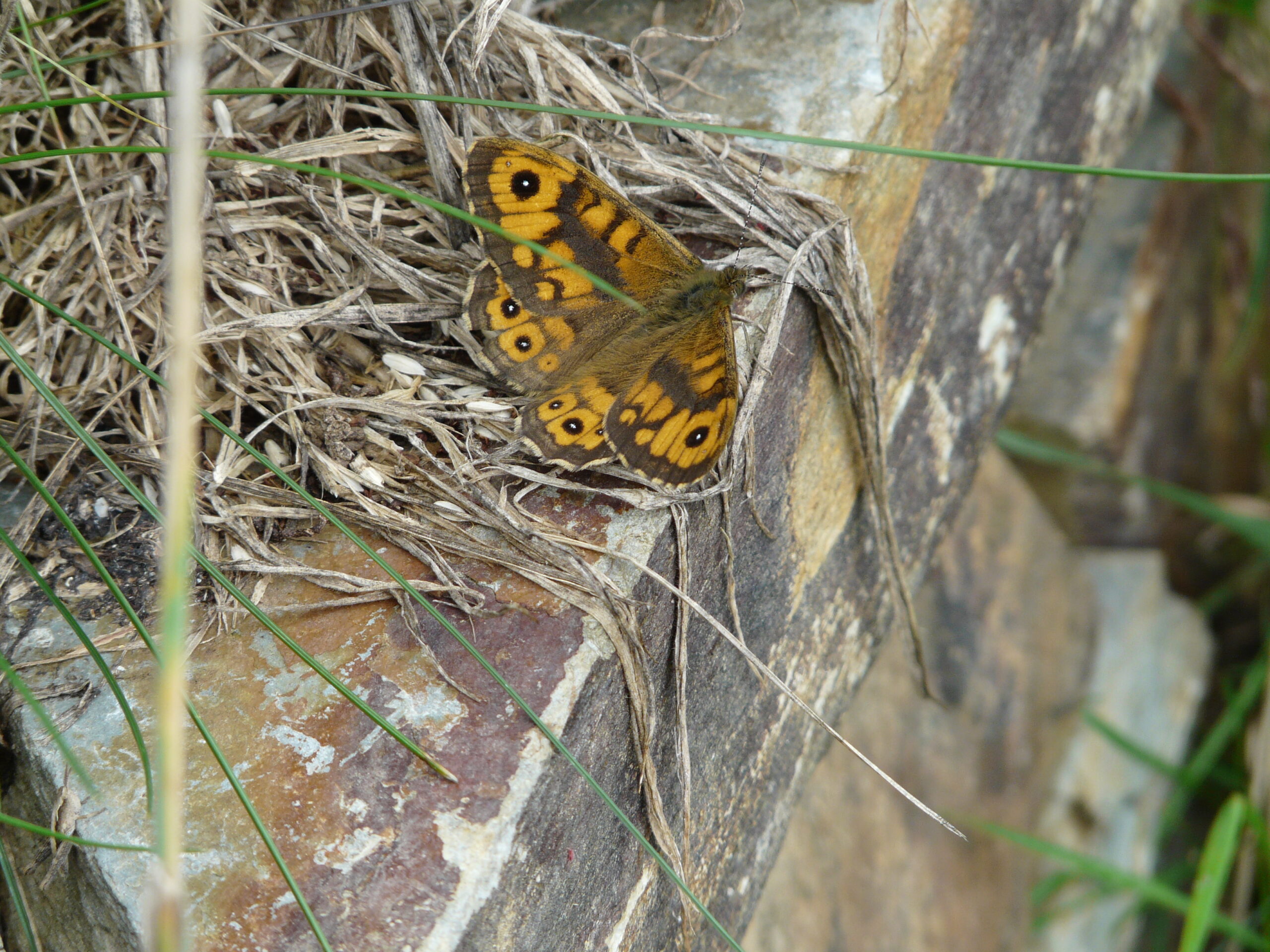
    This is the Wall Brown, living up to its name resting on a bit of dry-stone wall that stops our ramp from collapsing onto the steps.   Look how its white dots seem to pop out of the picture! 

    I wanted to know why so many butterflies have vibrant dots.  There are a few hypotheses about this.  The large ‘eyespots’ like those of the Peacock butterfly will fool predators into thinking that the eyes are of something much larger and more dangerous.  At the very least some are put off or confused by a jazzy wing pattern.  Smaller bright dots, like those on the Wall Brown serve as targets to divert predators from fatally wounding the butterfly by going for its head or body.

    The Wall Brown is found in grassland and the caterpillars are found on various grasses including Cocksfoot grass, which we have here.
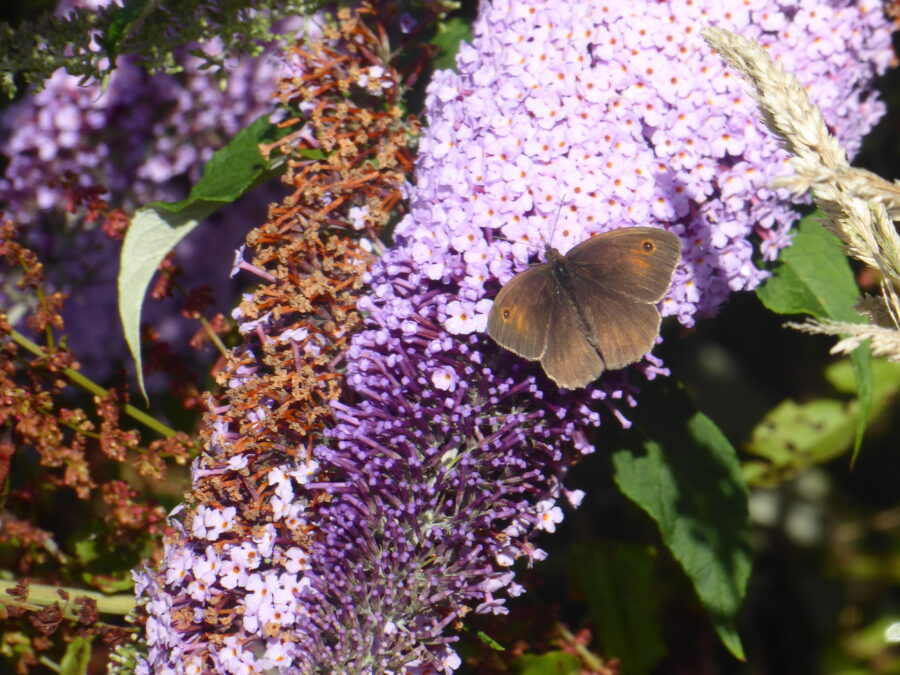
    The Meadow Brown is also found in grassland and the caterpillars would have been enjoying our Cocksfoot grass.  It is quite common, and we have been chasing this one for a couple of weeks trying to get a good photograph.  At last it settled on the buddleia which overhangs our ramp. 
    Daisy D

    25 July 2023
    Butterflies, moths, caterpillars
    Meadow Brown, Wall Brown
  • Tortoiseshell and Small White

    Tortoiseshell and Small White

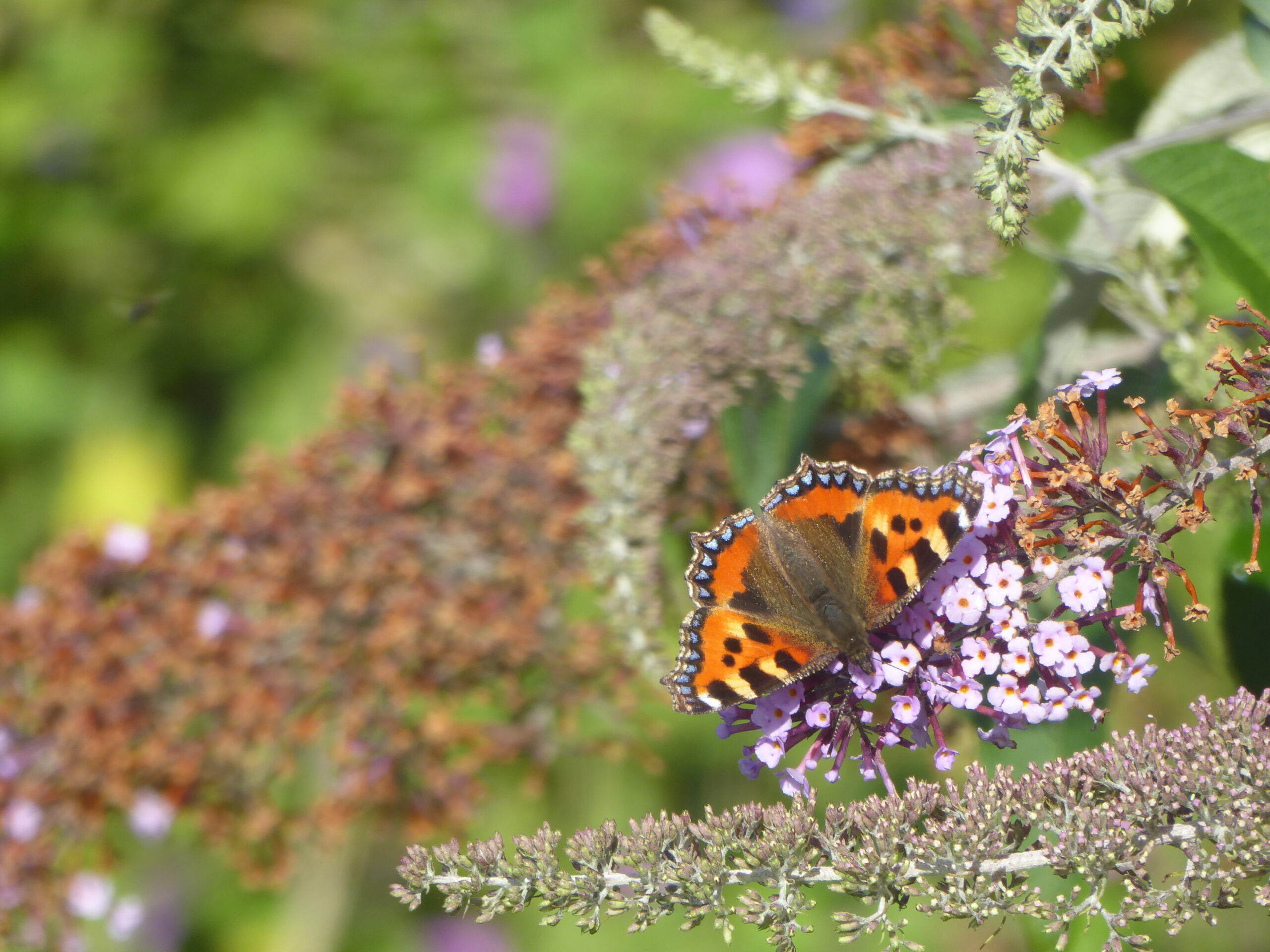
    I just love this butterfly!  It has such intricate markings – so beautiful and I particularly like the way its blue mosaic edging seems to mimic the tiny buddleia blooms it’s feeding from.  This is a Small Tortoiseshell.  The Large Tortoiseshell has more pronounced ‘swallow tails’ to its wings, but a less striking border.  Also it is declining in numbers, whereas the Small Tortoiseshell is more common.  Back in my Nettles post, small tortoiseshells were mentioned as a species whose caterpillars eat nettles.  I’d say it’s definitely worth a few nettle stings to see a sight like this.

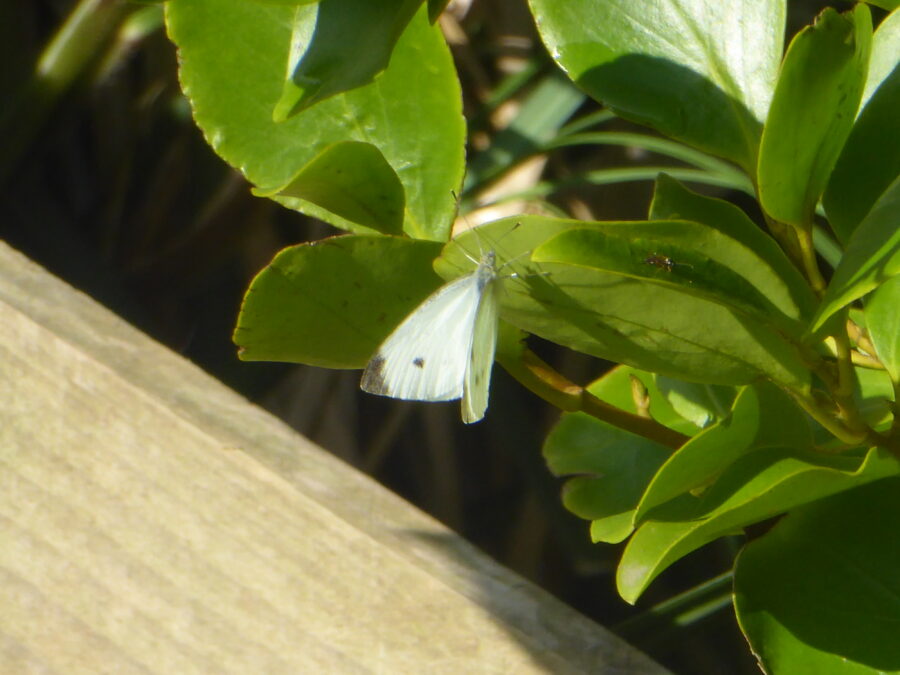
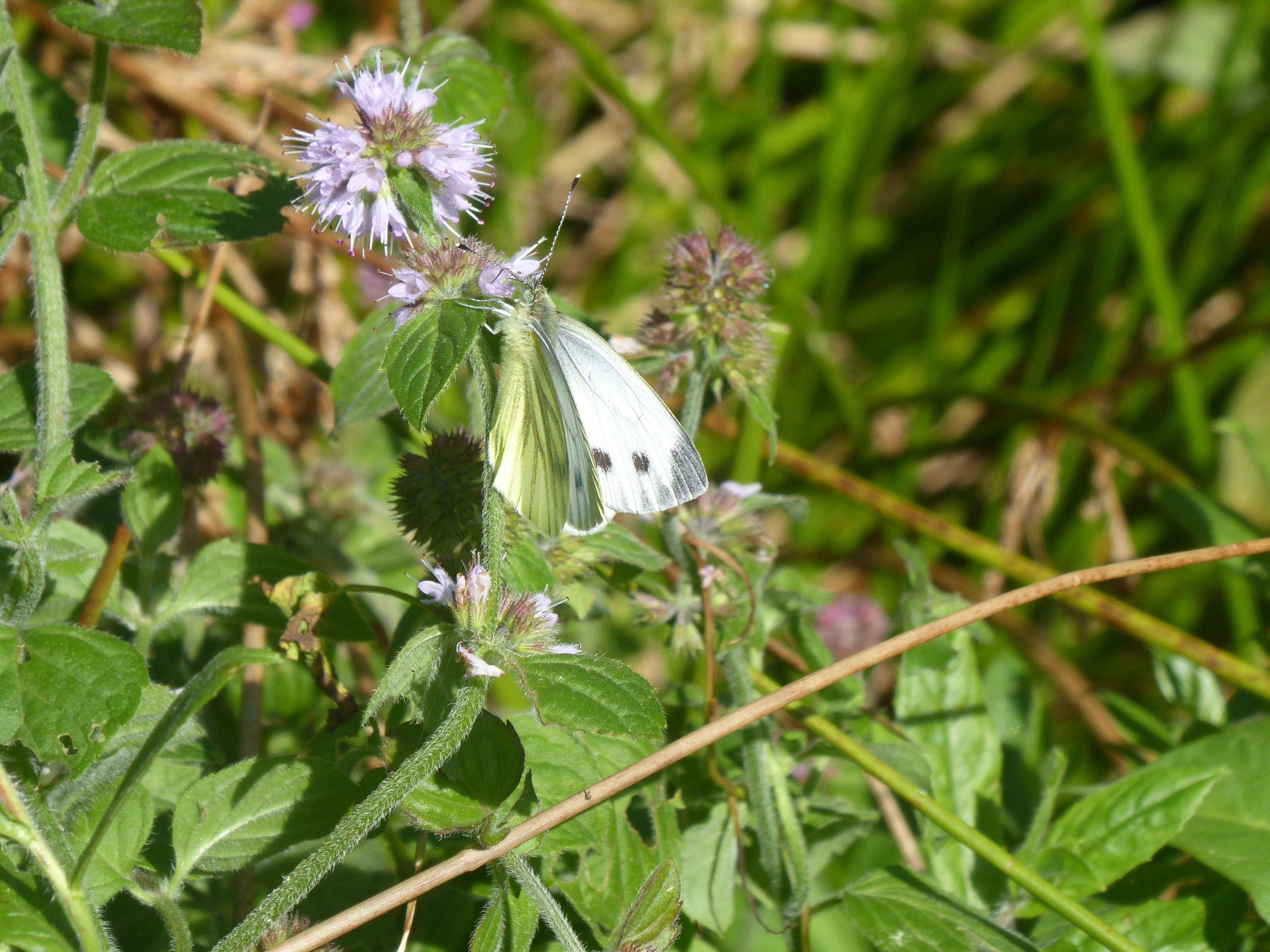
    I had to look long and hard at this one to make sure that it was actually a Small White.  I went back to my Green-veined White post.  Had I got that one wrong?  The two seemed so similar.  I read and followed my diagnostic process all over again.  Sure enough, there were differences.  Obviously neither are the Orange-tip or the Large White.  The Green-veined has more noticeable veins, the black tip goes patchy across the upper edge of the fore-wing, darker wing-backs and two black dots which mark it out as female.  The Small White has definite black wing tips, lighter wing-backs and one dot, which means it is a male.

    Then, Mr C pointed out that the wing-shapes differ.  The Small White has quite a triangular fore-wing, while the Green-veined White’s is more rounded in shape.  Below I’ve put the two photos side-by-side so you can make your own comparisons.

    Daisy D

    22 July 2023
    Butterflies, moths, caterpillars
    Small White, Tortoiseshell
  • Peacock and Green-veined White Butterflies

    Peacock and Green-veined White Butterflies

    So far, I have managed to photograph the Red Admiral, Peacock, and Green-veined White butterflies in the watermeadow.  I have also seen brown and blue butterflies, but they flew around too much to be photographed and formally identified.

    There are four white butterflies to choose from.  The Orange Tip can be discounted from our investigations, but I was trying to work out whether it was the Large White (Cabbage White), Small White or Green-veined White.

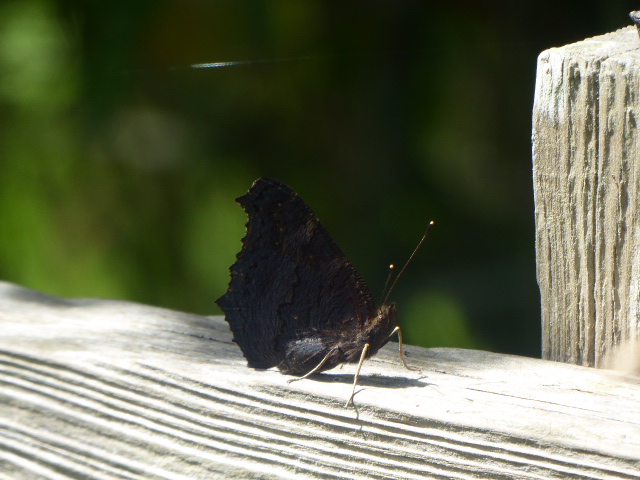
    This is not what the Peacock usually looks like, but it is resting on the fence, so you can only see the back of its wings.  It flew away before I could focus on its outstretched wings.

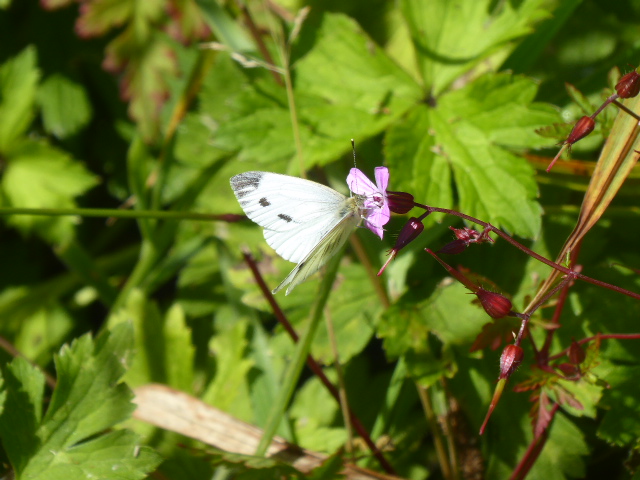
    The black tips are the key.  They are not dark black across the edges of the wings, like the Large White.  So that leaves the Small White or the Green-veined White.  They are a bit patchy across the edges, which points to the Green-veined white.  The veins are fairly noticeable, though I didn’t think that was conclusive by itself.  However, you can see a yellow and black stripy look to the back of the wings.  This marks it out as a Green-veined White, as the Small White has plain creamy wing-backs.  The females have two black spots.

    The Green-veined White is feeding from a Herb Robert flower. The Green-veined White is feeding from a Herb Robert flower.  It also likes the Cuckoo Flower and prefers to live in damp areas.

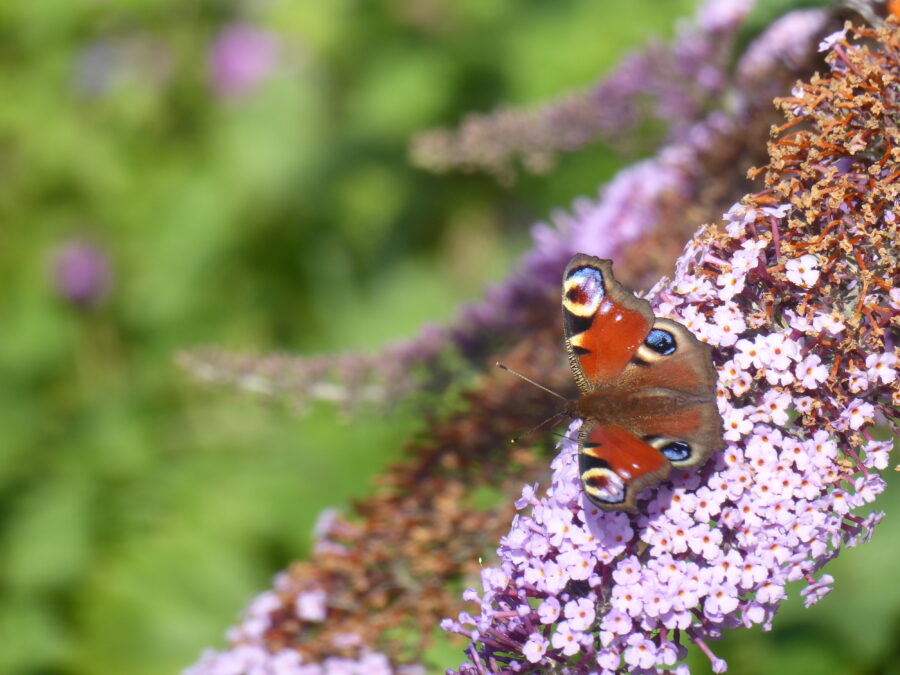
    Peacock update 17/07/23: I managed to take a picture of the glorious Peacock butterfly.

    Green-veined White update 05/09/23: on a day when everything flew, hopped or scuttled away from me, this charming butterfly proved without a doubt that green-veined whites are still visiting our watermeadow!

    Daisy D

    11 July 2023
    Butterflies, moths, caterpillars
    Green-veined White, Herb Robert, Peacock, Peacock Butterfly
  • Common Carpet Moth

    Common Carpet Moth

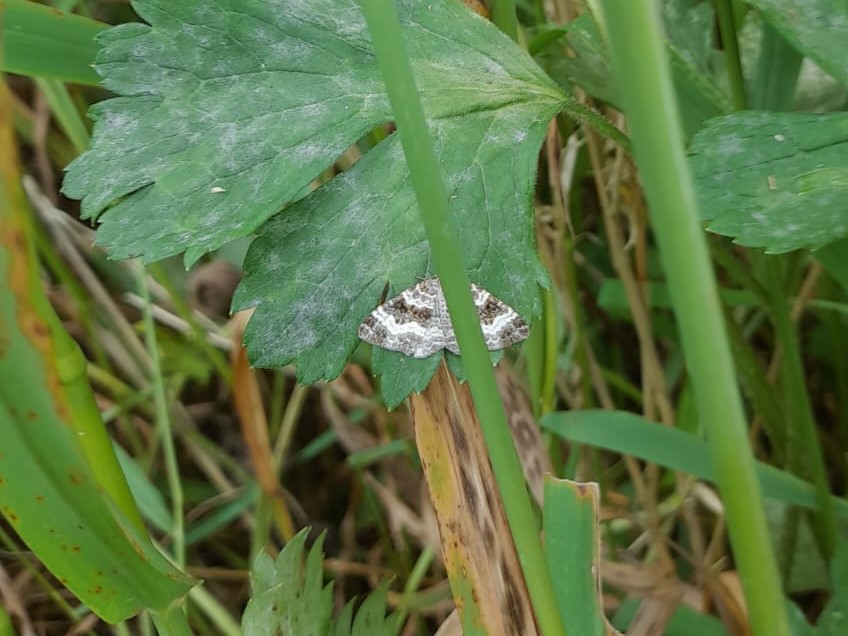
    When Mr C showed me this photo that he had taken, I was amazed at the striking monochrome patterns on this moth.  I was a bit upset that I hadn’t seen it myself, but as this journal is essentially a tally of the species in the watermeadow, I decided that it wasn’t cheating.  And it’s good that Mr C is getting excited about this project.  And I still had to identify it.  It turns out – surprise! surprise! – that there are at least three types of Carpet Moth with similar markings. 

    The Common Carpet, the Garden Carpet and the Wood Carpet are all moths with black and white markings.  (Try searching for information about these and not getting bombarded with flooring websites!!)

    See the broad black wavy line halfway up the wings?  Well, the Garden Carpet just has a black patch on the far side of each wing.  In effect, the line is broken in the middle.

    That just leaves the Common Carpet and the Wood Carpet.  Now, look at the thick white wavy line below the thick black one we’ve just been looking at.  Notice that it is split with a faint black line, giving a marmite sandwich effect.  Well, that means it’s a Common Carpet, because the Wood Carpet just has a thick white band, not split in two.

    Although they are called Carpet moths, the Common Carpet feasts on cleavers and bedstraws, which as previously mentioned can be found in our watermeadow.

    Daisy D

    09 July 2023
    Butterflies, moths, caterpillars
    Cleavers, Common Carpet Moth, Marsh Bedstraw
  • The Watermeadow in July

    The Watermeadow in July

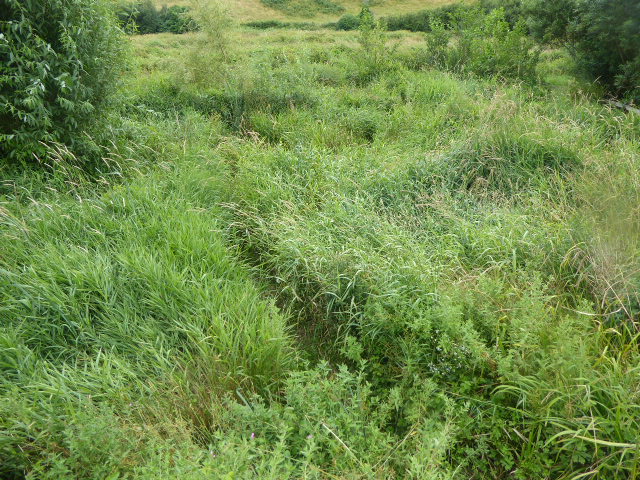
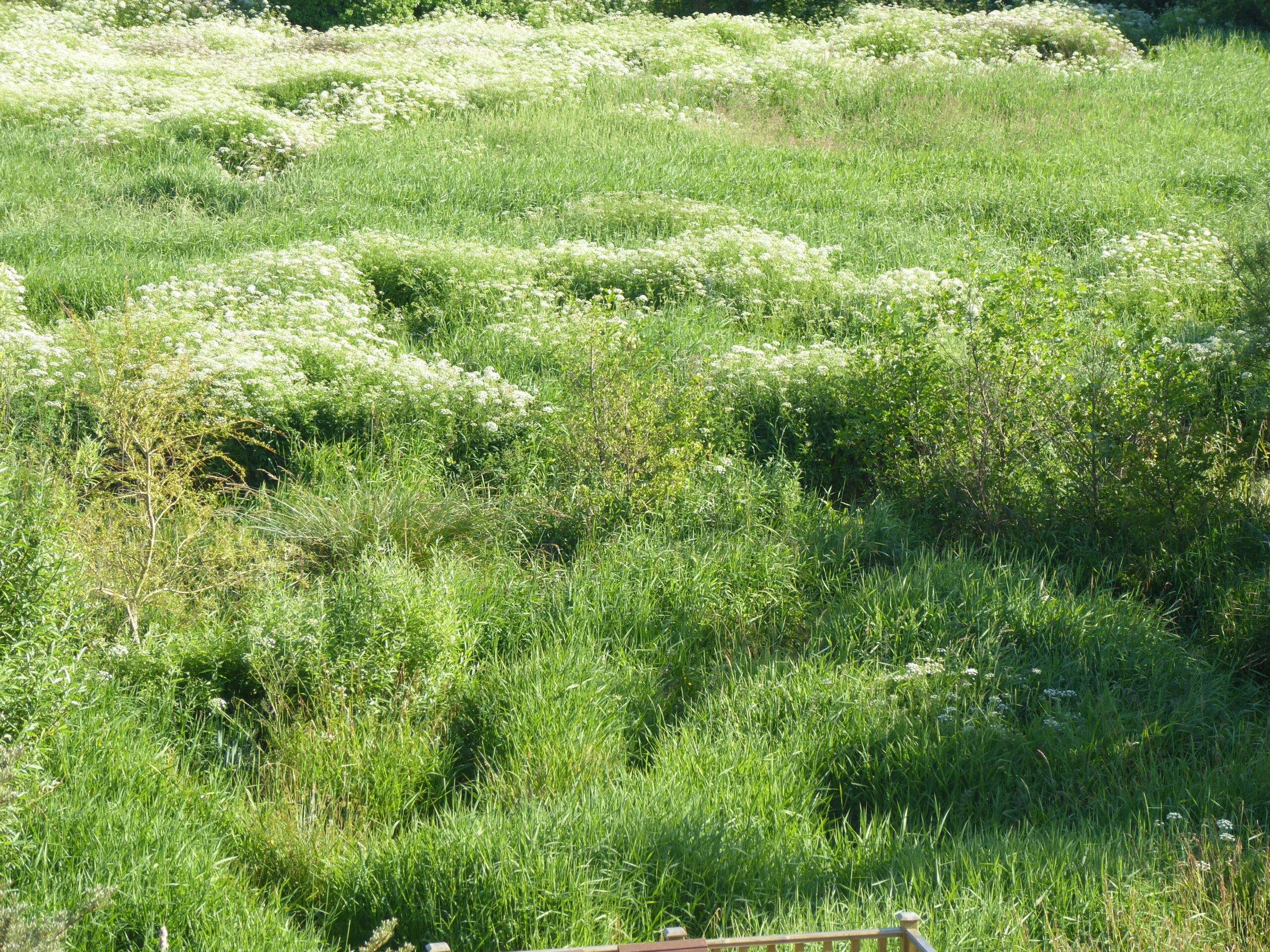
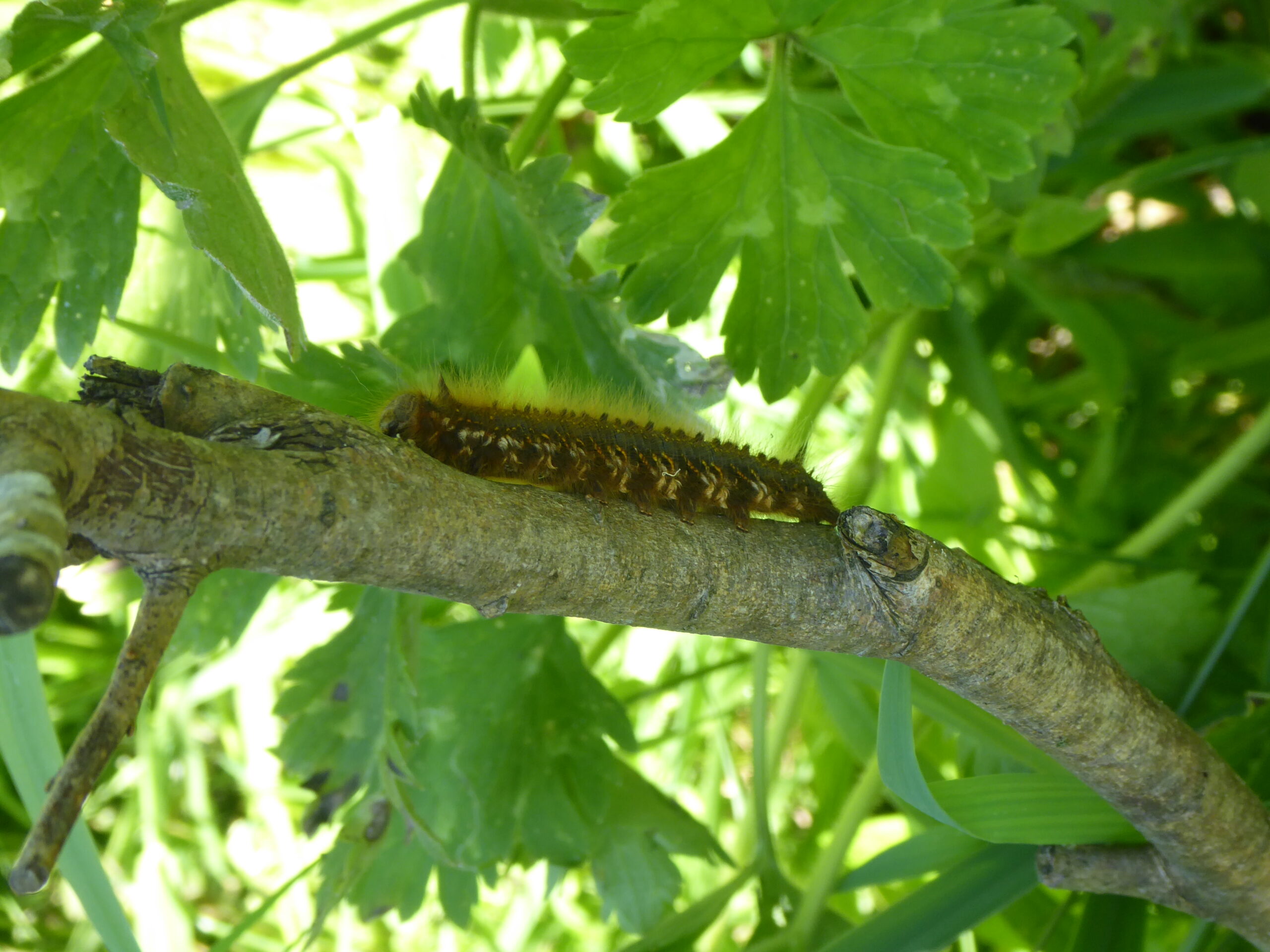
    We went for a walk round the watermeadow and pushed our way through the overhanging grass down the paths.  We saw baby frogs, but they hopped out of the way before I could focus the camera on them.  We saw a Drinker Moth caterpillar again.  It was huge, around 6cm and quite chubby.  We also saw a dead animal, very dead, very smelly.  I thought it was a rat, but it had a short furry tail, so I’m wondering whether it was a water vole, as even though it was flat, it still looked too large, wet, and dark to be a field vole.   It would be very exciting if we had live water voles in the stream – I’ve never seen them in our garden before.  Signs to look for are a) a burrow with nibbled grass ‘driveway’ b) a pile of grass stems nibbled at a 45° angle, like a quill, as they tend to eat in a regular place, and c) tiny oval droppings. 

    Again, compared to last month the watermeadow looks ravaged and untidy.  The grass is longer and brushed with its pink-ish blooms.

    Daisy D

    06 July 2023
    Butterflies, moths, caterpillars
    Drinker Moth, Frog, Reed Canary Grass, View, Water Vole
  • Red Admiral

    Red Admiral

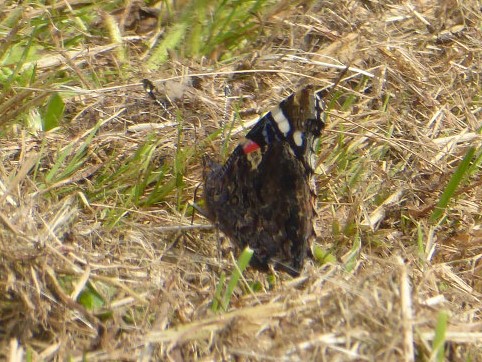
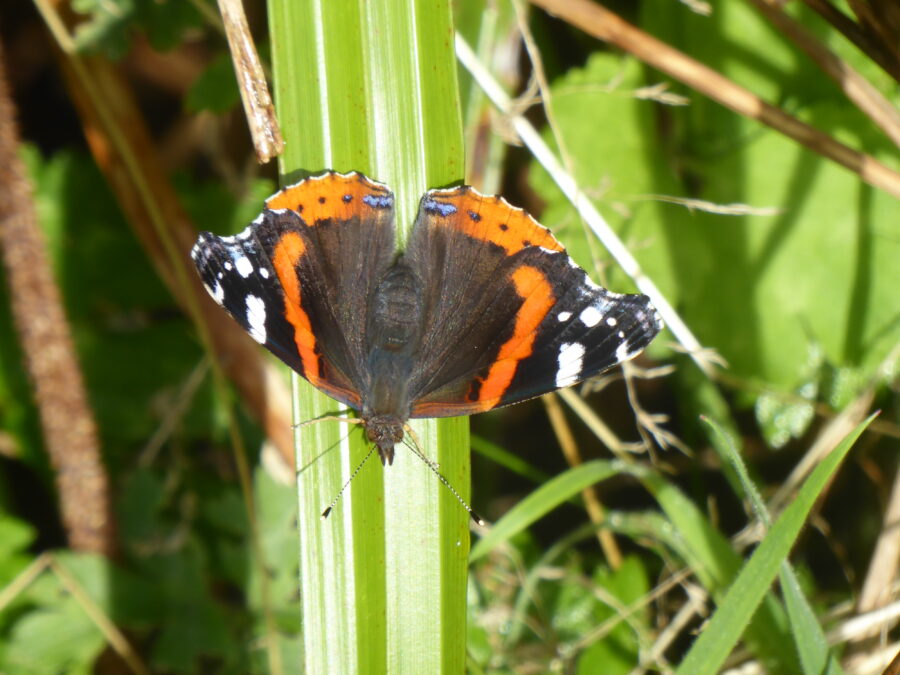
    So, this is what a Red Admiral looks like in repose.  I thought it was in a sorry state, but then I researched online and saw other photos of Red Admirals resting and their wings really do look this tatty when they are closed.  I suspected it was a Red Admiral because of the flashes of red and white, which correspond with the white stripe and dot, and a glimpse of part of the bright red stripe, though not the red edge, on the other side.  Red Admirals are quite common and like a variety of habitats.  The caterpillars particularly enjoy eating nettles and we do have a nettlebed and a good scattering of nettles in the watermeadow. 

    Update – I was able to photograph a Red Admiral with its wings outstretched. I just had to wait patiently for a while. It turned upside-down before it flew off!

    Daisy D

    03 July 2023
    Butterflies, moths, caterpillars
  • Blood Vein Moth

    Blood Vein Moth

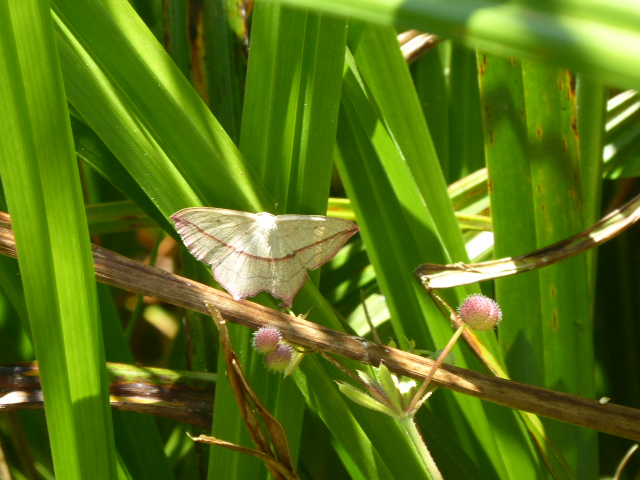
    I thought this was a Swallow-Tailed Moth, but then I realised that the stripes weren’t right.  The Blood Vein is a moth – easy ways to tell are that it rests with its wings outstretched and it has feathery antennae (not shown).  The Blood Vein is a sort of buff colour with a russet stripe that looks continuous through all four wings and russet edges to its swallowtail shaped wings.  They live in damp habitats including wet meadows, ditches, hedgerows, and gardens.  Their caterpillars feed on docks, Common Sorrel, and Knotgrass.  We definitely have dock and sorrel in our patch.

    Also, in the picture are Cleaver ‘sticky buds’. 

    Daisy D

    01 July 2023
    Butterflies, moths, caterpillars
    Blood Vein Moth, Cleavers
  • Lackey Moth Caterpillar

    Lackey Moth Caterpillar

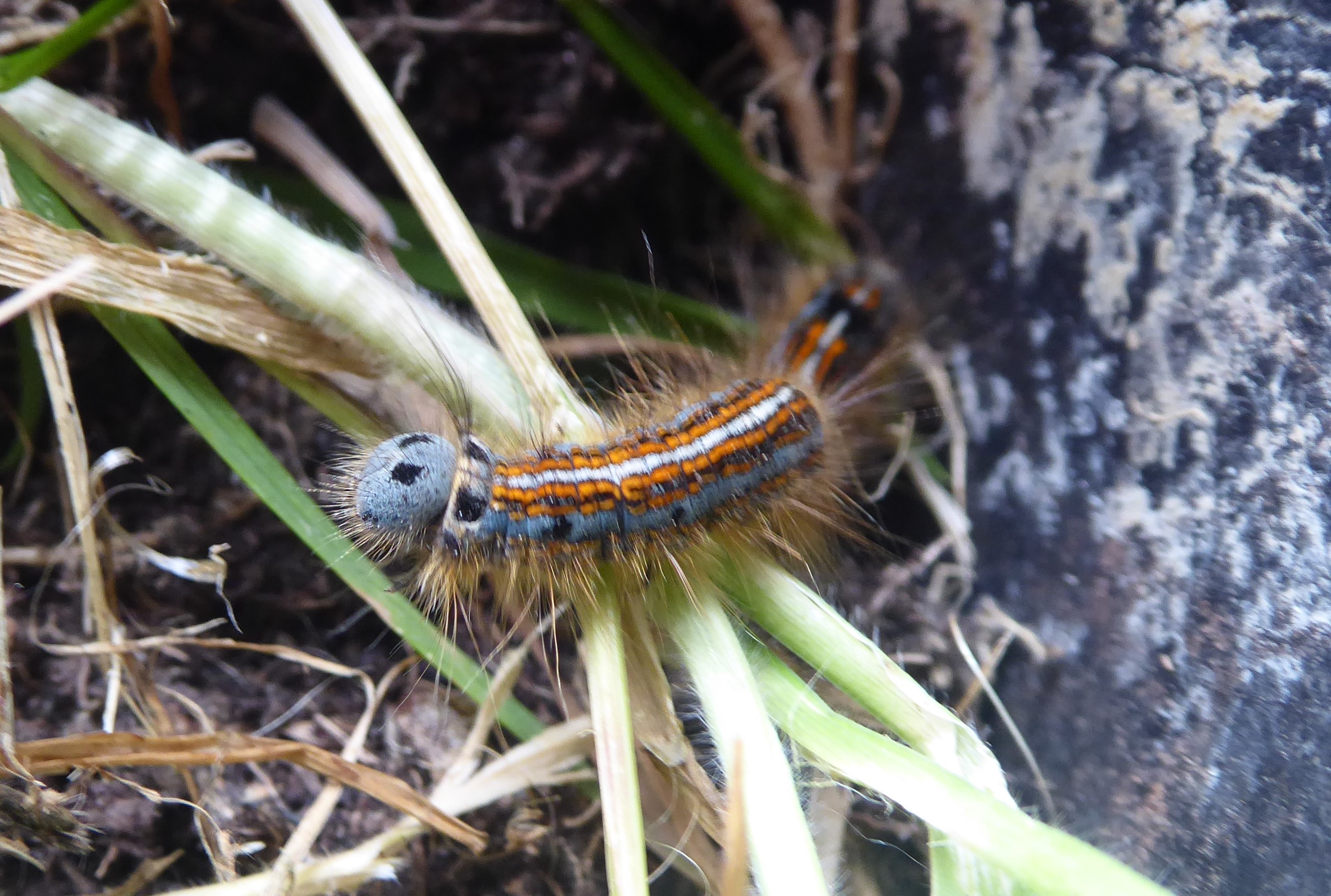
    No, this cute little caterpillar isn’t a toy!  Mr C found it in some long grass and brought it up to the kitchen for identification.  It is the caterpillar of another pale brown moth, the Lackey Moth.  Common in the coastal areas of Cornwall, this little chap started out as one of a hundred or so eggs laid in a bracelet-style band around a stem of a deciduous tree or shrub, notably hawthorn, blackthorn, or apple tree at the end of last summer.  The caterpillar and its siblings hatched out in the spring and started feeding under a web of silk.  We’re not sure which tree it came from, but Mr C returned it to where he had found it.  When it is fully grown it will fall to the ground and pupate in leaf litter, emerging as a moth July-September. 

    Daisy D

    09 June 2023
    Butterflies, moths, caterpillars
    Lackey Moth
  • Drinker Moth Caterpillar

    Drinker Moth Caterpillar

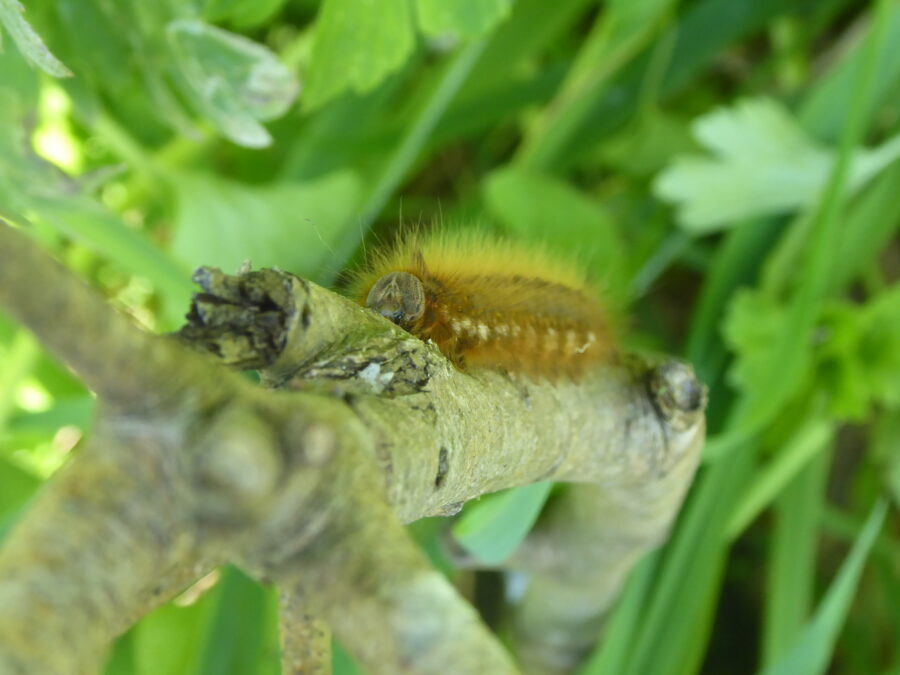
    We noticed this caterpillar on a dead stick that was marking where we had planted an Alder sapling.  Identified on the Wildlife Trusts website the Drinker Moth Caterpillar is distinguishable by the row of white hairs running down either side of its body, a ridge of tufts along its back and ‘horns’ at each end.  It feeds on grasses and reeds and therefore lives in “damp grassland, marshes and boggy areas”.  This little chap hibernated over the winter as a partially-grown caterpillar, woke up in the Spring and carried on growing.  It will be fully-grown this month – up to 7cm in length and will turn into a large moth the colour of an old cork.  That’s not why it’s called the Drinker Moth, though.  It’s because the caterpillar drinks drops of dew from grass stems.

    Blog note: I am disappointed that the first three scheduled posts have appeared on the blog with identical pictures.  I’m either doing something wrong or there is a glitch on the site or with the software.  We’re going away for a week and after a photography bonanza in the meadow, I have scheduled a week of posts, none of which are going to feature a striking picture of the subject matter.  I don’t have time to sort this out now.

    Daisy D

    07 June 2023
    Butterflies, moths, caterpillars
    Drinker Moth
Previous Page
1 2

©2023 All rights reserved.

  • October 2024
  • September 2024
  • August 2024
  • July 2024
  • June 2024
  • May 2024
  • April 2024
  • March 2024
  • February 2024
  • January 2024
  • December 2023
  • November 2023
  • October 2023
  • September 2023
  • August 2023
  • July 2023
  • June 2023
  • Spotted in September
  • Spotted in August
  • Spotted in July
  • Spotted in June
  • Conclusions