A Year in the Valley

A Year in the Valley

Discovering the flora and fauna in a small square of Portmellon Valley

  • BioBlitz
  • The Rules
  • Tally
  • Map
  • Bird Page
  • Contact Form
  • Nettles and Gypsywort

    Nettles and Gypsywort

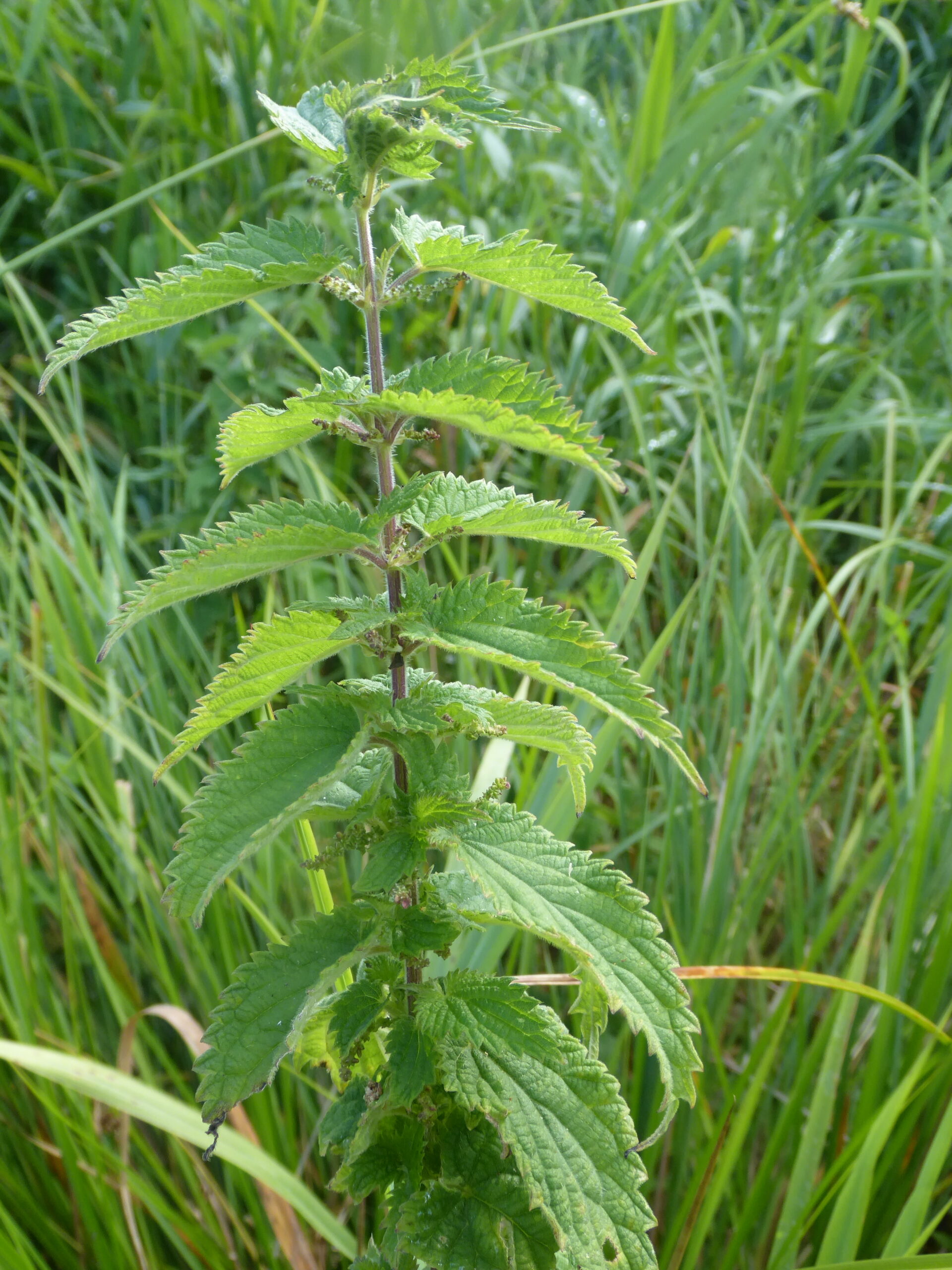
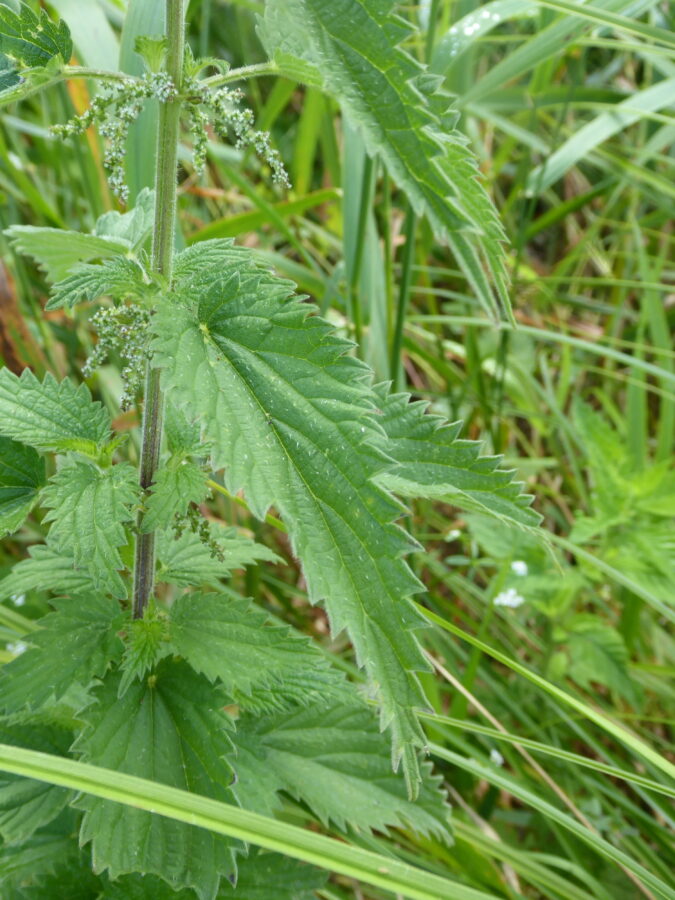
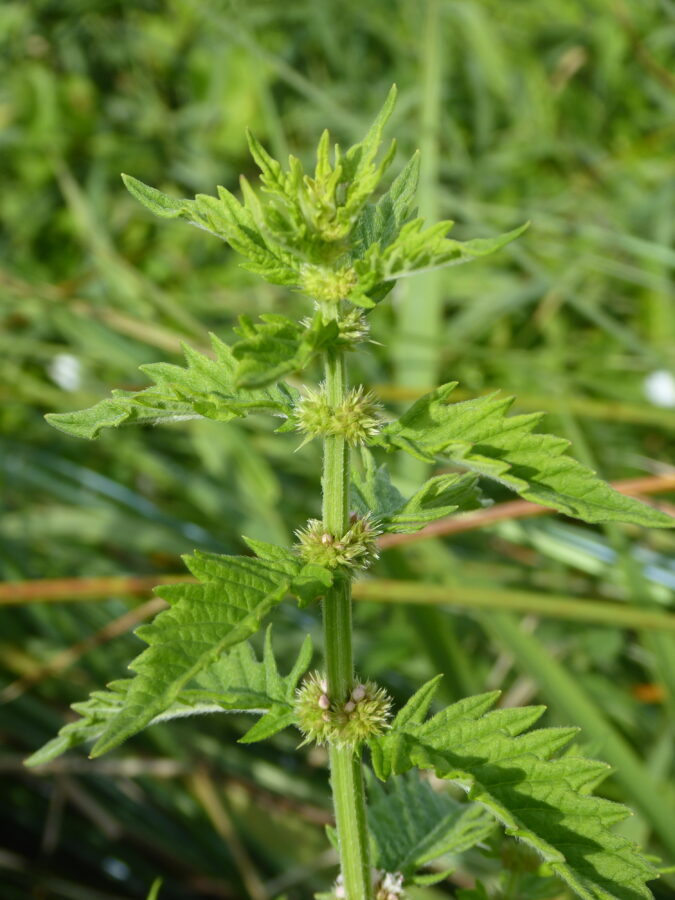
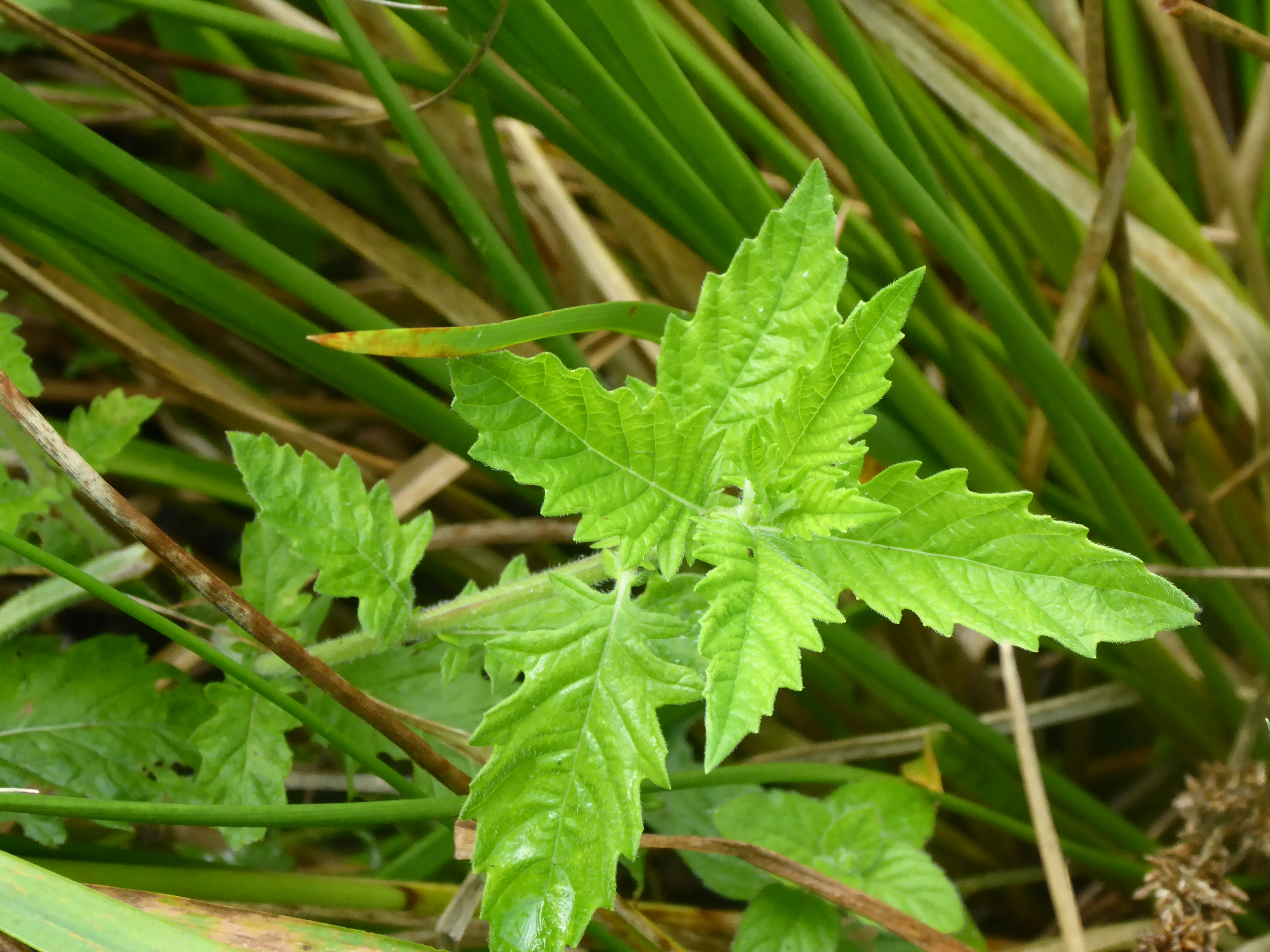
    The nettles are out in flower now.  I’m getting used to tingling arms in the afternoons after I’ve been gardening – anywhere between the gloves and the t-shirt sleeves are fair game it seems.  I should be immune by now!  Is it an Old Wives Tale that once the nettles are in flower they lose their sting?  I decided to find out.  I literally stroked a stinging nettle in flower, and it didn’t sting.  However, when I looked this phenomenon up online, I found out that common nettles bear both stinging and non-stinging hairs, but there is a sub-species of nettle – the Stingless or Fen Nettle (Urtica dioica galeopsifolia) that only has stingless hairs.  The flowers look the same as the Stinging Nettle, but the leaves are slightly narrower.  So I went back down to the watermeadow and discovered that the nettles out in flower at the moment do indeed have narrow leaves.
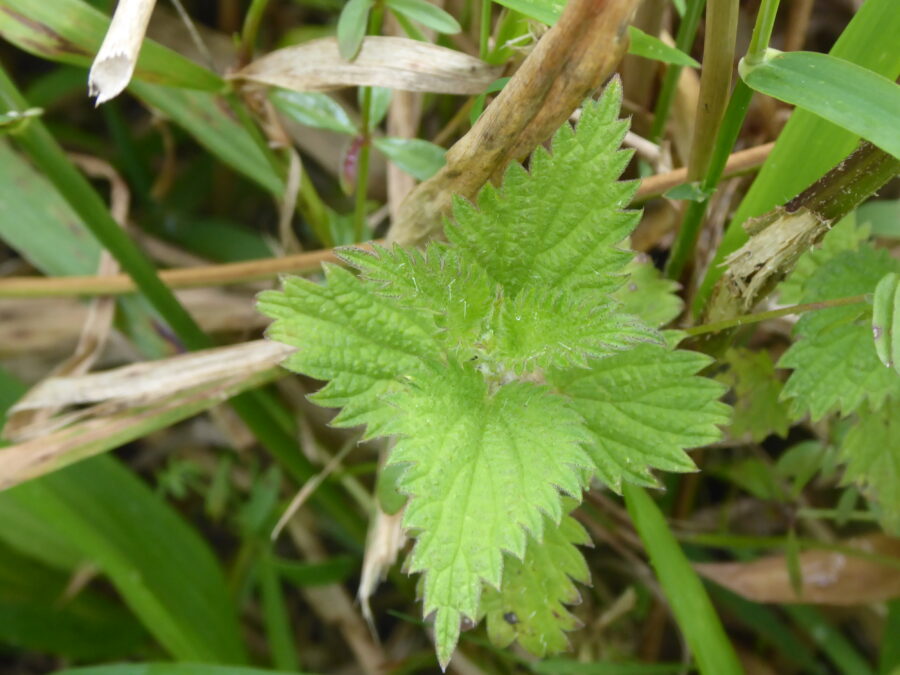
    Then I got stung by a greener, meaner Common Nettle (Urtica dioica).  Notice the proportionally wider leaves.  So, we have both types in the watermeadow. 


    Stinging nettles work like this:  the tips of the stinging hairs are broken off when touched and turn the hollow hairs into needles, which inject irritants like formic acid and histamines into our skin.

    Finally, there is Gypsywort (Lycopus europaeus). Looking just like a nettle, maybe with more exaggerated teeth on its leaves, it is slightly hairy but non-stinging and decorated with small white flowers.   

    We try to pull up the stinging nettles near the pathways for obvious reasons, but there is a nettle bed in the far left of the watermeadow, which I am keen to keep.  Nettle beds are good for caterpillars, ladybirds, and aphids.  In turn, caterpillars are good for the birds.  Nettle flowers are good for the pollinators – bees and butterflies – in particular, red admirals, peacocks, and small tortoiseshells.
    Daisy D

    10 July 2023
    Flowers
    Common Nettle, Fen Nettle, Gypsywort
  • Hedge Bindweed (Calystegia sepium)

    Hedge Bindweed (Calystegia sepium)

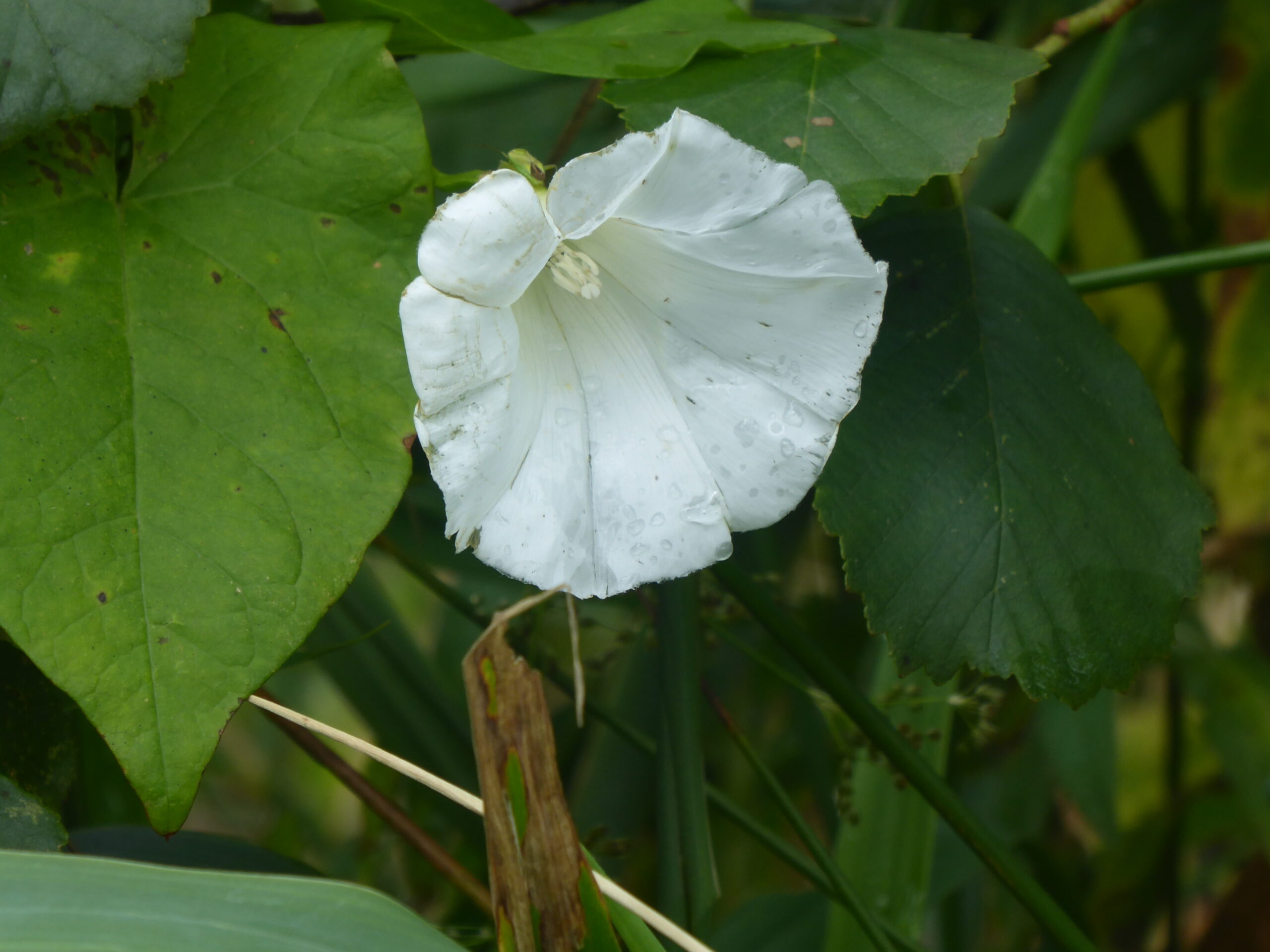
    We have been mistakenly calling this Bell Vine, but I now discover that that is something else entirely and this plant is Bindweed.  It’s a real pain as it twines round the Reed Canary Grass and pulls it down.  It has broken one of our Alders.  And although I try to pull it up in the late spring when it emerges, I can’t keep on top of it and have to resort to damage limitation.  Also, it’s probably not right to eradicate it entirely from the watermeadow.  There are several types of Bindweed.  This is Hedge Bindweed as it has large white trumpet-flowers, a red-ish stem, but no hint of pink on the flowers.  It’s not one of my favourite plants, but I have to admire its tenacity and striking white bells.

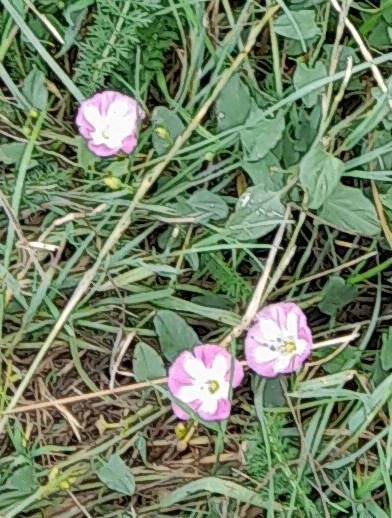
    Update – we spotted some Meadow Bindweed in Wadebridge by the River Camel.  It was creeping along in the grass.  Very different to the Hedge Bindweed.

    Daisy D

    07 July 2023
    Flowers
    Bindweed
  • Purple Flowers

    Purple Flowers

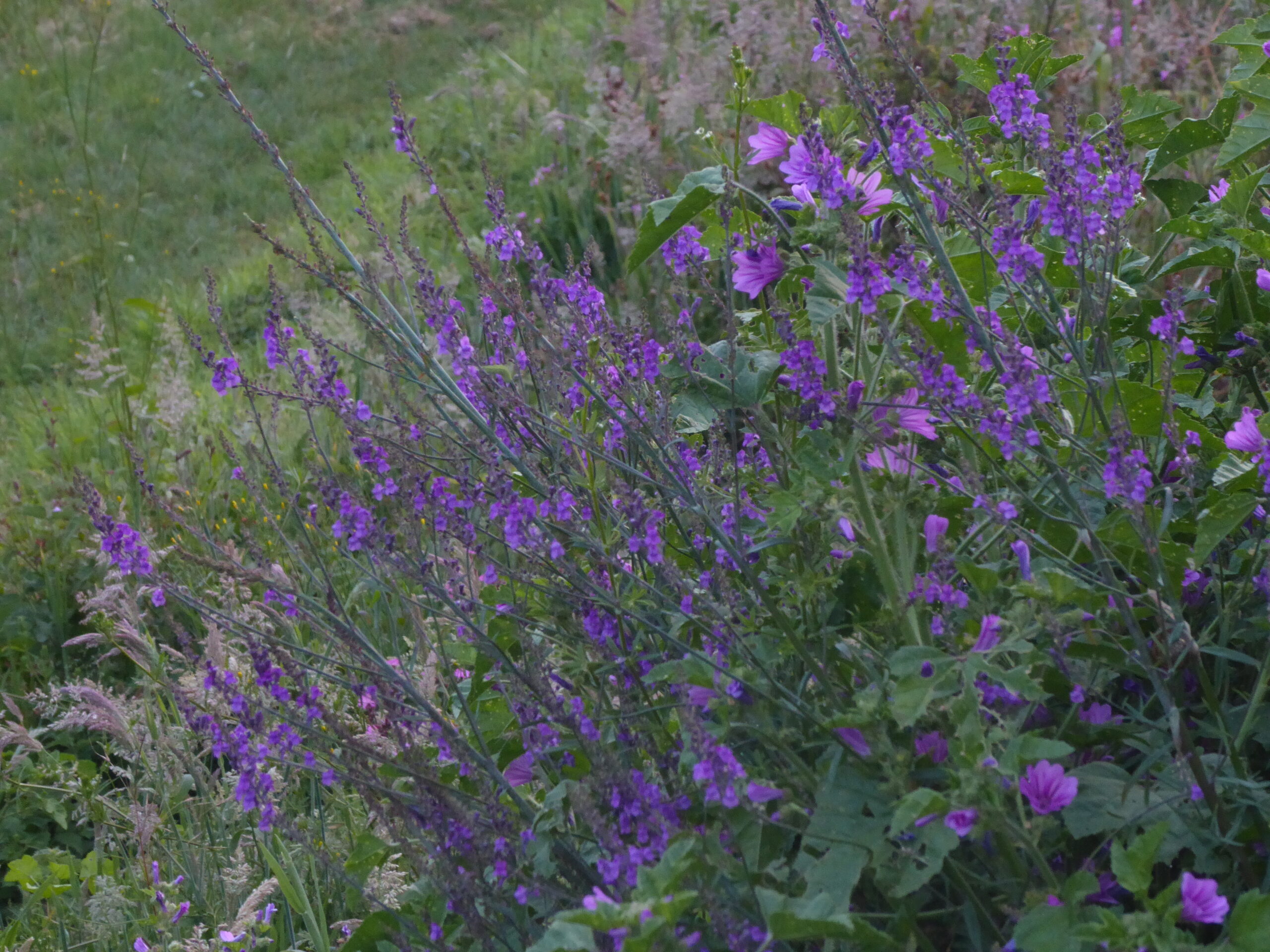
    On a mild summer’s evening we are walking round the garden and admiring this mass of purple flowers on the slope leading down into the watermeadow.  On closer inspection the mass of purple comprises two distinct clumps of flowers – Mallow and Toadflax.

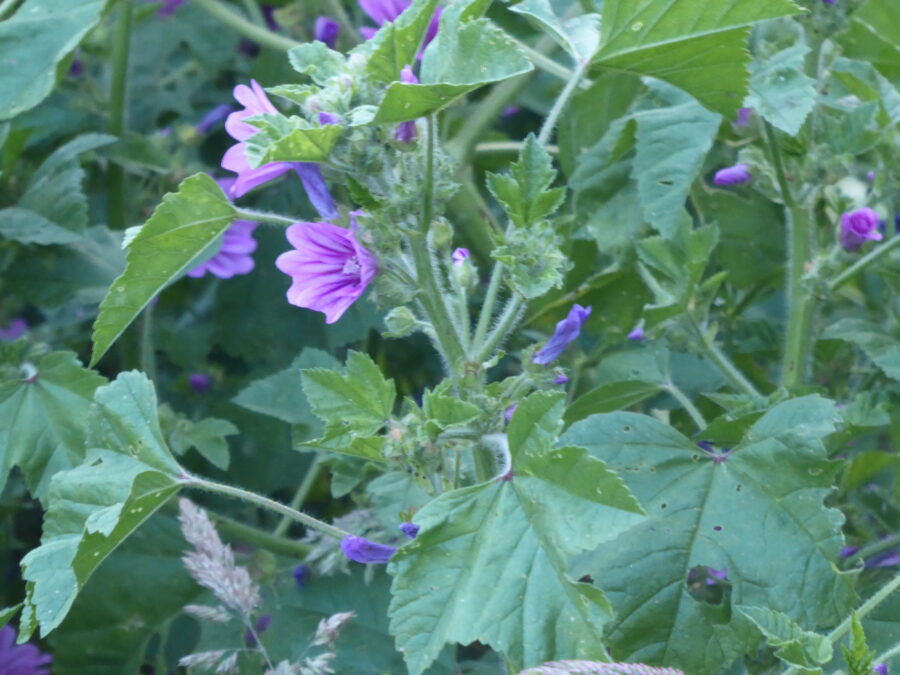
    Common Mallow (Malva sylvestris)

    This is quite tall.  It can grow up to 1.2m.  It flowers June-October and has pale mauve flowers with five petals arranged in a funnel-like formation and deep purple stripes running down each petal.  The stalk is covered in fine hairs and the large leaves each have five lobes. The Common Mallow prefers a dry habitat i.e. roadside verges and sand dunes, hence growing on the ramp.  

    Purple Toadflax (Linaria purpurea)

    Another tall plant growing up to 70cm with spikes of purple flowers at the top of the stem.  The flowers have five purple petals.  It is in the plantain family and prefers moist soil, stony ground, and walls.  Although it is thought of as a weed, it is good for bees.

    Daisy D

    30 June 2023
    Flowers
    Common Mallow, Purple Toadflax
  • White Clover (Trifolium repens)

    White Clover (Trifolium repens)

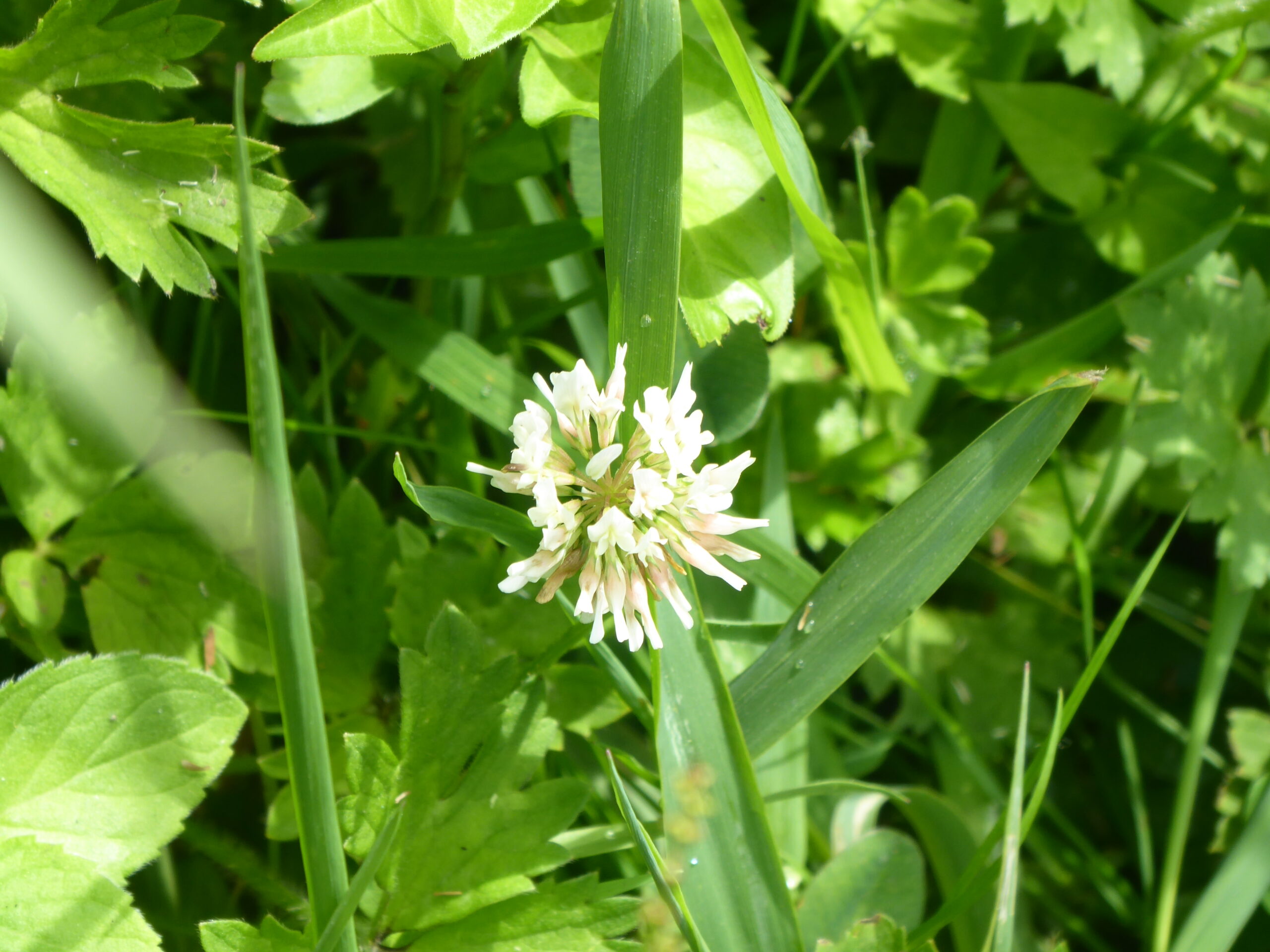
    At last!  An easy one!  Was I glad to see a flower I recognised!  And a little surprised if I’m honest, as I thought clover was confined to lawns and grassy stretches.  It’s true that it isn’t a wetland flower.  It’s also true that our watermeadow has dried out considerably, even the soggy middle that we call ‘Little Venice’ is merely claggy – and the clover was on the bank, which is populated with unidentified meadow grass and wildflowers.  What I also didn’t know was that clovers are in the legumes family along with peas, vetches and the previously mentioned Birdsfoot Trefoil.

    Daisy D

    29 June 2023
    Flowers
    White Clover
  • Water Forget-Me-Not (Myosotis scorpioides)

    Water Forget-Me-Not (Myosotis scorpioides)

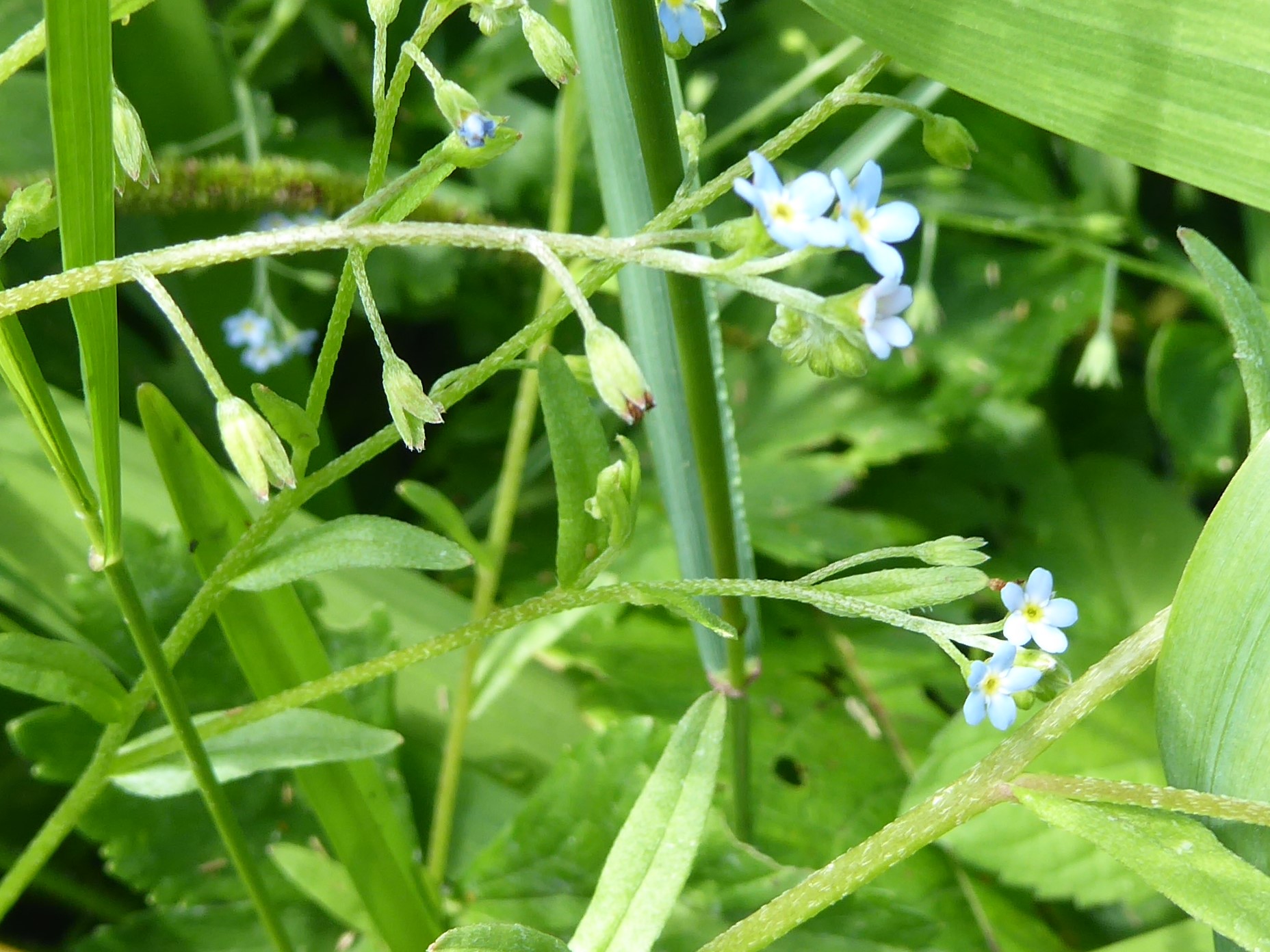
    I didn’t realise that there were so many types of Forget-Me-Nots.  The best fit was the Water Forget-Me-Not, which obviously likes damp places, water margins.  It has purple-tinted sheathed buds and long stems with branched buds and long oval leaves.  It can grow up to 30cm, though I think it grows more mat-like in the water.  This one is in a low-lying reliably damp part of the watermeadow.

    Daisy D

    28 June 2023
    Flowers
    Water Forget-Me-Not
  • Cleavers and bedstraws

    Cleavers and bedstraws

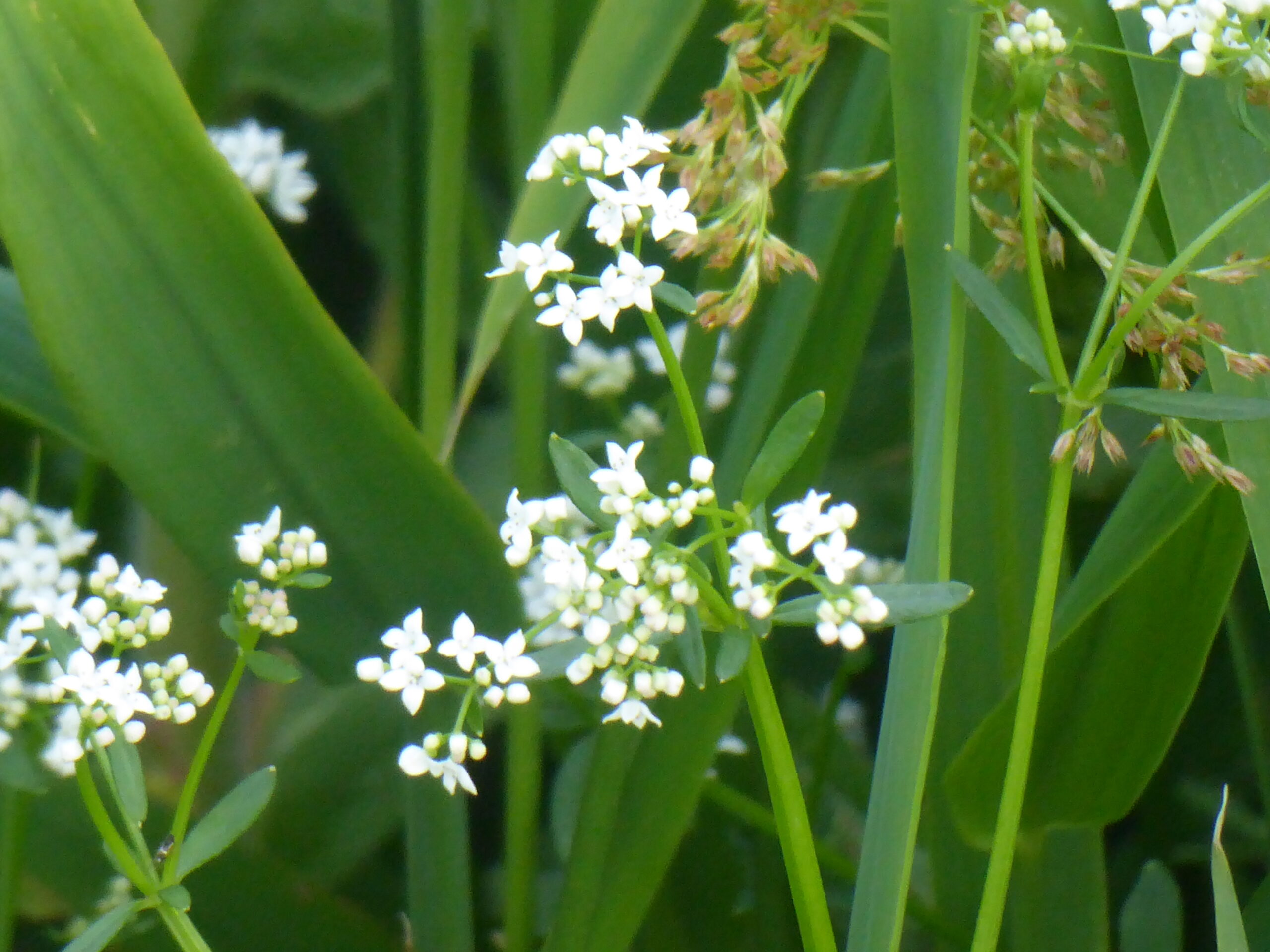
    The other week, I thought that the Cleavers were not so sticky and wondered whether it was just in the nature of their growing cycle.  Now I have found hat the ‘non-sticky cleavers’ are, in fact Marsh Bedstraws (Gallium palustre) members of the same family.  Marsh Bedstraws have hairless, square stems and tiny white four-petalled flowers.  They like damp habitats. 

    Other bedstraws include Hedge Bedstraw and Heath Bedstraw, which are identifiable by their bristled leaves. 

    We definitely do have Cleavers scrambling over the drier parts of the garden including the water meadow bank that we call ‘Vole County’ due to the abundance of field voles and mice.  The Cleavers have less significant white flowers, which have obviously escaped me and the ubiquitous sticky buds clinging to our gardening clothes.

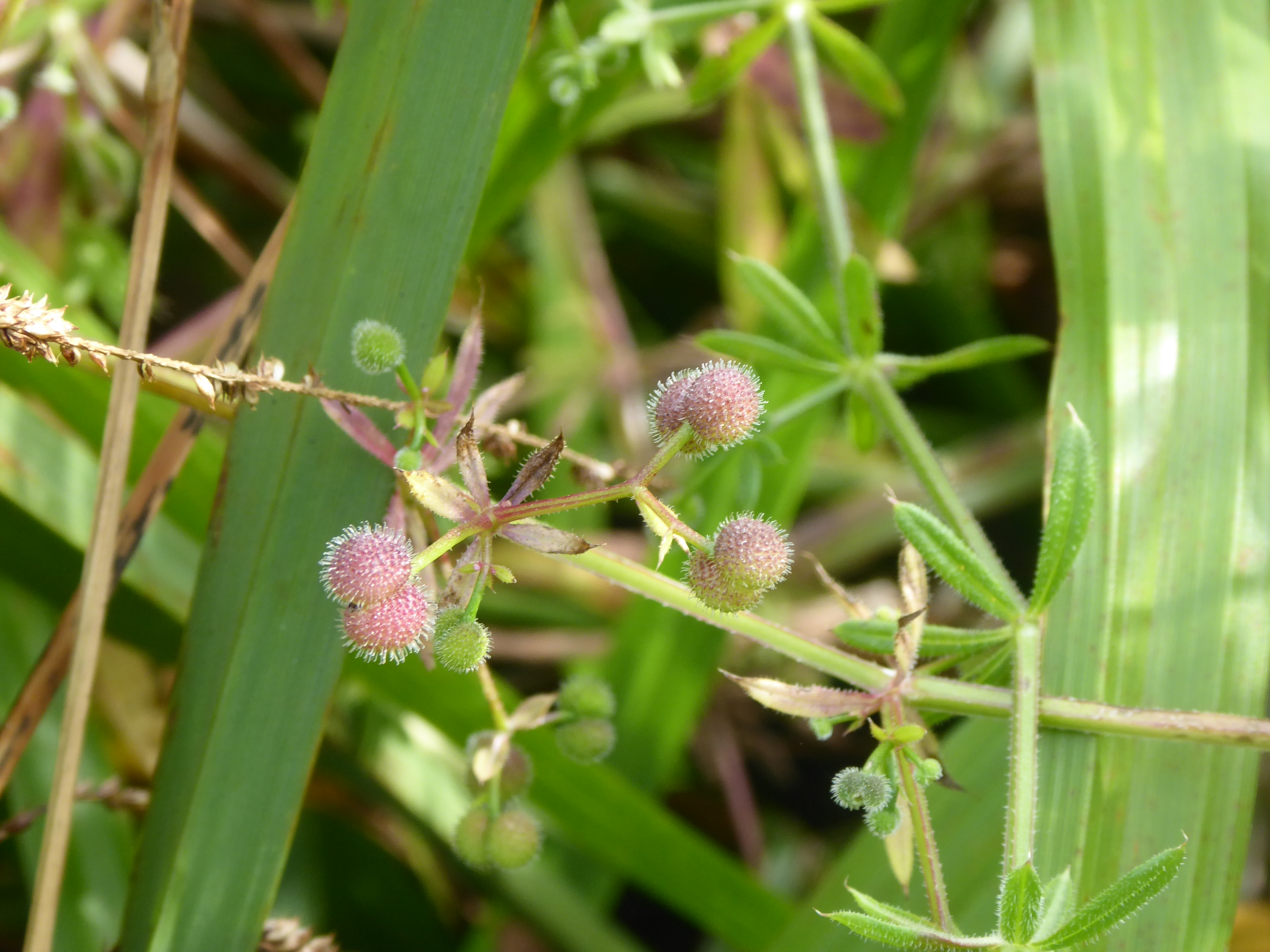
    Update – below is a photo of Cleavers (Galium aparine), showing their sticky burrs. Like the Marsh Bedstraw, the flowers were white four-petalled stars.

    Daisy D

    27 June 2023
    Flowers
    Cleavers, Marsh Bedstraw
  • Lesser Stitchwort (Stellaria graminea)

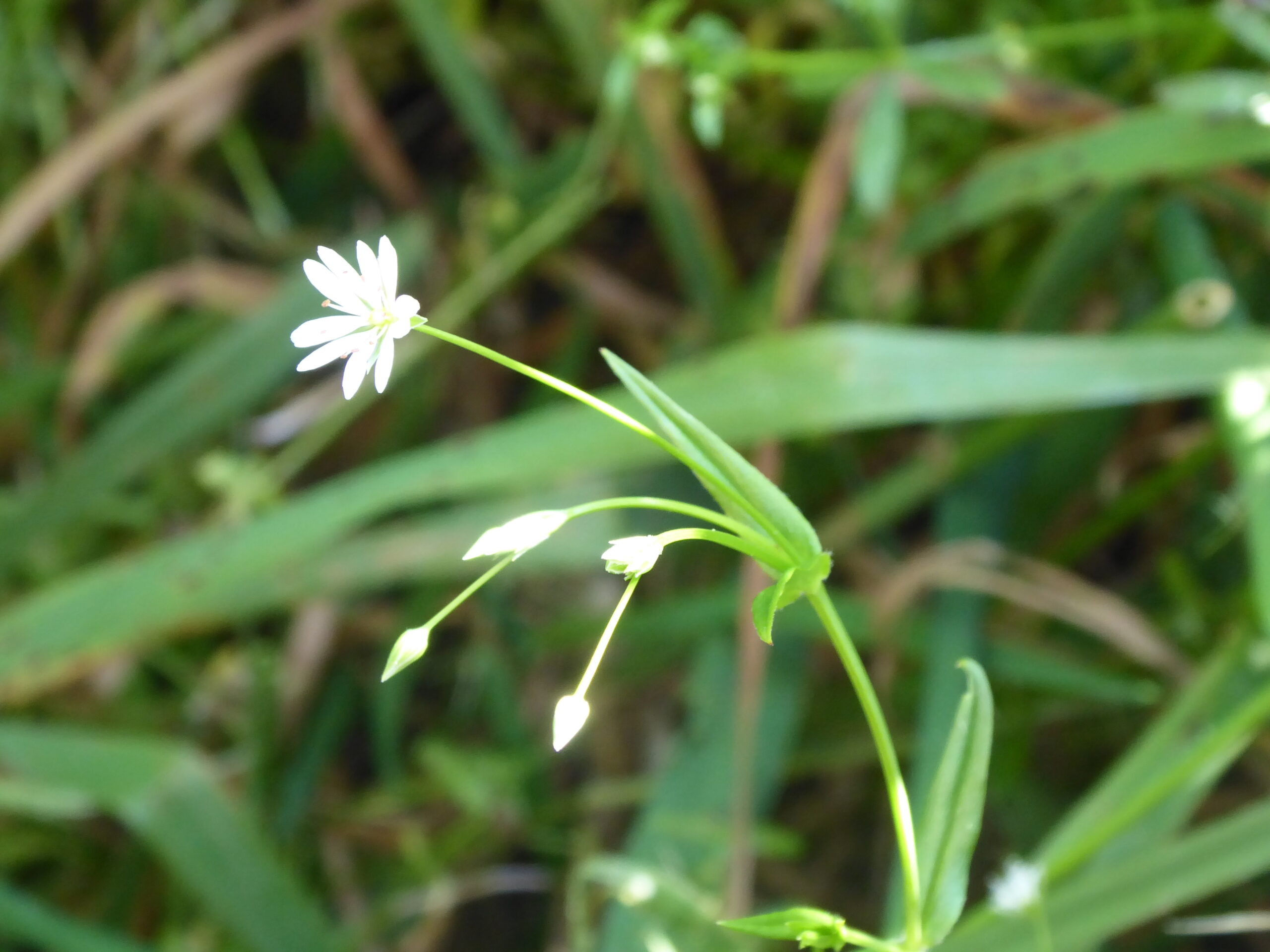
    Lesser Stitchwort (Stellaria graminea)

    Another one that was difficult to identify.  Was it Greater or Lesser Stitchwort?  The main difference is in the size of the flowers 0.5-1cm diameter for Lesser Stitchwort and 2-3cm for Greater Stitchwort.  Also although they both have five distinctive split white petals, the Greater Stitchwort’s seem from photos to be broader in proportion to the length, making them seem more crowded, also they are slightly flared.

    The Lesser Stitchwort flowers May-September.  The name ‘Stellaria Graminea’ means star-like, grass-like, and indeed in USA, where it is an introduced species, it is known as the Grass-leaved Stitchwort.  The name ‘Stitchwort’ refers to the plant’s use as a herbal cure for a stitch in the side.

    Daisy D

    26 June 2023
    Flowers
    Lesser Stitchwort
  • Herb Robert (Geranium robertianum)

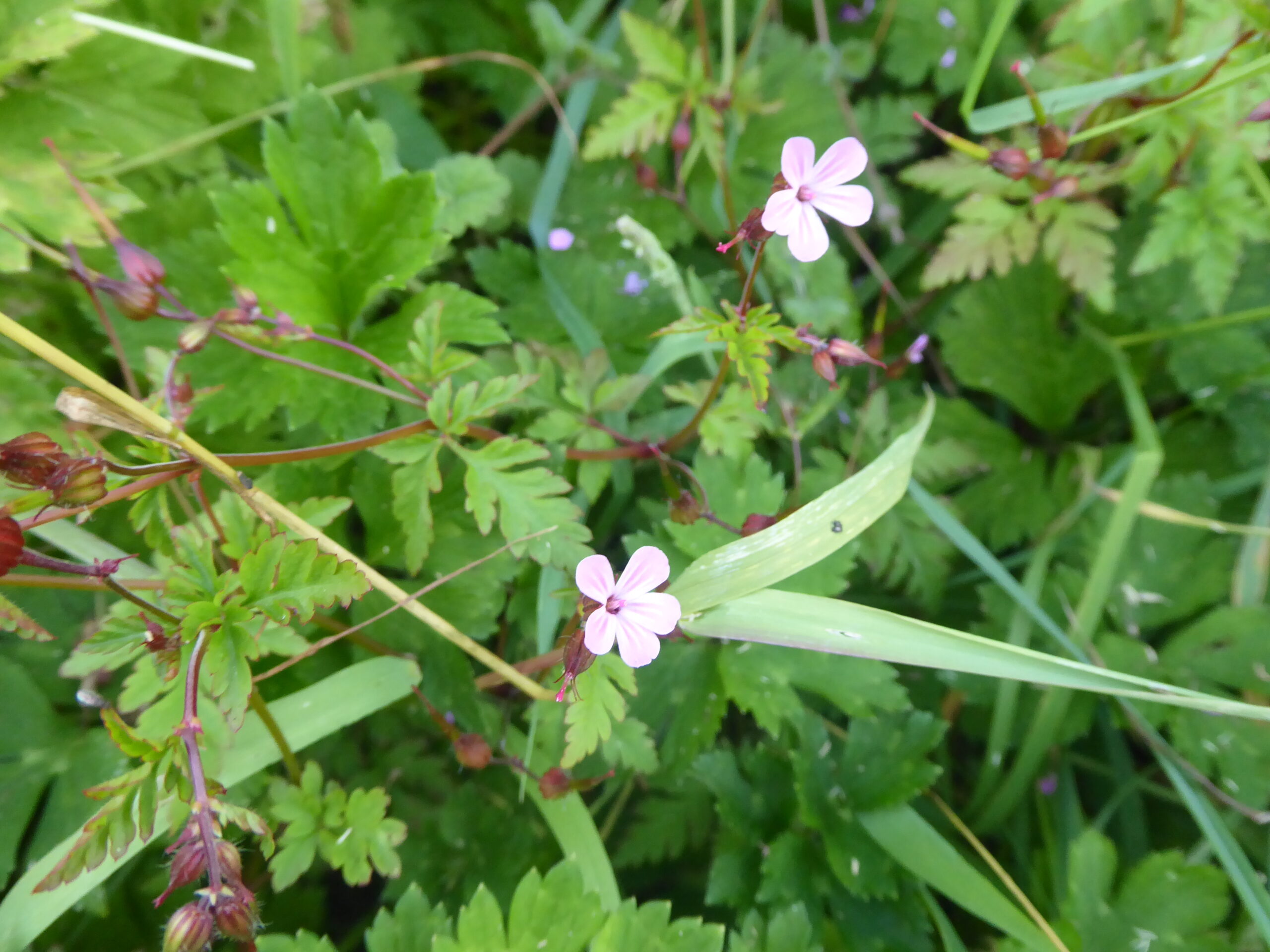
    Herb Robert (Geranium robertianum)

    Herb Robert is distinguishable by its feathery leaves, red stems, and delicate pink five-petalled flowers.  Each petal is embellished with tiny cerise pencil-lines drawing the eye to the centre of the flower.  The herb has been used in folk medicine for treating nosebleeds, liver, and gallbladder trouble.  It grows in hedgerows, woodland, and shingle.

    Daisy D

    25 June 2023
    Flowers
    Herb Robert
  • Birdsfoot Trefoil (Lotus corniculatus)

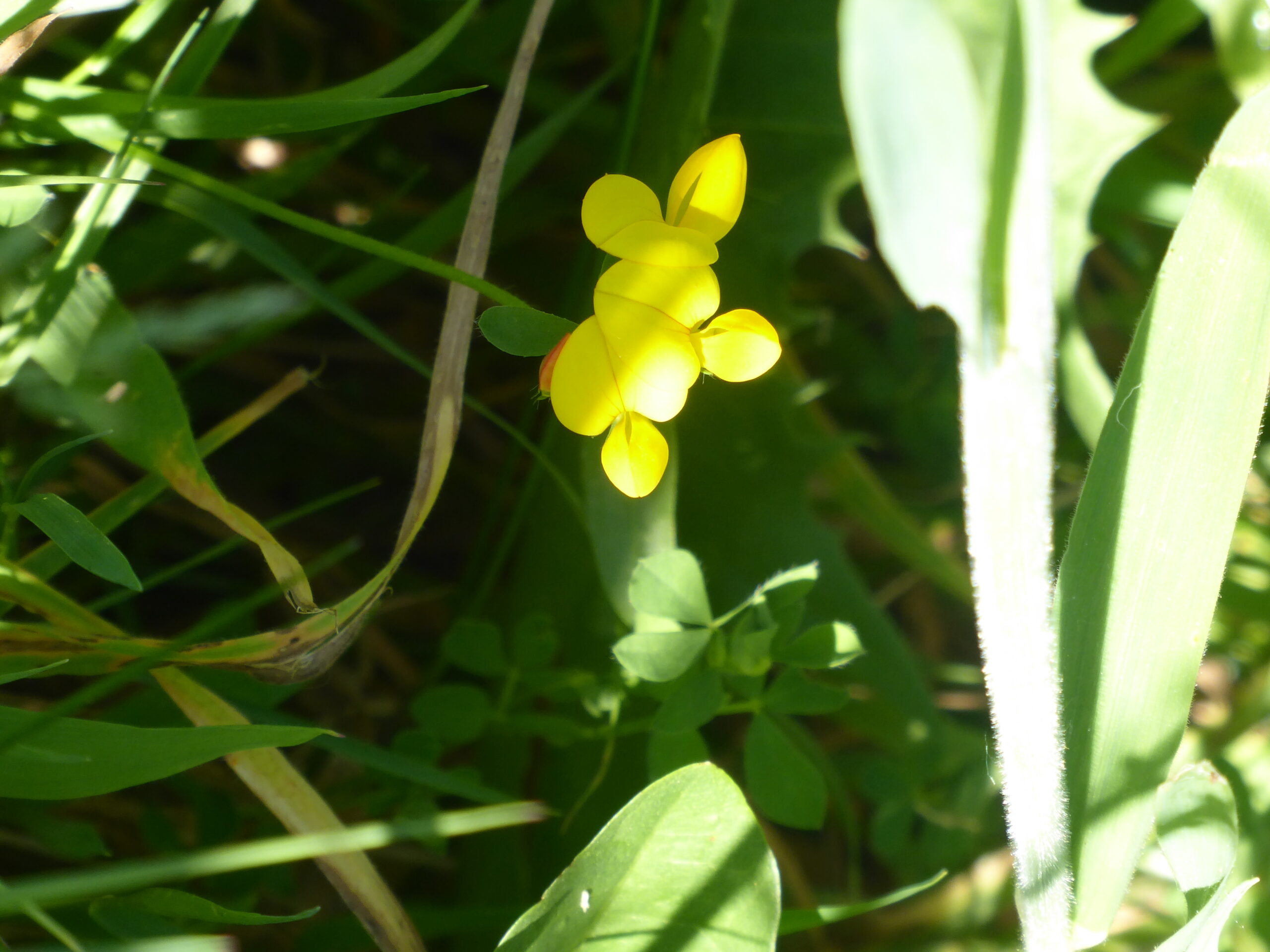
    Birdsfoot Trefoil (Lotus corniculatus)

    Birdsfoot Trefoil is a member of the Legumes family, which includes beans, peas, and vetches.  When the flower matures, it will form into a cluster of seed pods, the shape of which gave rise to the ‘Birdsfoot’ name.  ‘Trefoil’ is thought to originate from the arrangement of the leaves.  In fact, it has many alternative common names, one of which is ‘Eggs and Bacon’ thought to derive from the red and yellow colouring, which also helped me identify it.  This little flower grows in a variety of environments including roadside verges and grassland. 

    Since we came home from our holiday, I have continued to take photos for blog posts, whilst setting up a ‘proper’ website and doing a crash course on WordPress.org.  It’s frustrating that I’m going to have to post retrospectively, but it was important that the blog’s year started on 5th June and I didn’t know it was going to be so problematic.  The last time I posted a blog entry was over 5 years ago, so it’s probably not surprising that the technology has progressed.

    Daisy D

    23 June 2023
    Flowers
    Birdsfoot Trefoil
  • Woody Nightshade (Solanum dulcamara)

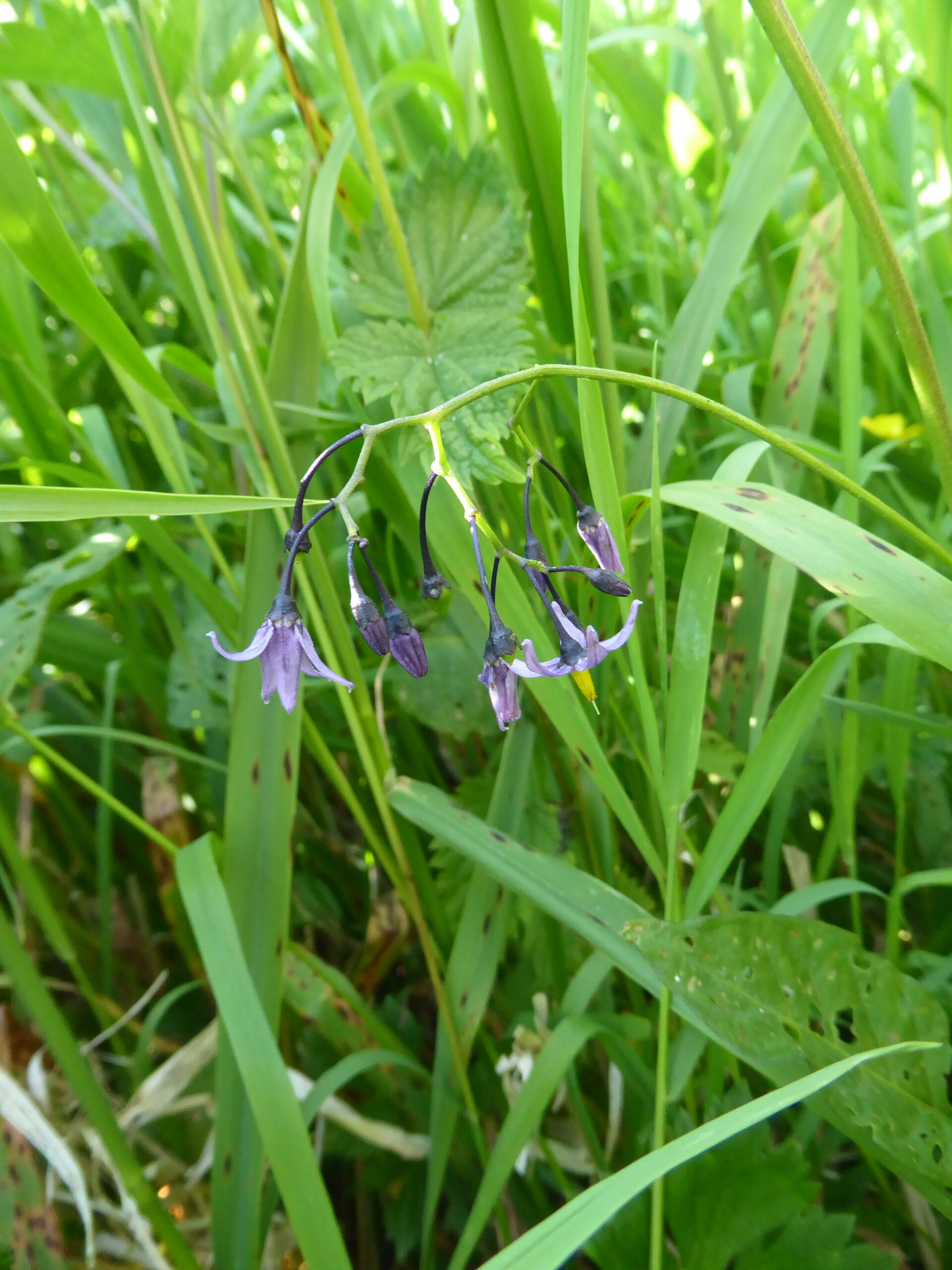
    Woody Nightshade (Solanum dulcamara)

    This is also known as Bittersweet, due to its flavour, though the red berries are poisonous in common with all the nightshades. The flowers of Woody Nightshade and Deadly Nightshade are similar – bright purple and yellow – and to start with I assumed this was Deadly Nightshade. However, look closely at the flower stems and you will see that they are also purple. This identifies the plant as a Woody Nightshade. This is the sort of detail I would have missed, had I not been doing this project. Later on, the berries are a further identifier. Those of the Deadly Nightshade are black.

    Daisy D

    19 June 2023
    Flowers
    Woody Nightshade
Previous Page
1 … 3 4 5 6
Next Page

©2023 All rights reserved.

  • October 2024
  • September 2024
  • August 2024
  • July 2024
  • June 2024
  • May 2024
  • April 2024
  • March 2024
  • February 2024
  • January 2024
  • December 2023
  • November 2023
  • October 2023
  • September 2023
  • August 2023
  • July 2023
  • June 2023
  • Spotted in September
  • Spotted in August
  • Spotted in July
  • Spotted in June
  • Conclusions