A Year in the Valley

A Year in the Valley

Discovering the flora and fauna in a small square of Portmellon Valley

  • BioBlitz
  • The Rules
  • Tally
  • Map
  • Bird Page
  • Contact Form
  • Hawthorn (Crataegus monogyna)

    Hawthorn (Crataegus monogyna)

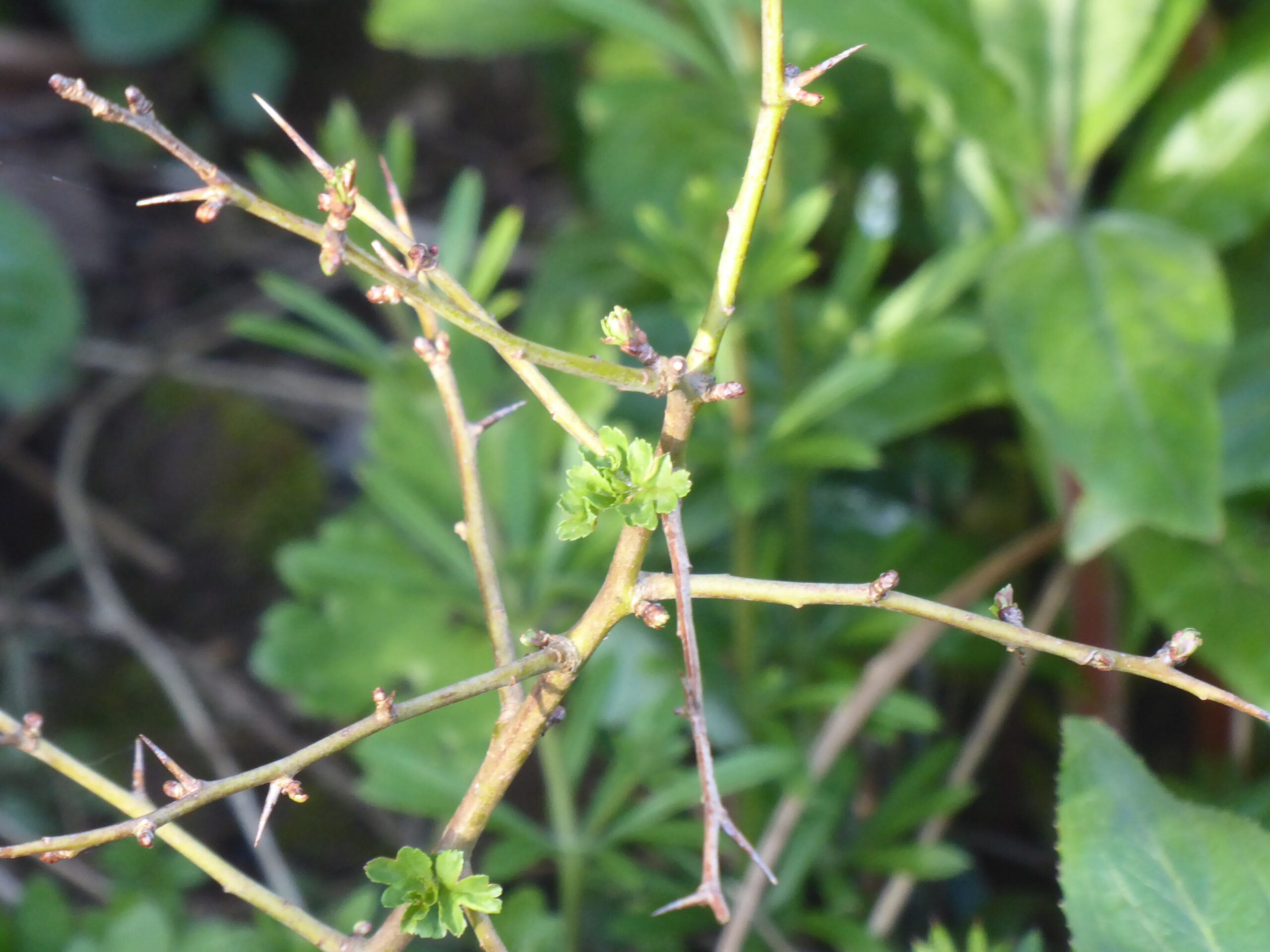
    There is a hawthorn sapling growing on the bank (Vole County). The hawthorn is also known as the May tree after the month in which it is covered in white or pale pink blossoms. It is one of the earliest trees in leaf. The leaves are small and deeply lobed and the branches spiney. The flowers once pollinated grow into deep red berries called haws.

    Hawthorn blossom marks the beginning of summer and coincides with the Celtic festival of Beltane, which celebrates the return of life and fruitfulness after the winter. The hawthorn is thought to have special powers, but inside the home is a harbinger of illness and death at any time apart from May Day. It was from these superstitions that arose the tradition of Bringing Home the May, in which young people would gather garlands of May blossoms on May Day eve and bring them home at sunrise (for one day only).

    Previously, at this time of year, the Roman festival of Floralia celebrated the goddess Flora breathing flowers across the land.
    Daisy D

    01 May 2024
    Trees
    Hawthorn
  • Staghorn Sumac (Rhus typhina)

    Staghorn Sumac (Rhus typhina)

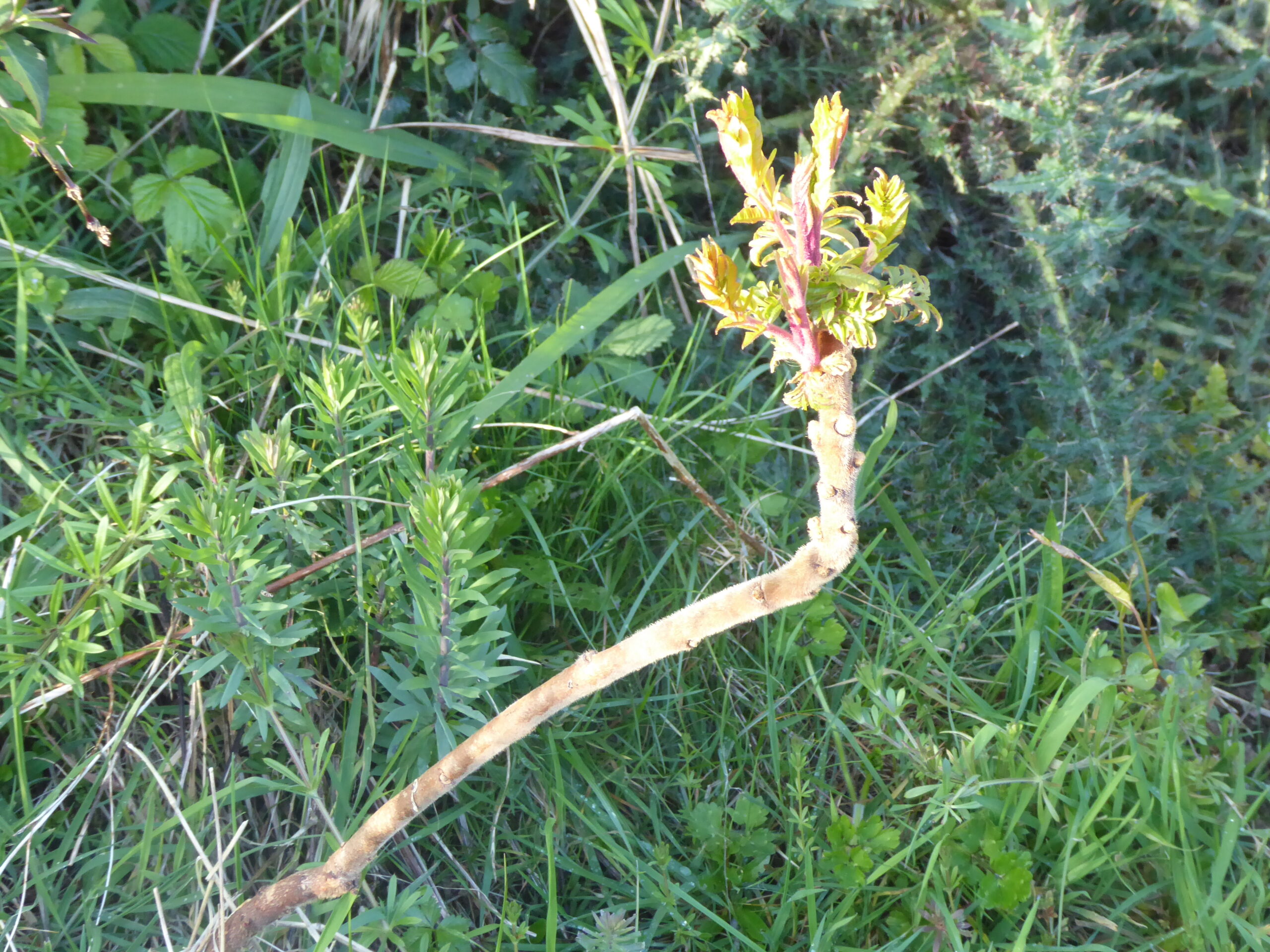
    We had one of these in the top garden which wasn’t really flourishing but sending up suckers in the lawn.  Now we have one growing on the bank and it seems to be doing quite well.  Because the bank slopes up from the watermeadow, it is drier and because we leave it wild, it seems to attract ‘garden escapees’, as well as grass, ferns, and brambles.  We knew this as Tree of Heaven, but I now discover that its common name is actually Staghorn Sumac, so-called because of the velvety coating of the branches and crimson fruit clusters.  In the autumn the foliage turns to flame with vivid shades of red, orange, and yellow.  They are usually found near gardens or cultivated land, escaping by means of suckers which can extend a long way from the tree.  Staghorn sumac originates from North America but has been growing in the UK since the seventeenth century.

    Daisy D

    22 April 2024
    Non-native, Trees
    Staghorn Sumac
  • Mountain Ash

    Mountain Ash

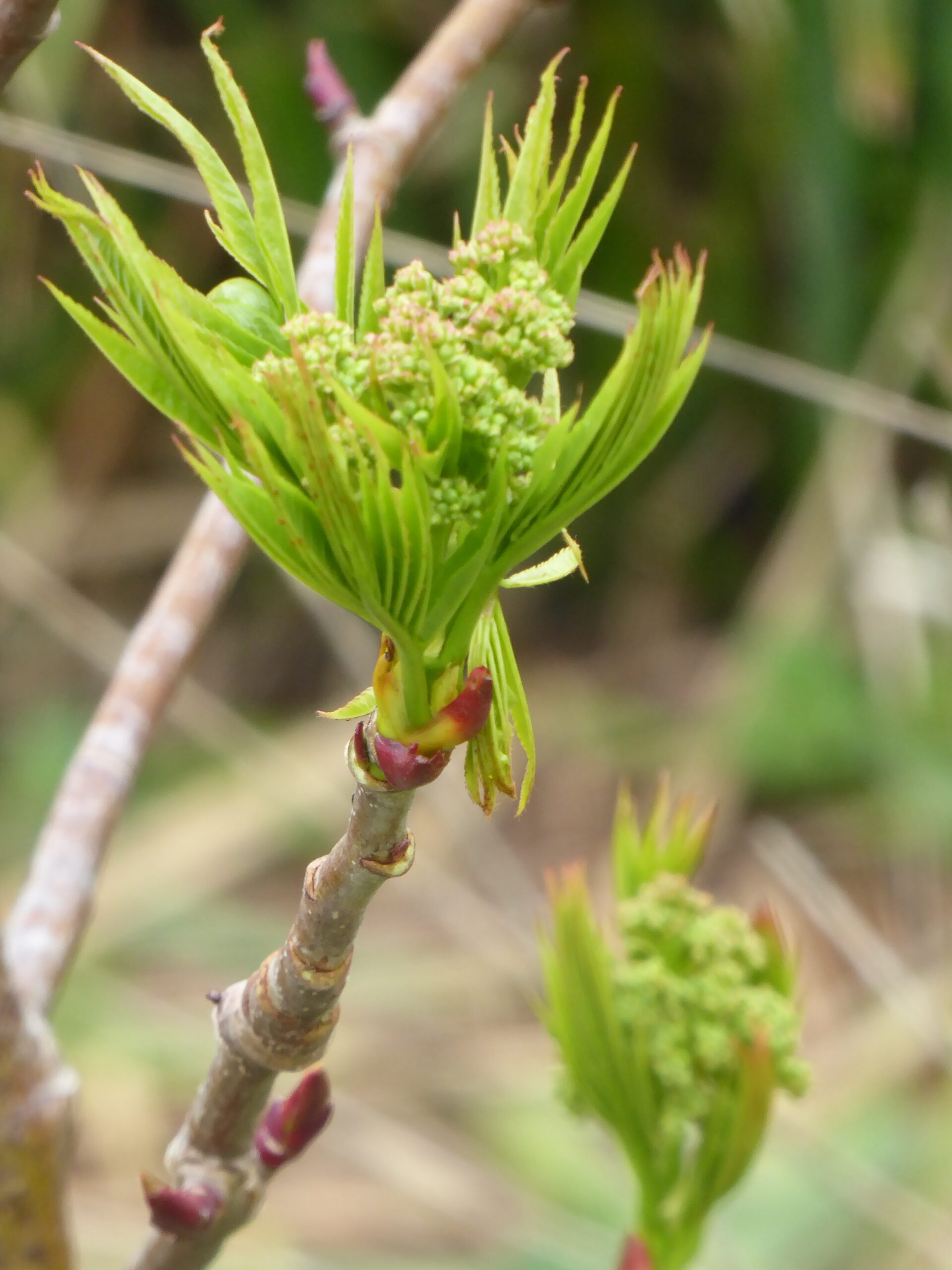
    We have a young mountain ash tree growing in Vole County and I was waiting for it to come into leaf, as it didn’t have any berries in the autumn.  I was intrigued to see that it has flowers that look a bit like broccoli florets in the centre of its leaf clusters.  Apparently, they will become white blossoms and hopefully, in turn, red berries.

    Daisy D

    03 April 2024
    Trees
    Mountain Ash
  • Goat Willow (Salix caprea)

    Goat Willow (Salix caprea)

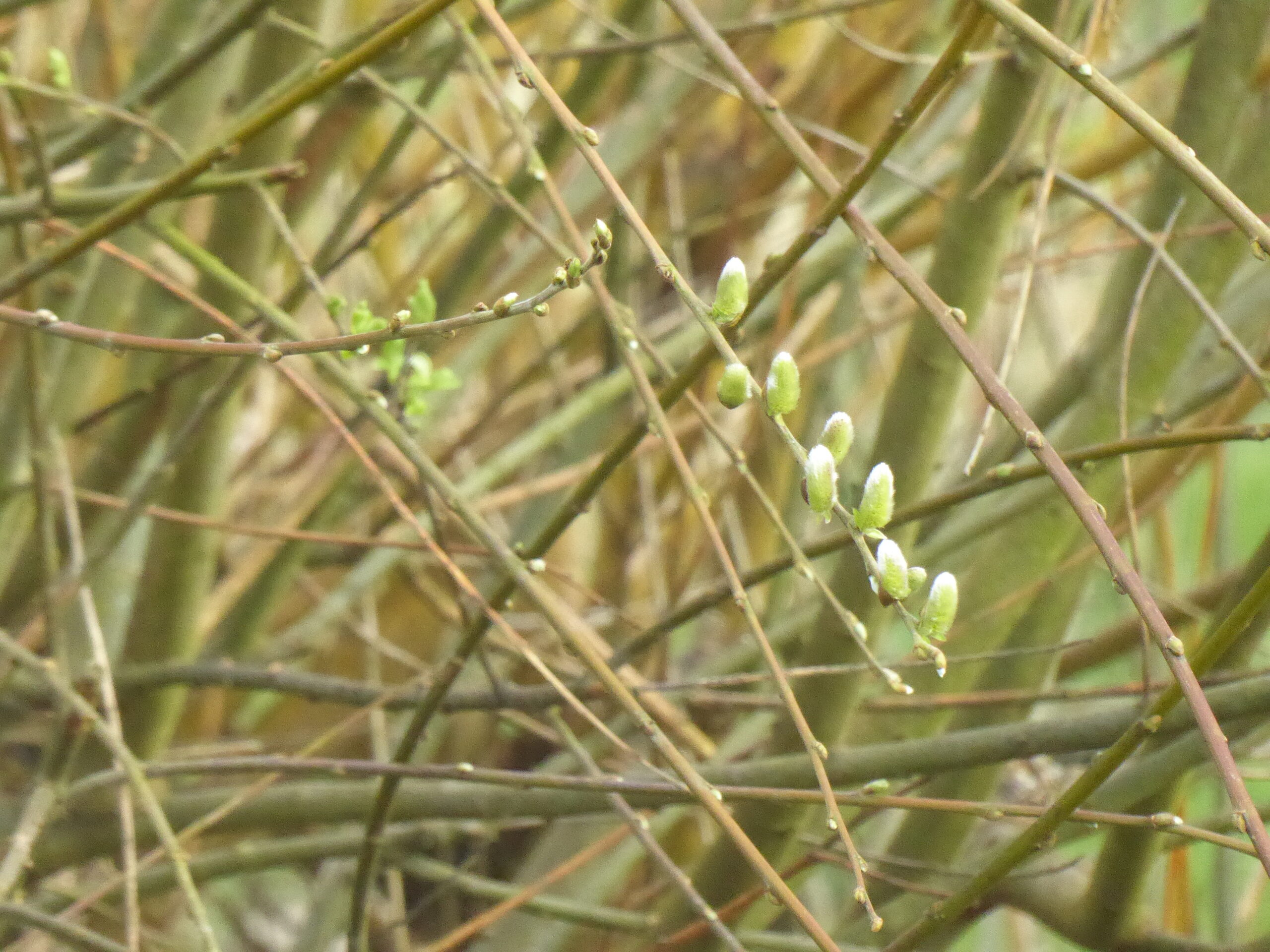
    Goat willows border and overhang the watermeadow, so we get the benefits of the shade and any wildlife that might be associated with them.  They are mature trees with grey fissured trunks; some are pollarded, and others thinned out.  The leaves are smaller and more oval than our grey/hybrid willow.  The pussy willow buds appear before the leaves.  They start off furry and the male ones become bright yellow with pollen and the female ones pale and spikey.  Goat willows will tolerate a dryer habitat but prefer to live in damp areas.

    Daisy D

    27 March 2024
    Trees
  • Grey Willow (Salix cinerea) or hybrid with Osier

    Grey Willow (Salix cinerea) or hybrid with Osier

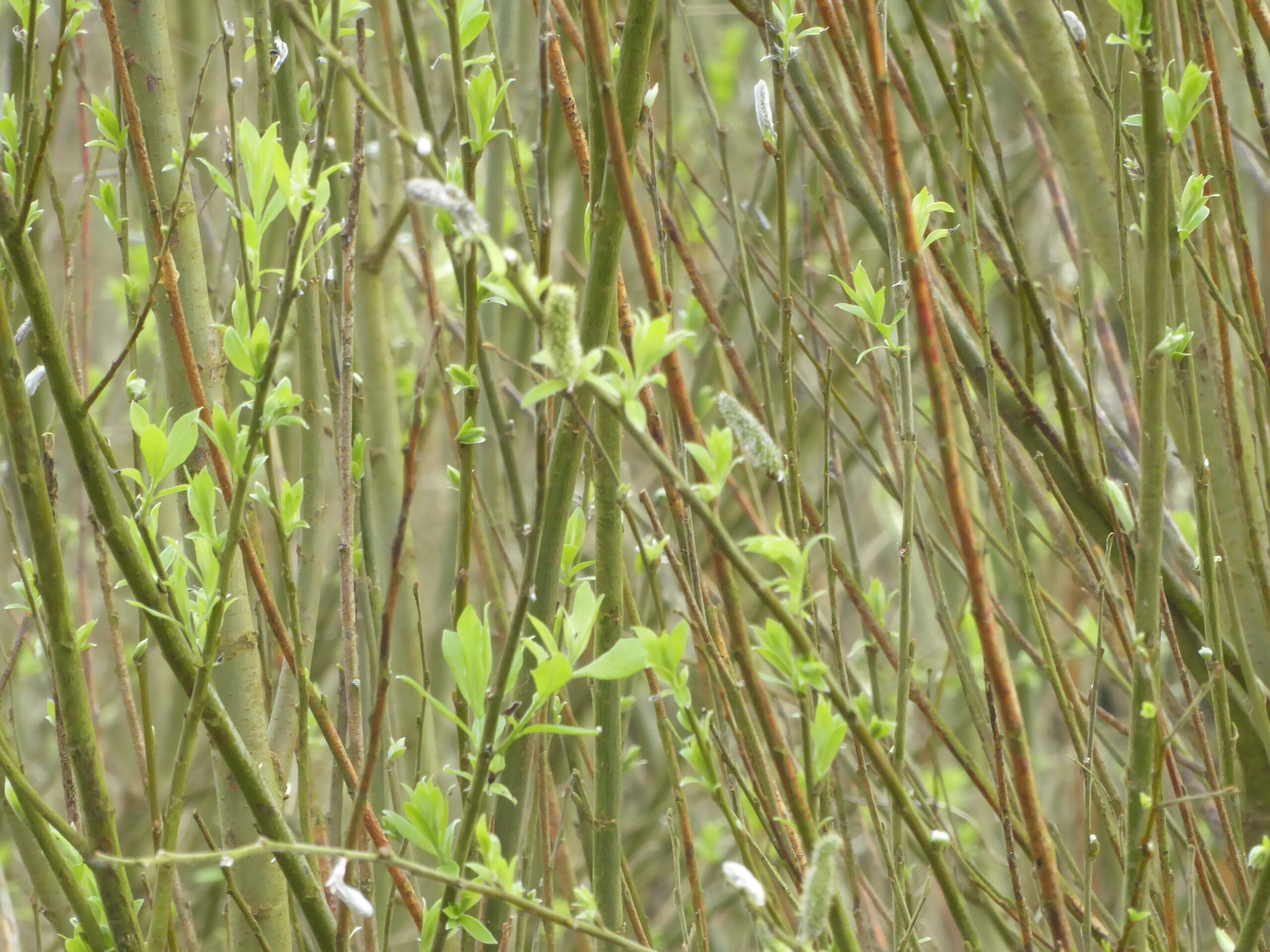
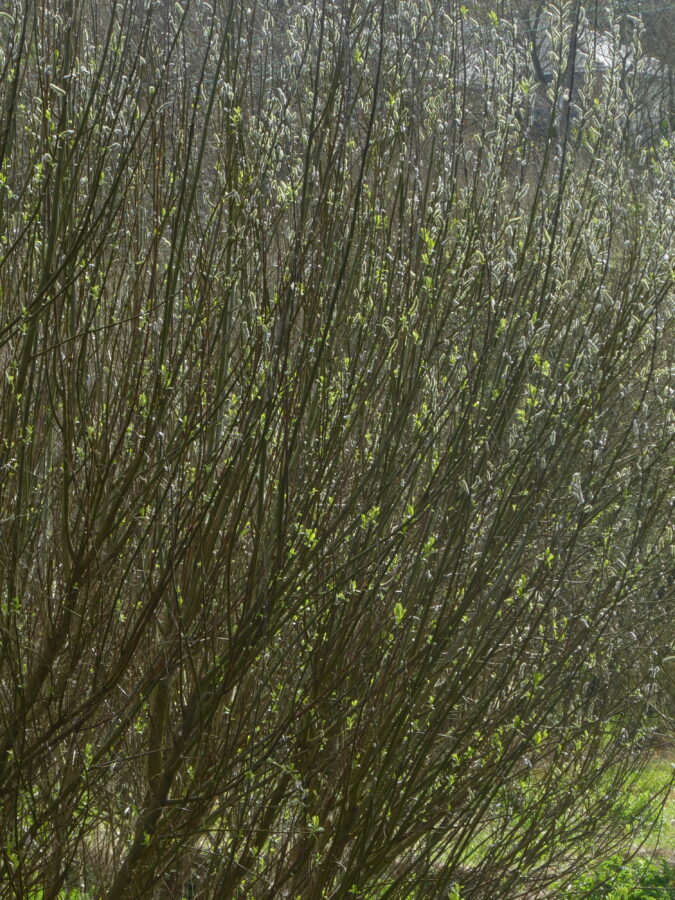
    Willows are well-known for hybridisation, and I have had trouble identifying our ‘tall’ willow.  In the end I have plumped for either a grey willow or a hybrid with an osier.  Its leaves are long for a grey willow, but it has ‘pussy’ willow buds – and only the grey willow and goat willow have those.  Most of the buds have now fallen off the tree before turning yellow and are lying on the ground beneath.  The grey willow is also known as the Common Sallow and can be found in damp habitats, like wet woodland, reedbeds and ditches.  The leaves are supposed to be blunt-ended and oval, but ours are quite long and thin – not as slim as osier leaves which can be 20cm x 1cm – but 3-4 times as long as wide and pointed at the ends.  This is why it might be a hybrid.  Its shape is tall and slim, with new stems popping up every year.  We have found that it roots and shoots very easily.  The straight stems we placed on the ground to mark where we were going to dig our pond four years ago have now grown into willow hedges. 

    Daisy D

    25 March 2024
    Trees
    Grey Willow
  • Weeping Willow (Salix babylonica)

    Weeping Willow (Salix babylonica)

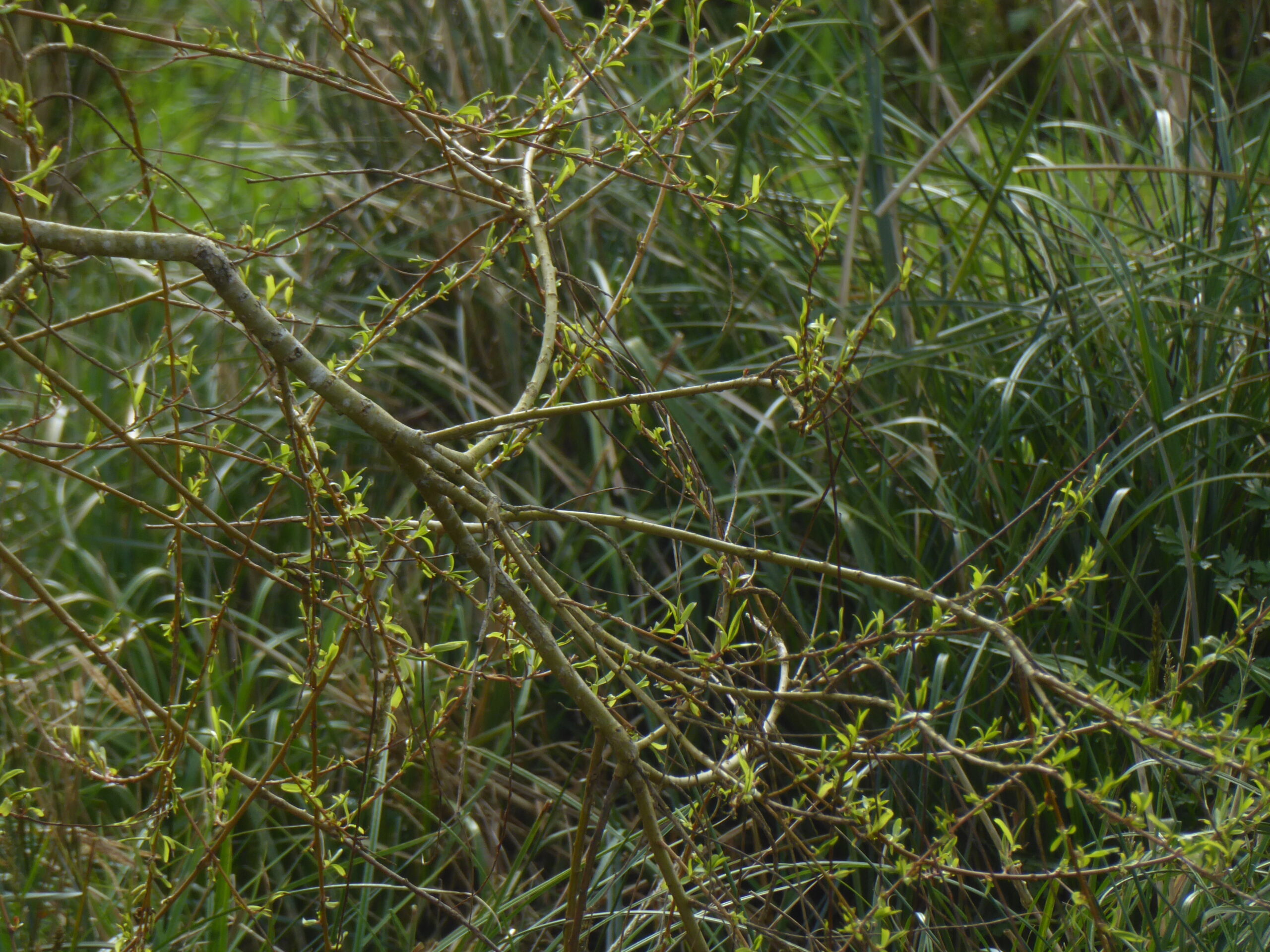
    This week many trees across the valley and hillside have come into blossom or leaf.  It gives them a fuzzy look as the leaves scatter tiny green dots over the branches.  Our Weeping Willow is no exception.

    The weeping willow is not native to the UK but was introduced to England in the 18th century.  It is known for its long, weeping branches often dangling over and into lakes and streams.  They do best in broad sunshine, and it is said that they need four hours a day.  Ours must have been feeling pretty fed-up over the winter! 

    Many weeping willows are hybrids and that is true of willows in general.  I am now trying to identify the other willow in our garden and those that hang over our fences.

    Daisy D

    23 March 2024
    Trees
  • Black Slug and Sycamore

    Black Slug and Sycamore

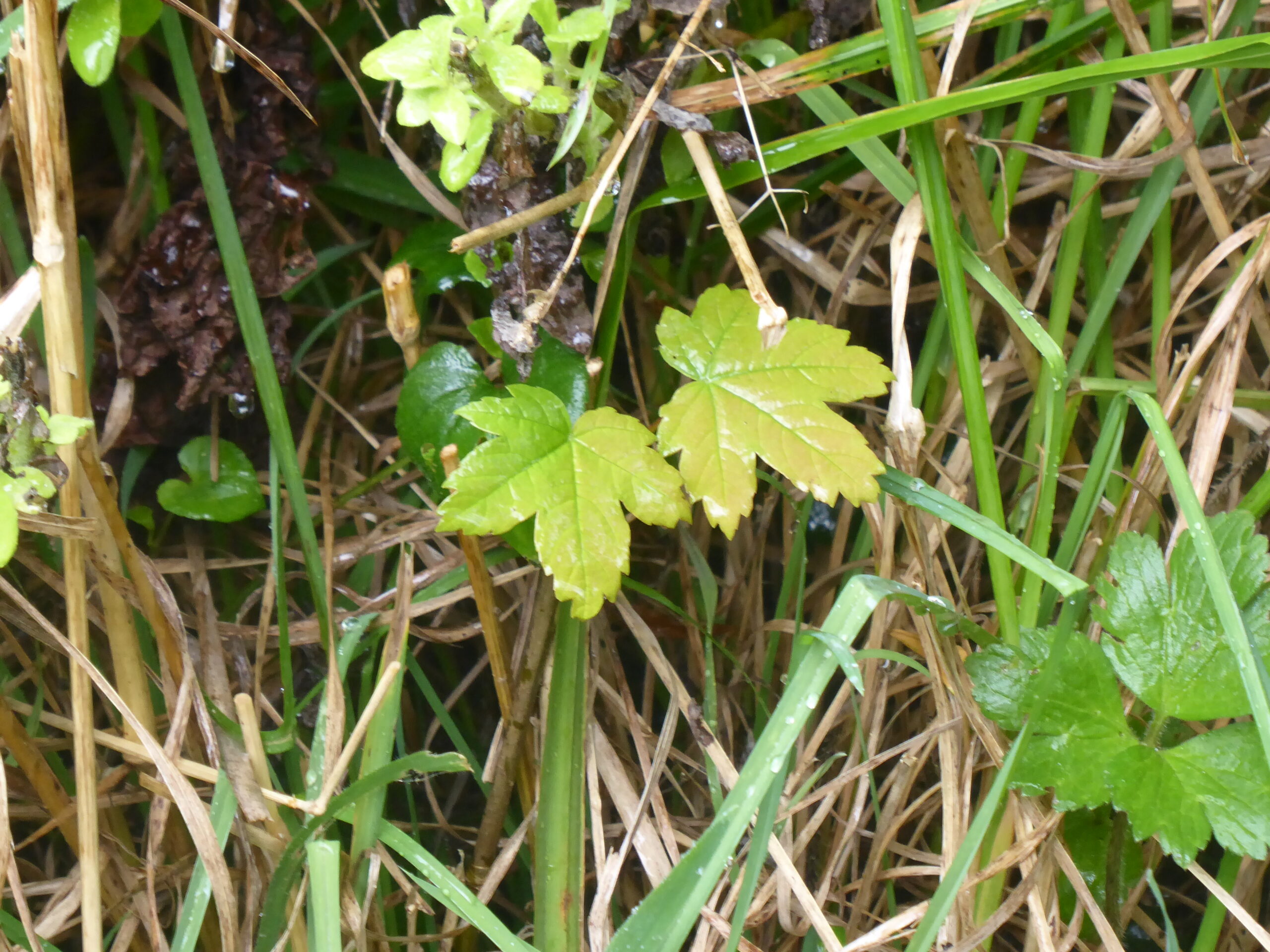
    I think the Slug and Sycamore would make a great pub name!  The sycamore shoot is in the bank down beneath the silver birch.  We frequently get sycamore shoots in the top garden and the bank because this side of the valley used to be lined with sycamore trees.  We have four stumps in one of our flower beds.  One is pretty much disintegrated and the other three are home to bracket and other fungus.  We will probably pull up this little one as it is too close to the silver birch and sycamores can grow up to 35m tall.

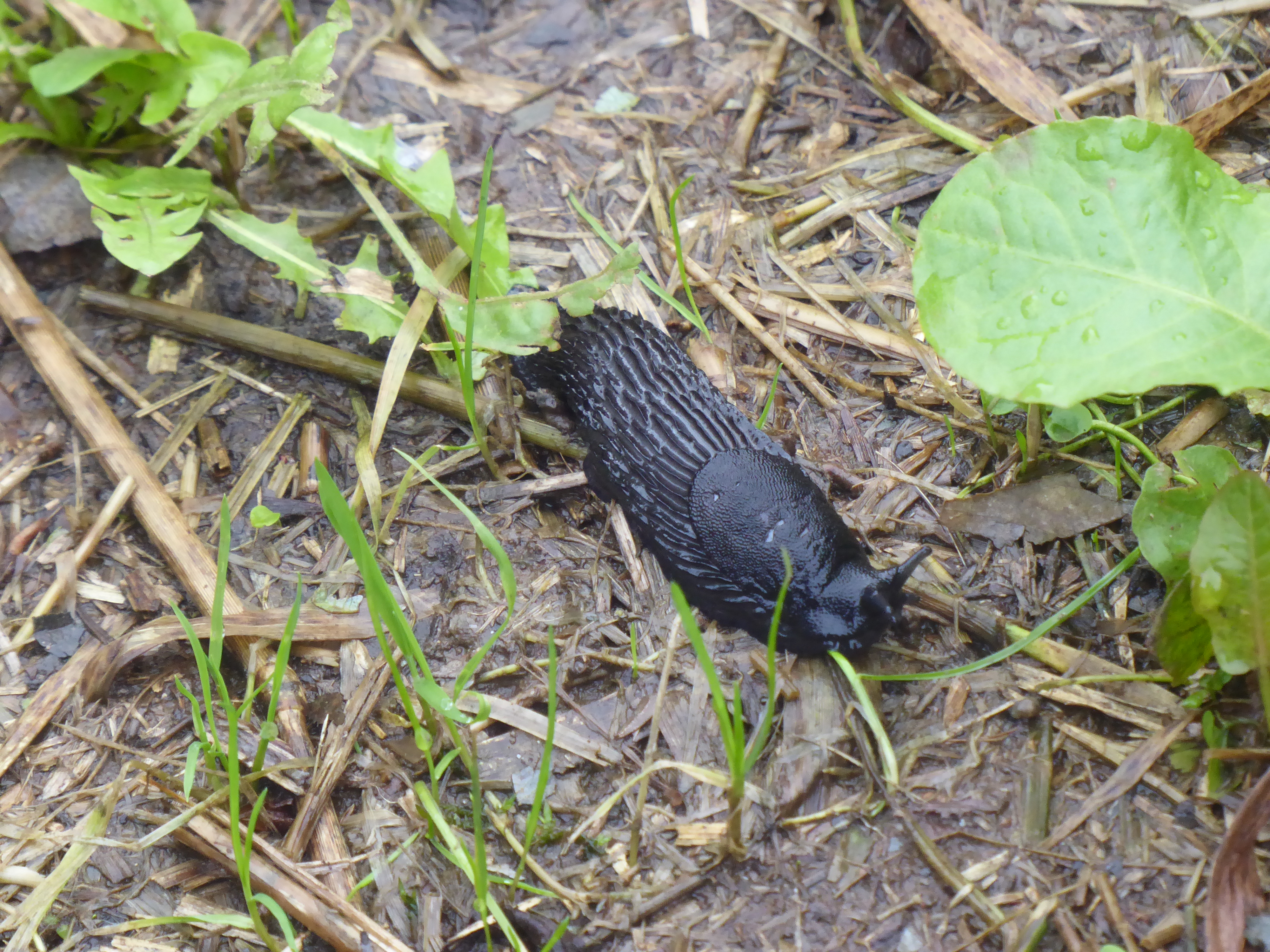
    I spotted the black slug (Arion ater) a while back, just before Little Venice got flooded.   

    Black slugs are not always black.  They start life as pale specimens, and there are red and brown variations.  Also, there is a tendency to darker shades the further away from the equator you get. 

    I found out that black slugs have a top speed of 1.8inches per minute – that’s 0.0017mph.  This compares to the Leopard Slug (Limax maximus), which is the fastest slug and can whizz along at 6 inches per minute – 0.0056mph.

    Finally, not all slugs are bad for the garden.  The black slug eats an omnivorous diet including dead plant and animal matter, earthworms, and fungi.  It rasps its food into tiny pieces with a band of microscopic teeth called radula.

    Daisy D

    22 November 2023
    Molluscs, Trees
    Black Slug, Sycamore
  • Silver Birch

    Silver Birch

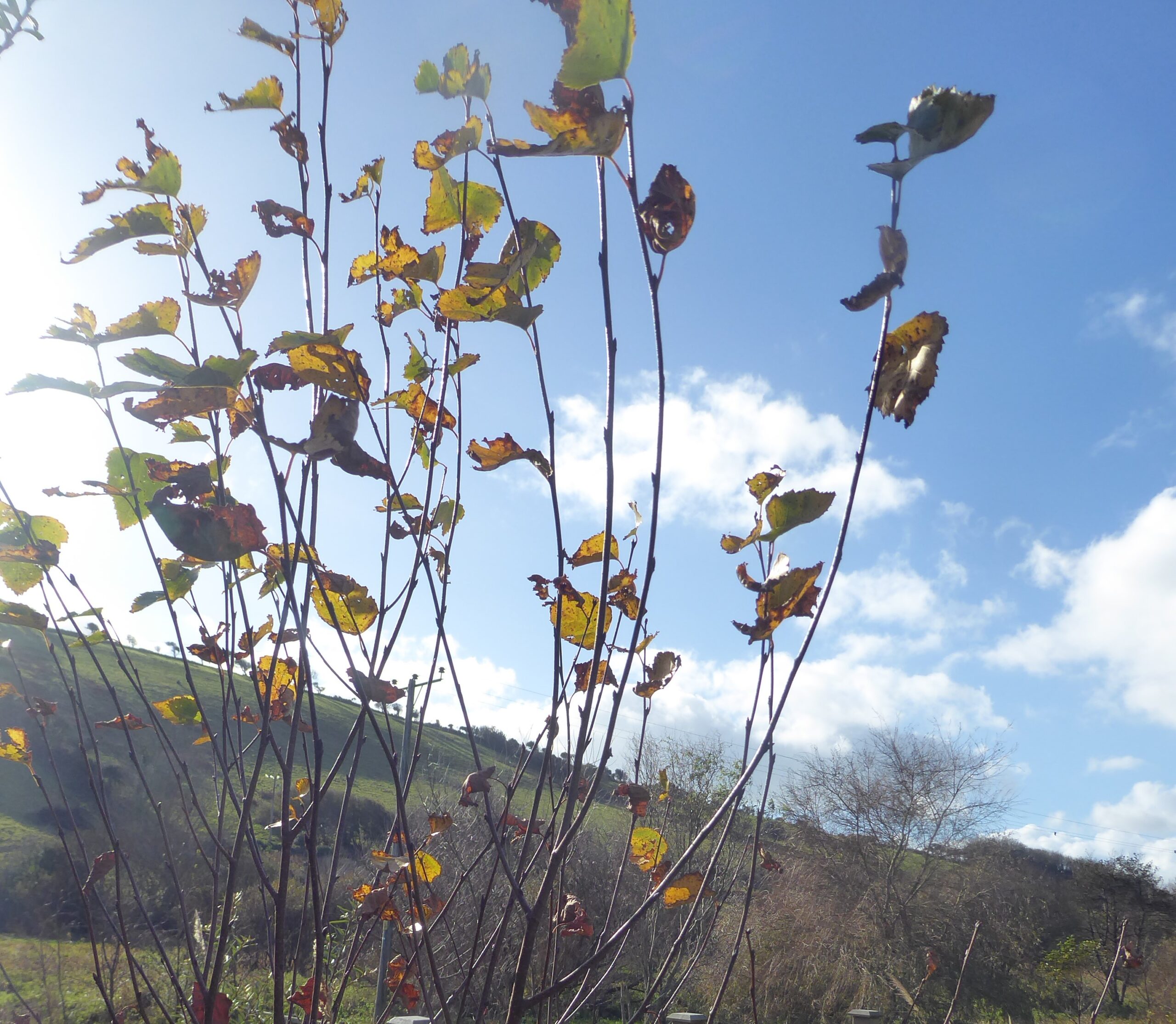
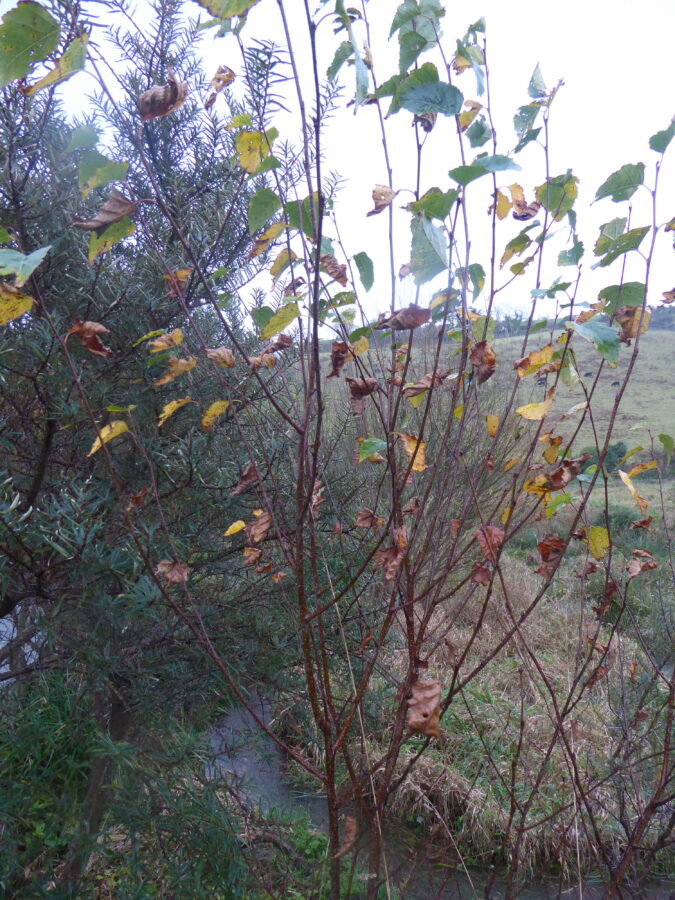
    This silver birch is one of three and was originally in the top garden, but we had to move it as it was exposed to the salty Easterlies and wasn’t thriving.  Now it is near the top of the watermeadow bank, next to the sea buckthorns and it is galloping skyward.  Silver birches really prefer a dry habitat, and the weird thing is that our top garden is very dry with poor soil.  So this tree possibly now gets a better balance. 

    Apparently a silver birch can grow up to 30m tall.  This one is helping to provide welcome shade on the left-hand side of the watermeadow.  However, the shade that birches provide is light and dappled, so good for grasses, mosses, and wildflowers.  It also provides food and habitat for a variety of insects including ladybirds and moth caterpillars.  Also the right environment for fungi, including the chanterelle, which we have had on our lawn, and the birch knight, among others.  When the birch is a bit bigger it might house a woodpecker, and its seeds are food for greenfinches, siskins, and redpolls.   Of these, we have seen a greenfinch in the watermeadow.

    Daisy D

    19 November 2023
    Trees
    Silver Birch
  • Alder (Alnus glutinosa) and Woolly Alder Sawfly

    Alder (Alnus glutinosa) and Woolly Alder Sawfly

    Yesterday, I took part in the Big River Watch.  I spent 15 minutes over on the far bank of the stream, just watching the water (plus time to tot up the plant life and enter data on the app).  It wasn’t as productive as the Big Butterfly Count back in August.  From the list I was only able to record flies and could add up to three other things not on the list.  I added a blackbird, water mint and wild angelica.  Other items that I saw were the usual suspects … dung flies, slugs, and spiders, water pepper, grass, stinging nettles, dock, branched burr-reed, forget-me-not, bedstraws, and the bindweed which is trying to strangle the smallest of the new alders.  The water quality was quite sludgy, with bubbles popping and an oily sheen in places. 

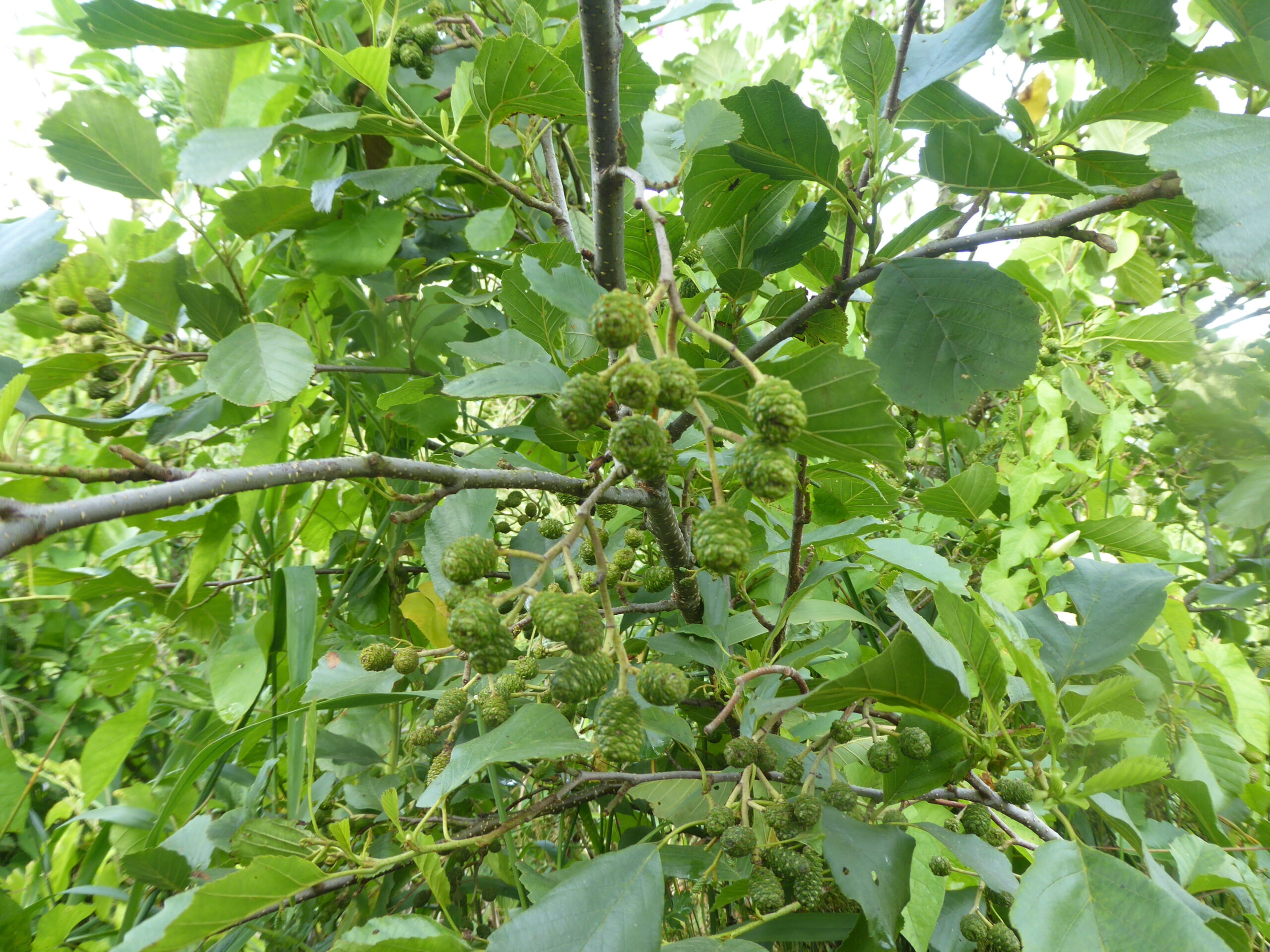
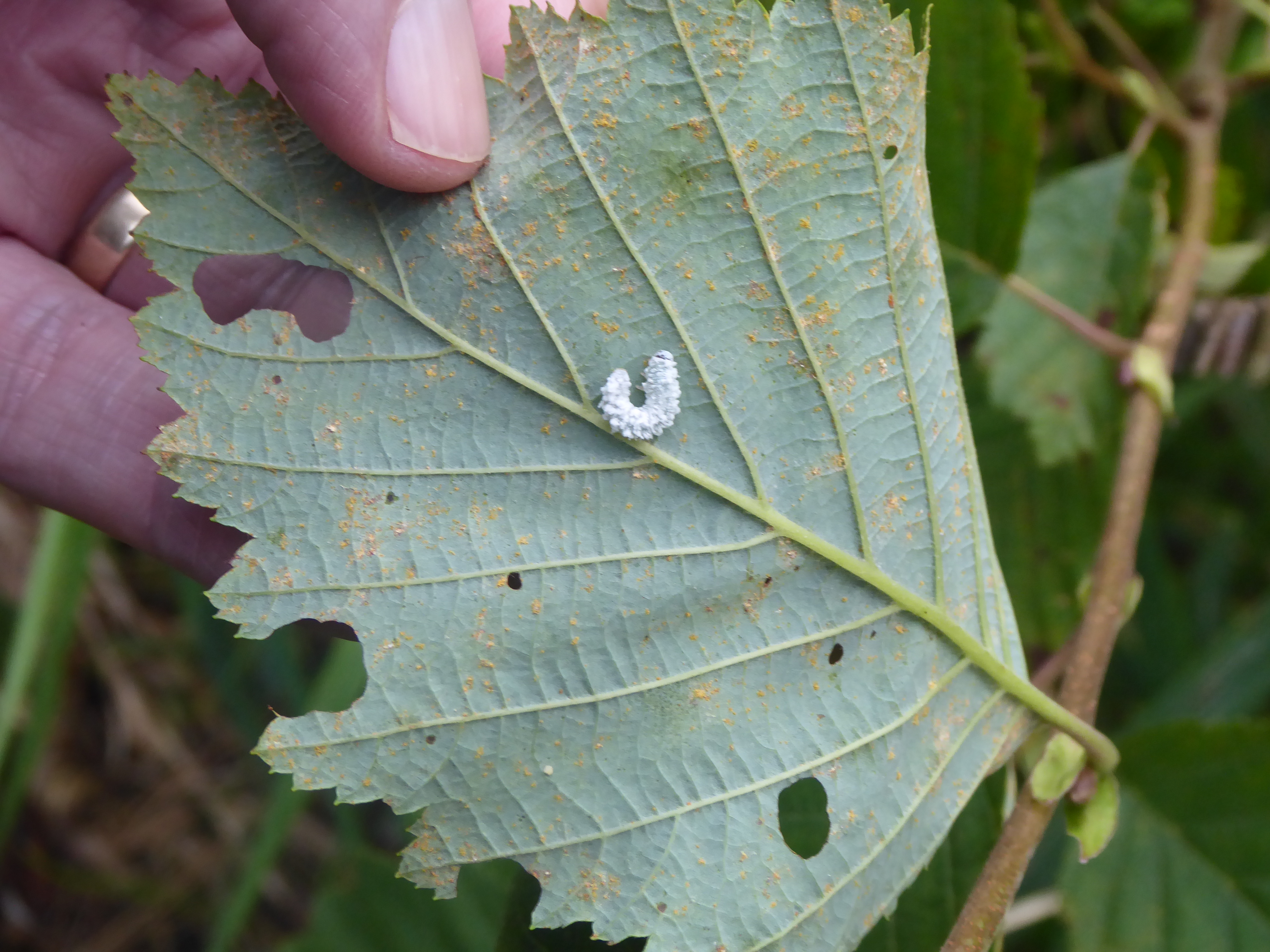
    I mentioned the alders and haven’t officially recorded them yet.  We planted the alders – ten in 2020 (of which we have seven left, which are now about 10-12 feet tall) – and another eighteen this spring.  We have been told that alders were good for soaking up flood water and we have noticed that they are less invasive than the willows, which pop up saplings even from prunings left lying around.  There is a really good information resource on The Woodland Trust website.  The picture above shows the female catkins on one of the trees in July. The latest alder saplings are all growing at different rates, some are six foot tall already, others have lost a lot of leaves or are patchy.  We saw the Birch Sawfly Larvae the other week on some alders in pots.  Yesterday we noticed the Woolly Alder Sawfly Larvae curled up on some of the saplings in the watermeadow, surrounded by evidence of its feasting.  Also some leaves curled and folded with webbing inside -presumably nests of sawfly eggs.

    Daisy D

    24 September 2023
    Insects, Trees
    Alder, Woolly Alder Sawfly
  • Sea Buckthorn

    Sea Buckthorn

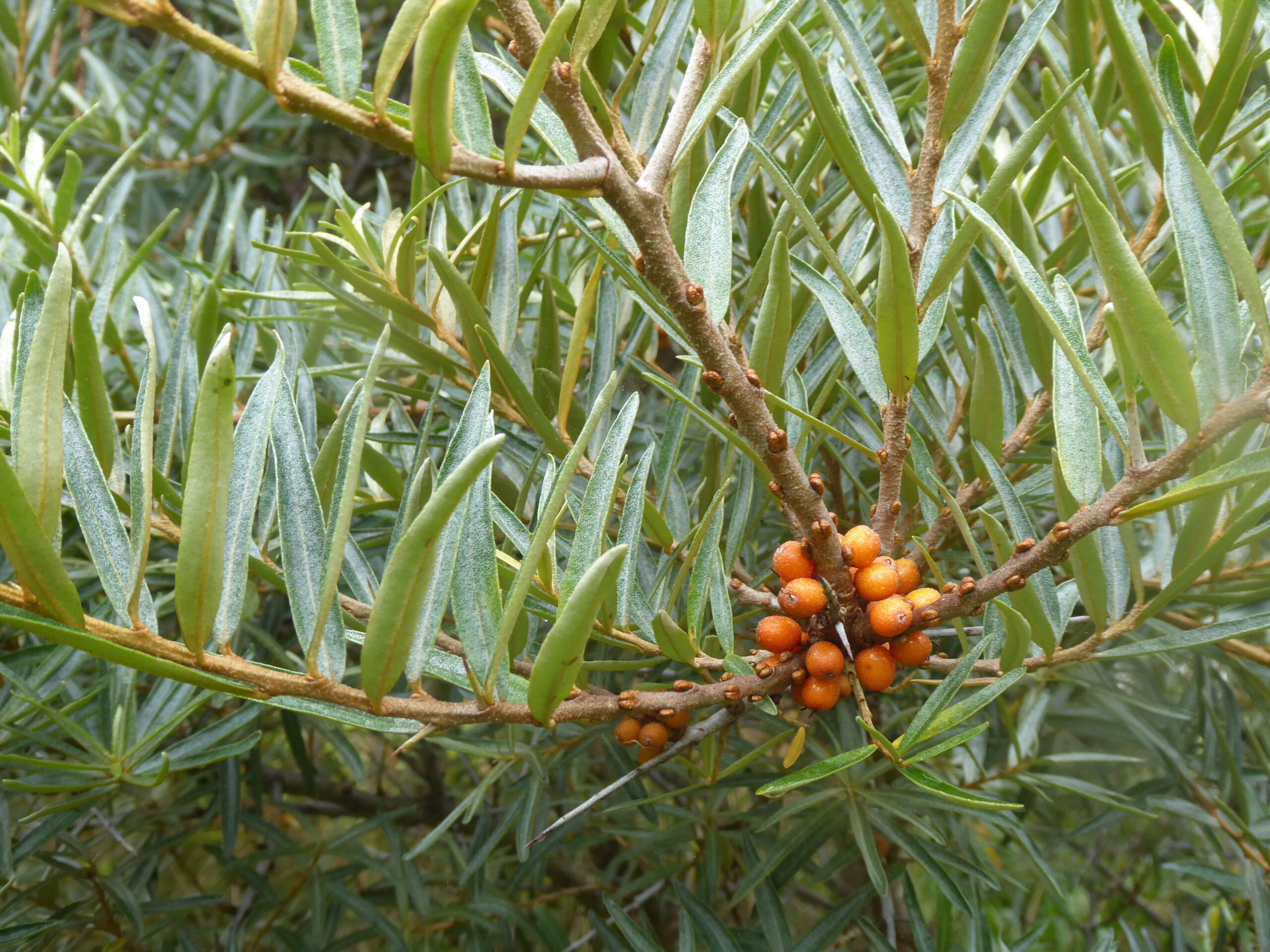
    Trees in our watermeadow include willows, alders, and sea buckthorn.  On the bank we have planted a silver birch and a mountain ash, which are doing quite well as the bank is drier.  The sea buckthorn is at its best now with clusters of bright orange berries nestling among its spikey silver-green foliage.

    It turns out that sea buckthorn berries are a bit of a superfood – full of vitamins and anti-aging properties.  The oil is supposed to help with skin conditions and burns, but evidence is purely anecdotal, rather than scientific.  The berries can be made into jellies or syrups and more to the point, they provide food for birds, in particular over-wintering thrushes.

    Our sea buckthorn trees are quite prolific with thorny saplings sprouting up in close proximity to the trees.  They are native to the east coast of England but have been planted in other places to help stabilise sand dunes.  It’s possible therefore that ours were planted to help prevent erosion of the bank.  For that reason, we would keep them, though we have pulled up some of the saplings.

    Daisy D

    02 September 2023
    Trees
    Sea Buckthorn

©2023 All rights reserved.

  • October 2024
  • September 2024
  • August 2024
  • July 2024
  • June 2024
  • May 2024
  • April 2024
  • March 2024
  • February 2024
  • January 2024
  • December 2023
  • November 2023
  • October 2023
  • September 2023
  • August 2023
  • July 2023
  • June 2023
  • Spotted in September
  • Spotted in August
  • Spotted in July
  • Spotted in June
  • Conclusions