A Year in the Valley

A Year in the Valley

Discovering the flora and fauna in a small square of Portmellon Valley

  • BioBlitz
  • The Rules
  • Tally
  • Map
  • Bird Page
  • Contact Form
  • Bird Traffic Report – and Wood Pigeons revisited

    Bird Traffic Report – and Wood Pigeons revisited

    Lately, it’s been harder to spot new things than in December-January.  I notice things re-emerging that I have already counted, but nothing new.  This morning it is seriously raining (again!) and we have a broadly easterly wind.  I decided to do a bit of twitching and compile a Bird Traffic Report to see what was flying in the valley. 

    Between 9-9:30am I spotted many herring gulls, up to 21 at a time.  There were six on the right-hand field opposite, to start with and it became a bit of a gull drop-in with others joining and flying off during the half hour.  Two crows flew across the valley.  Wood pigeons were around.  Then I noticed a flock of at least 17 grazing in the left-hand field opposite.  Two mallards were swimming in the flooded lawn next door.  Finally, four male mallards flew down the valley, got buffeted by the wind, did a slightly flustered U-turn, and curved off back up the valley again!

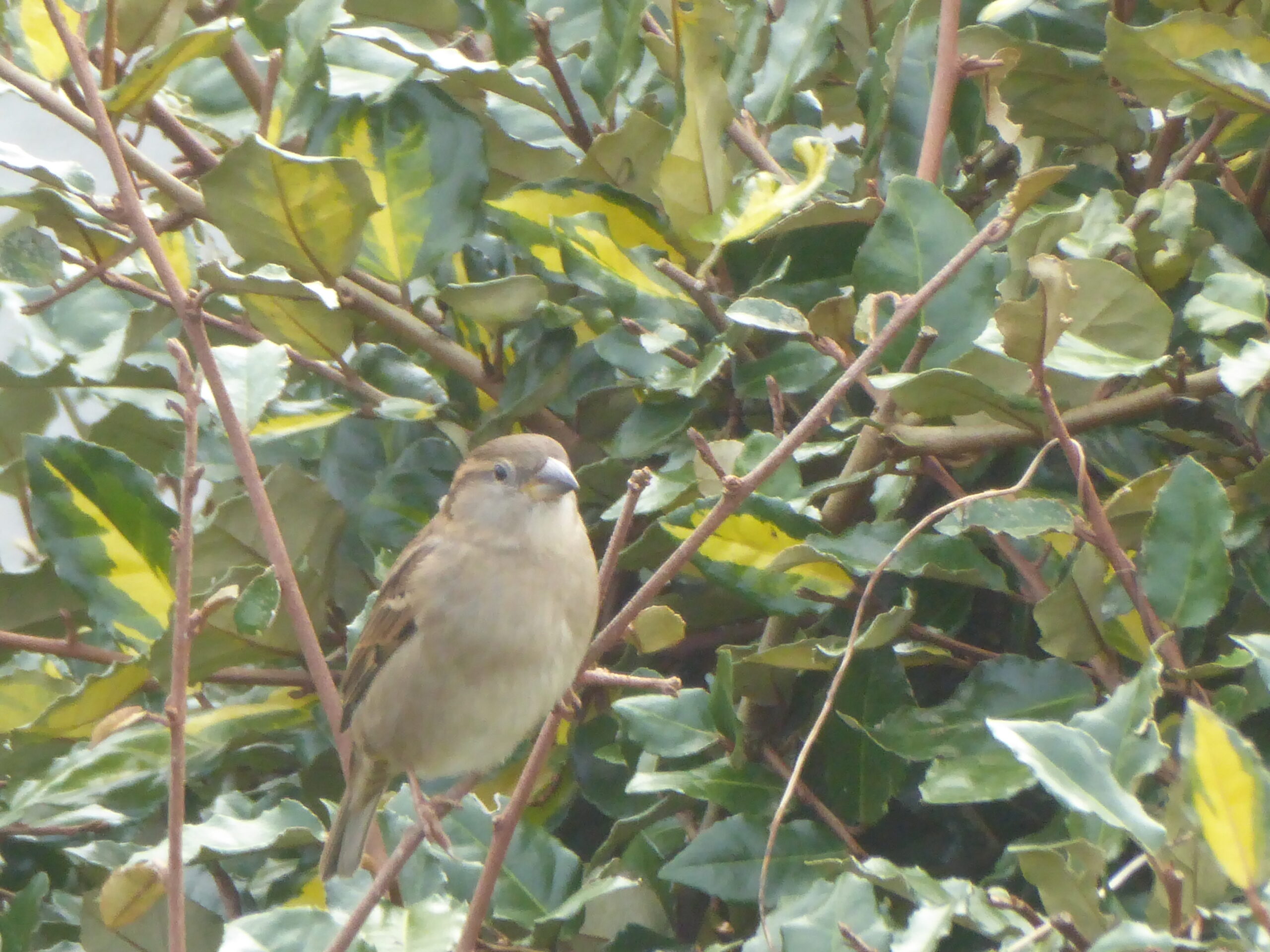
    Up at the bird feeder – sparrows were flying in and out of the ‘Sparrow Tree’.  I imagine there were many more hunkered down in there.  Also spotted – 2 great tits, 2 blue tits, 2 dunnocks, and a robin.

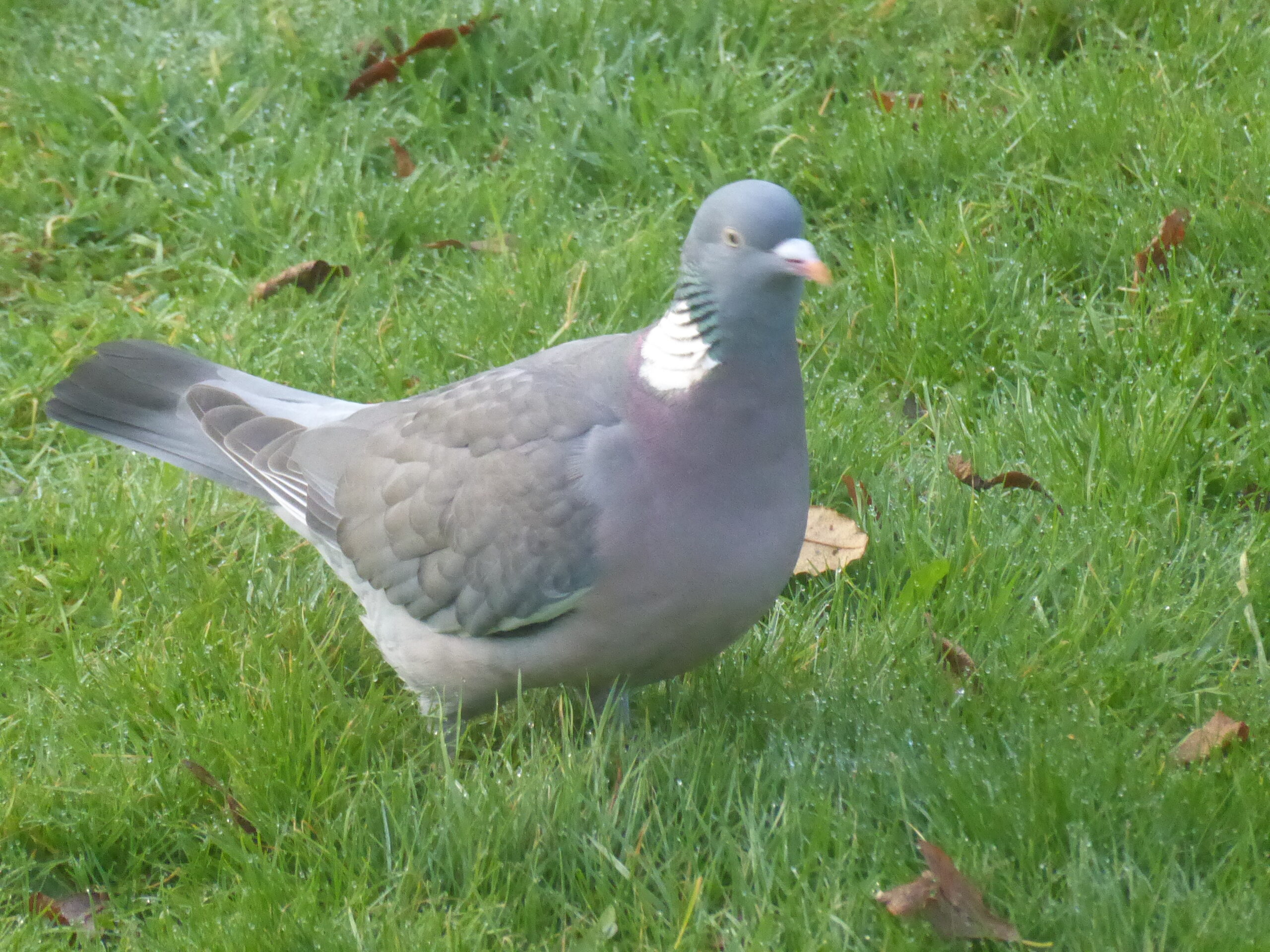
    I wondered what the pigeons were grazing on in the field and found out that they eat a lot of grass seed.  I also discovered that pigeons breed all year round (up to six broods a year) but we never see fluffy fledglings.  Why not?  Well, they spend a longer time than most in the nest, fed on high-calorie crop milk and high-protein insects as well as seeds and leaves.  This means that by the time they fledge they already have adult plumage.  In wood pigeons, the only difference is they don’t yet have the iconic white collar round their neck.
    Daisy D

    25 February 2024
    Birds
    Wood Pigeon
  • Big Garden Birdwatch 2024

    Big Garden Birdwatch 2024

    So, not a sighting today, but more of a summary.  As usual when we do the Big Garden Birdwatch, the birds were mostly taking the day off.  We scored a total of 20 birds in an hour.  We thought that was a rubbish score, really, given the number of birds that we commonly spot during the day.  The rules of this Birdwatch are that you count the highest number that you see at any one time (in case you count the same bird twice) and you don’t count birds flying over the garden, which today included five woodpigeons, a kestrel, a heron, two carrion crows and a jay. 

    The birds that landed in our garden (top garden and watermeadow combined) were: 

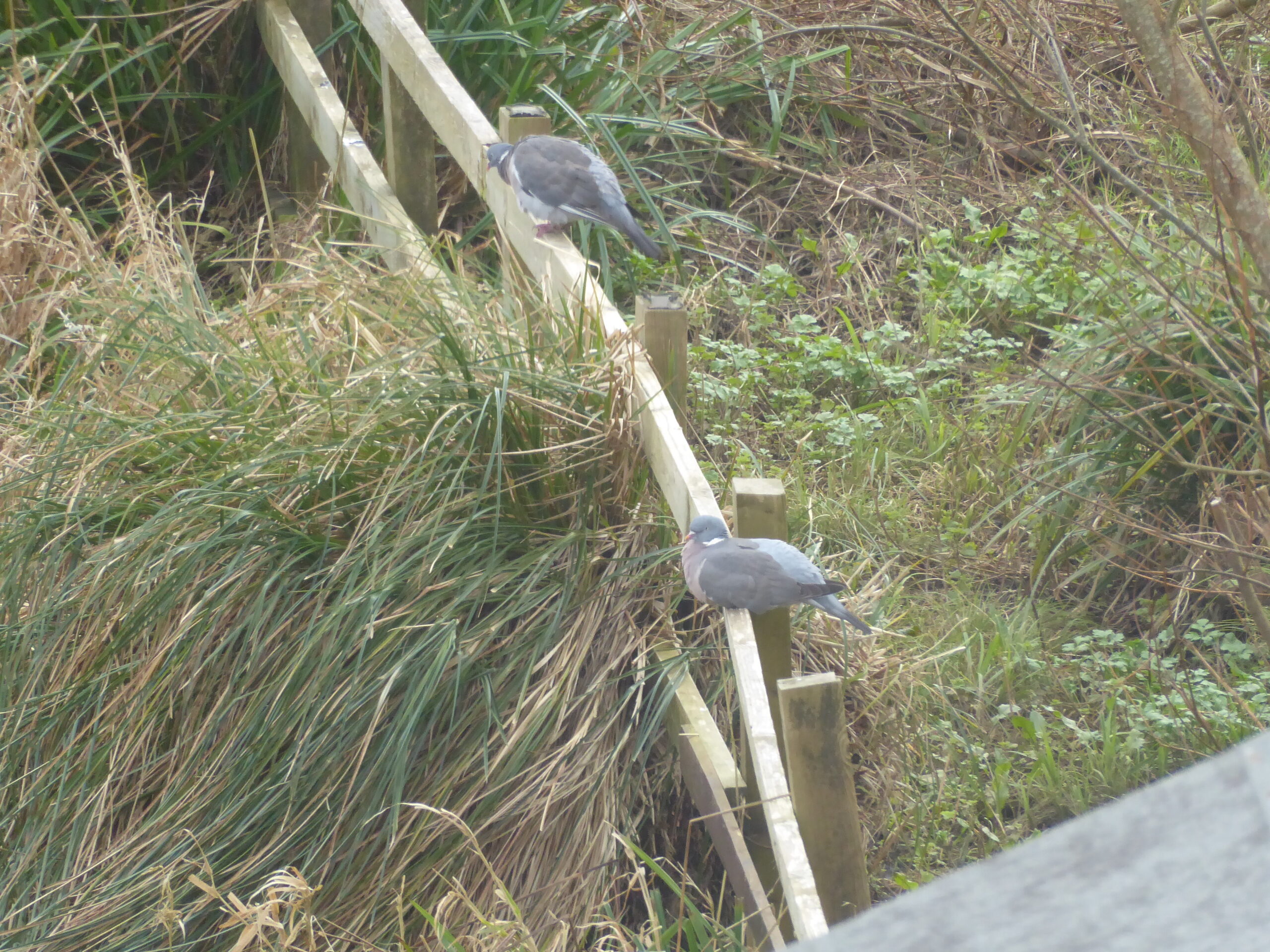
    Wood Pigeon x 1 – sitting on the fence in the watermeadow.

    Dunnock x 2 – hopping around under the bird feeder and shrubs.

    Little Egrets x 2 – having been fended off next door’s lake by the mallards and moorhens, they flew over the fence to pause and reconsider their plans briefly before carrying on up the valley.  It’s been a joy to see this pair every day for the last week or so and we hope they are going to choose to nest in the valley.

    Robin x 1 – there were two of them yesterday having a bundle on our patio, possibly rivals, as they are known to be fiercely territorial.

    Sparrowhawk x 1 – this was a stroke of luck!  The sparrowhawk came to perch on our fence for a while.  The kestrel was flying around, but not stopping.

    Wren x 1 – over the other side of the garden under the shrubs.

    Blackbird x 1 – over by the fruit cage.

    House Sparrows x 6, Blue Tits x 2, Great Tits x 3 – these were flying between the bird feeder, surrounding trees and the willows and sea buckthorn in the watermeadow. 

    N.B. The rules of ‘A Year in the Valley’, my rules, include birds flying over the watermeadow, as they are taking advantage of the valley’s natural corridor, which includes our patch – and it’s not a count of population, but of diversity of species.

    Daisy D

    28 January 2024
    Birds
    Blackbird, Blue Tit, Carrion Crow, Dunnock, Great Tit, Grey Heron, House Sparrow, Jay, Kestrel, Little Egret, Robin, Sparrowhawk, Wood Pigeon, Wren
  • Wood Pigeon and Herring Gull

    Wood Pigeon and Herring Gull

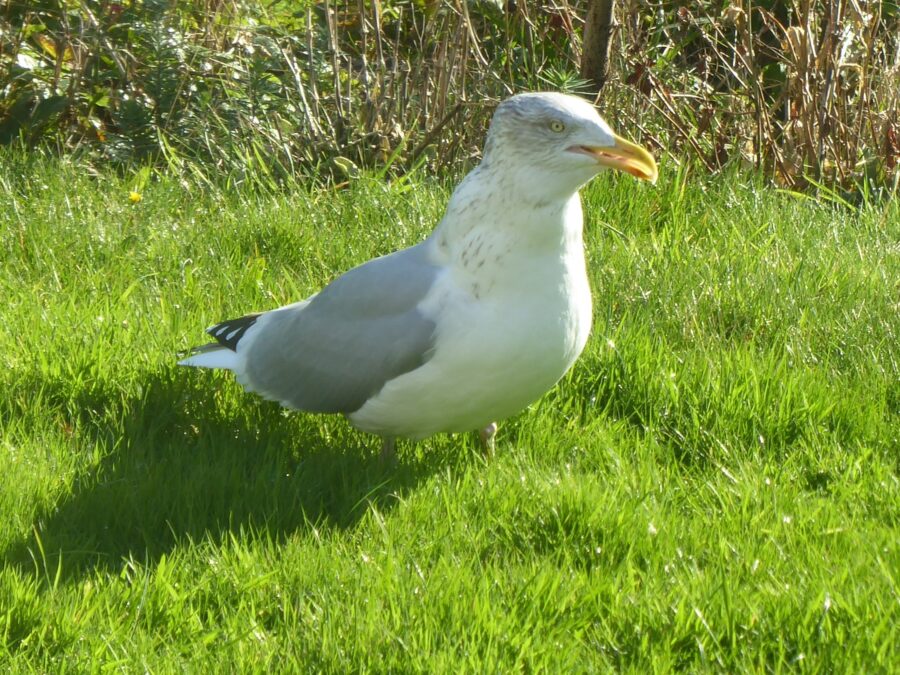
    Wood pigeons and herring gulls fly up and down the valley in completely different styles.  Whereas the gulls go scavenging morning and evening, sweeping, circling, and scanning the valley for titbits; the wood pigeons fly purposefully in straight lines, but with much flapping, as though they are late for a meeting.

    On the ground, the wood pigeon is cautious and will circle its dinner many times before committing to a delicate peck.  We know the gull has no such inhibitions!

    Wood pigeons eat leafy crops, grain, seeds, shoots, buds, and berries.  At the moment, it is likely to be visiting to eat the ivy berries.

    Herring gulls on the other hand include fish, crustaceans, carrion, and human food in their diet.  Like the wood pigeon it can be found in a variety of habitats, but while the pigeon prefers parks, gardens and farmland, the herring gull will also frequent cliffs, wetlands, and landfill sites.

    The wood pigeon can be identified from other pigeons primarily by its white collar and purple-flushed breast. 

    The herring gull has grey wings with white-spotted black tips, and a characteristic red spot on its lower beak.  The reason for the red spot is for the chicks to peck at to encourage the parent to regurgitate food for them.

    This one has a mottled head, so I wondered whether it was still a juvenile, but I found out that herring gulls have a mottled head pattern in the winter.

    Daisy D

    01 December 2023
    Birds
    Herring Gull, Wood Pigeon

©2023 All rights reserved.

  • October 2024
  • September 2024
  • August 2024
  • July 2024
  • June 2024
  • May 2024
  • April 2024
  • March 2024
  • February 2024
  • January 2024
  • December 2023
  • November 2023
  • October 2023
  • September 2023
  • August 2023
  • July 2023
  • June 2023
  • Spotted in September
  • Spotted in August
  • Spotted in July
  • Spotted in June
  • Conclusions